tree day
Guide
What is agroforestry?
Agroforestry combines trees or shrubs with crops or livestock on the same land. Its design depends on the site and the goals for production, so the presence of trees alone does not show how well a system works.
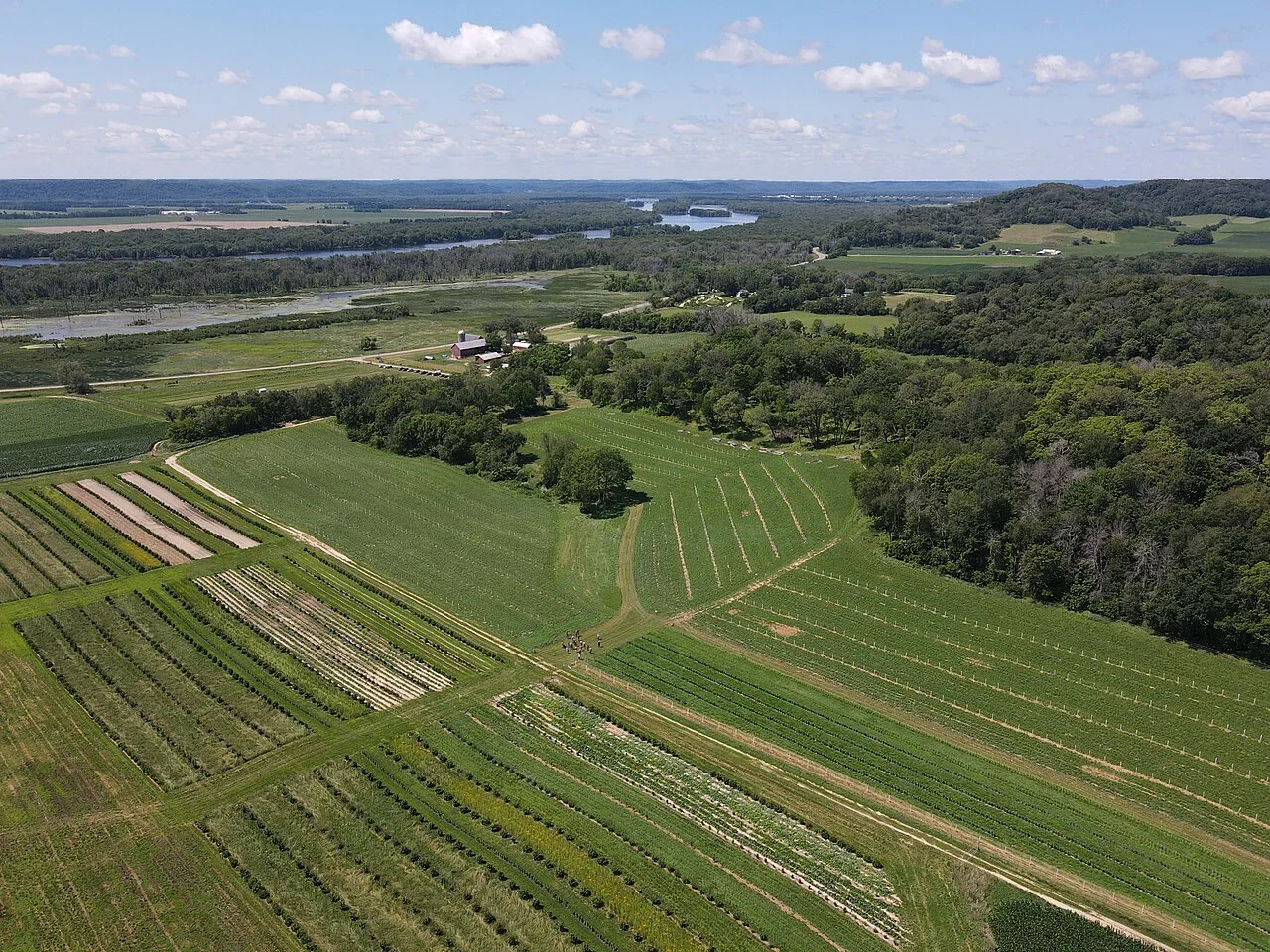
Agroforestry is the deliberate use of trees or shrubs together with crops or livestock on the same land. It can mean trees within fields, farming among an existing wooded area, or other arrangements shaped around a farm’s goals. The central idea is to manage woody plants as part of a working agricultural system, rather than treating trees and food production as separate uses of land.
More than planting a row of trees
A windbreak beside a field may protect crops or livestock, but agroforestry usually refers to an arrangement in which trees or shrubs are integrated with agricultural production. The layout can vary: trees may form rows, boundaries or scattered groups, with crops or grazing areas occupying the spaces around them. These are examples of possible designs, not a claim that every design suits every farm.
The useful distinction is between adding trees as an isolated feature and planning how woody plants interact with farm production. A farmer might consider harvestable products, shade, shelter, wildlife habitat or soil and water goals. Which purposes are realistic depends on local climate, species, soils, farm equipment and the time available to manage trees.
Why put trees and production together?
Trees can bring multiple kinds of value to a farm, but their effects depend on where they grow and what grows nearby. USDA’s Natural Resources Conservation Service describes soil as helping regulate water: functioning soil can absorb precipitation, drain excess water and store some for later plant use. Farm design that considers vegetation and soil should account for those functions, but the source does not claim that adding trees automatically improves them. [1]
The broader food system also connects production with land use and greenhouse gas emissions. The United Nations identifies agriculture and land use as the largest share of food related emissions and notes that cutting forests to expand farmland releases stored carbon. That context helps explain why the relationship between trees and agriculture matters, but it does not establish the climate effect of a particular agroforestry project. [2]
Design begins with the site
Trees take space and require decisions about species, placement, establishment and long term care. A row that makes sense on a large, flat field may make machinery difficult to use on another farm. Shade that is useful for livestock might be undesirable for a crop that needs more sun. A planned system has to account for these trade offs before planting, not after the trees have grown.
Soil conditions matter too. NRCS distinguishes relatively fixed soil properties—including texture, slope, depth and landscape position—from properties that management can change. A design should account for the first set and work patiently with the second; management cannot make every site behave like a different soil type. [1]
A hypothetical field example
Imagine a grower with a sloping field considering a line of trees along one edge. Before planting, the grower could identify what the line is meant to do: provide a farm product, create shelter, mark a boundary or support another specific goal. The grower would then consider how the chosen trees fit the slope, soil, crop plans and equipment routes. This is an illustrative planning exercise, not a recommendation for any particular species or spacing.
If the goal is mainly to retain productive farmland, the grower would also compare the benefits with the land taken out of a crop or grazing area and the labor needed to establish and manage trees. There is no universal spacing or layout: the right choice depends on the species, intended products and site. A local forestry or agricultural adviser can help evaluate those details.
A practical next step
For a shopper, the word agroforestry can indicate that trees are part of a farm’s production system, but it does not by itself explain how they are integrated or what environmental outcome follows. Ask what grows alongside the trees, what role the trees play and how the farm manages the site. A specific answer is more useful than assuming that any tree cover proves a particular benefit.
If you manage land, sketch the production area and mark existing trees, slopes, wet spots, access routes and the goal you want trees to serve before considering a design with local expertise.
Follow the evidence
Primary sources used in this story. Practical examples are illustrative unless a source states otherwise.
Read our editorial standards. Have a correction? Identify the article and relevant source in your feedback to the site owner.