tree day
Guide
Watts vs kilowatt hours?
Watts describe the rate at which a device uses power at a moment; kilowatt-hours describe energy accumulated over time. Understanding the distinction makes appliance labels and electricity bills easier to interpret.
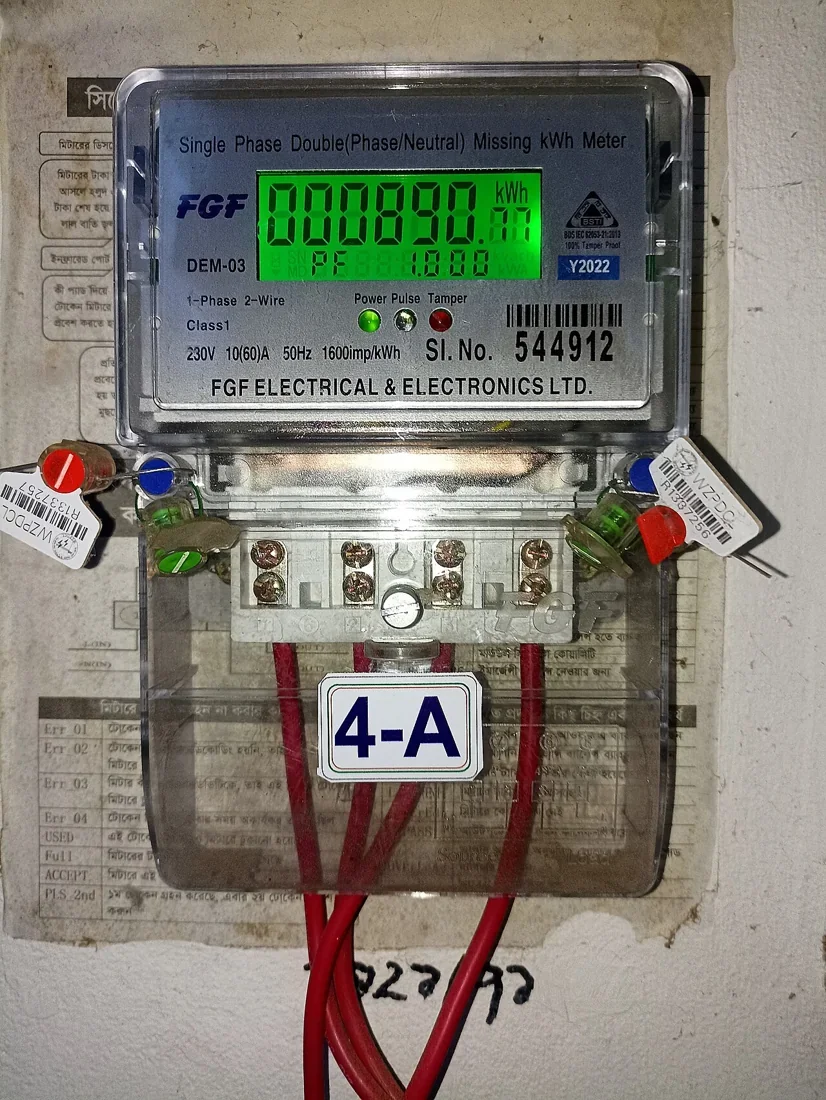
A watt tells you how quickly an appliance uses electricity; a kilowatt-hour tells you how much energy it uses over a stretch of time. The first is a rate, the second is an amount. That distinction explains why a high-wattage device used briefly may consume less energy than a modest device that runs for many hours.
Power is the moment; energy adds up
Power is measured in watts (W). One thousand watts is one kilowatt (kW). Energy use depends on both power and time, and household electricity bills commonly express it in kilowatt-hours (kWh). The unit combines a kilowatt of power used for one hour; it is not a measure of how many appliances are running at once. [3]
This is why an appliance's watt rating alone does not tell you its monthly energy use. A device can draw power only intermittently, cycle on and off, or run at different levels. The label or manual may state a rated input, but actual use depends on operation and conditions.
Use a simple calculation
For a device with a steady 100-watt draw running for 10 hours, convert watts to kilowatts by dividing by 1,000: 100 W becomes 0.1 kW. Multiply by 10 hours, and the hypothetical energy use is 1 kWh. If a 1,000-watt appliance runs for one hour, that is also 1 kWh, assuming it draws that full amount throughout.
The formula is: watts ÷ 1,000 × hours = kilowatt-hours. It is a useful estimate when you know the actual operating time and power. For a refrigerator or a heating and cooling system that cycles, a nameplate rating does not mean the unit draws that power constantly, so direct measurement or energy-use data may be more informative.
Why the bill uses kilowatt-hours
A utility needs to bill for energy delivered over a period, not merely the maximum wattage of each appliance. The kWh figure on a statement accumulates energy use across lights, appliances, heating and cooling, and other electric loads. ENERGY STAR points out that heating and cooling can account for a large share of household energy use, illustrating why long-running systems can matter even when attention tends to go to small plug-in devices. [1]
A hypothetical comparison: a 60 W lamp used for 5 hours consumes 0.3 kWh. A 1,000 W space heater running for 5 hours would consume 5 kWh if it draws its full rated power for that entire time. The example only compares energy arithmetic; actual operation, settings and conditions can change the result.
Avoid the common label trap
A watt rating is not a promise of constant demand. Motors, thermostats, compressors and electronic controls can make actual draw vary. A device's standby mode may use some power too, while its main rating can apply only during operation. To estimate household use, distinguish operating hours from clock hours and look for a device's energy information where available.
Another common error is to read kWh as kilowatts per hour. The term means kilowatts multiplied by hours, an amount of energy. Similarly, a high wattage does not by itself mean an appliance is inefficient: a powerful tool used briefly may use less energy than a lower-power device running continuously. The useful comparison depends on the job each device performs.
Apply the distinction at home
When deciding what to investigate, look for loads that combine substantial power with long or frequent operation. Heating, cooling and hot water are often worth considering alongside appliances. Improving the building envelope with suitable air sealing and insulation can reduce the amount of heating or cooling needed, though the right work depends on the house. [2]
For a quick estimate, write down an appliance's watts and the hours it actually runs, then use the formula. If the result is surprising, check whether the rating represents typical draw, maximum draw or a particular mode. Your next step can be to compare that estimate with the kWh on a bill or a suitable plug-in energy monitor.
Follow the evidence
Primary sources used in this story. Practical examples are illustrative unless a source states otherwise.
- ENERGY STAR: Energy savings at home ↗
- ENERGY STAR: Why seal and insulate? ↗
- US Energy Information Administration: Measuring electricity ↗
Read our editorial standards. Have a correction? Identify the article and relevant source in your feedback to the site owner.