tree day
Guide
School tree planting projects?
A school tree planting project succeeds when students help choose an appropriate site and the work continues after planting day. Learn how to plan for local conditions, care and measurable learning.
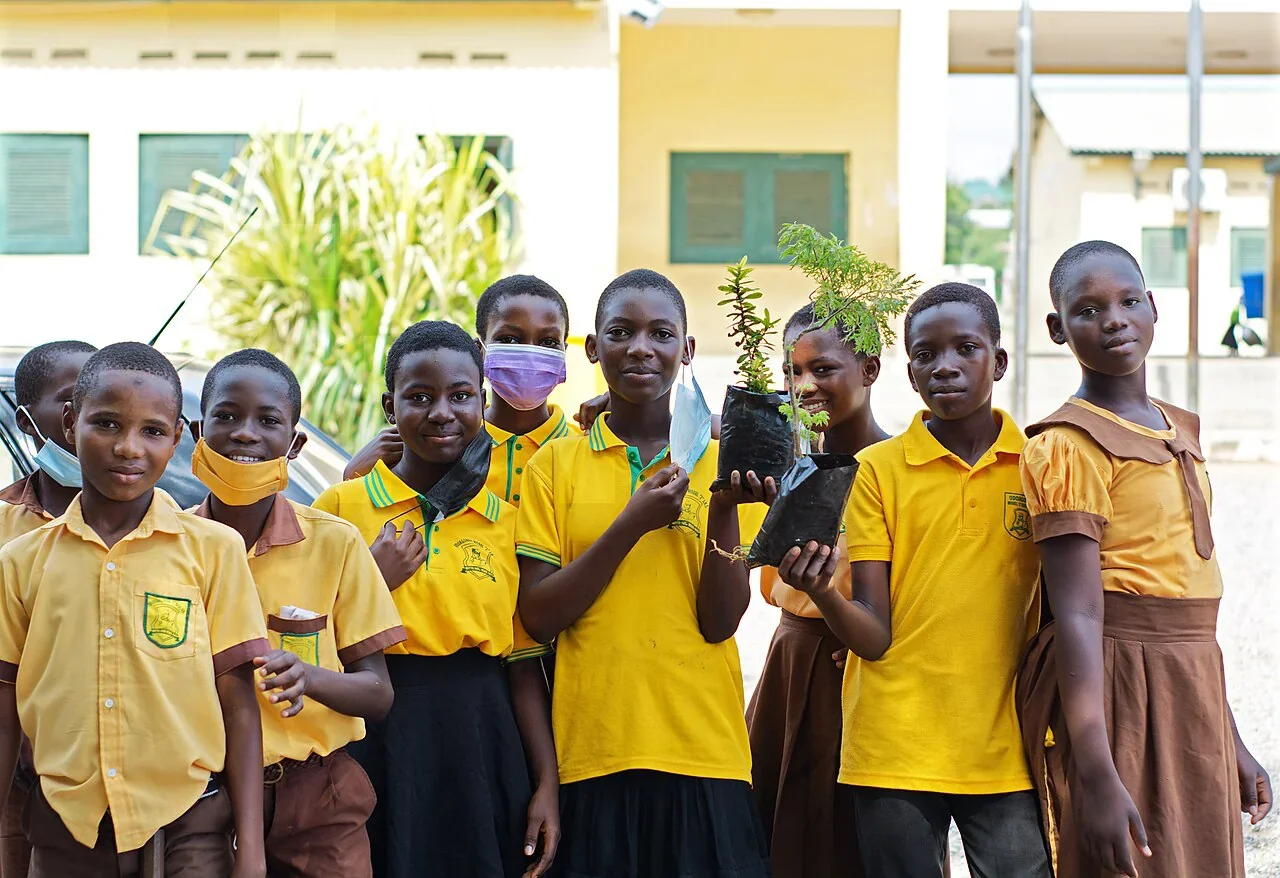
A school tree planting project should begin with a site and a care plan, not a count of how many saplings can fit into one morning. The right project might add shade to a paved play area, restore a small patch of habitat or help students understand how rain moves across campus. Its value depends on matching the goal to the place—and assigning someone to look after the trees once the volunteers go home.
Choose the problem before the trees
Walk the grounds with students, facilities staff and whoever manages the property. Where does the sun make outdoor spaces uncomfortable? Where does rain run off quickly? Is there a neglected area where local vegetation could recover? A clear question makes it easier to decide whether planting is appropriate at all.
Trees and other vegetation can cool urban areas, while green infrastructure can help rain soak in where it falls. Those benefits depend on conditions at the site; a sapling in a crowded, dry strip will not solve a larger design problem by itself. [2] [1]
Make the site work for a living tree
Before choosing a species, find out what the site can support. Consider local climate, soil, drainage, sunlight, available growing space and the mature size of the tree. Ask a local arborist, extension service, native plant specialist or municipal forestry staff for suitable options. Check for underground utilities before anyone digs, and confirm the school has permission to plant and a plan for avoiding conflicts with paths, buildings and sightlines.
A useful project may involve fewer trees than students initially imagine. For example, a class might compare two possible planting areas and learn that one has enough room and access to care, while the other is too exposed or crowded. If neither is suitable, restoring an existing planting bed or removing a pressure on a recovering patch can be more sensible than adding trees. Restoration can include helping nature recover and conserving intact ecosystems, as well as active planting. [3]
Build care into the project budget
A planting day is a beginning, not the outcome. Identify who will check the trees, who can respond if a tree is damaged and how care fits around school breaks. Ask the local supplier or qualified adviser for planting and aftercare guidance suited to the chosen species and site. Avoid promising a fixed watering schedule: needs change with weather, soil, establishment and local restrictions.
For a hypothetical school, the planning group could choose a small planting area near a reliable hose connection, then assign a staff member to coordinate care during summer and students to record observations during term. If ongoing care cannot be arranged, the group should reduce the planting scope or select a project that can be maintained. A tree that survives is a stronger result than a large planting-day tally.
Turn the work into a lesson
Students can help map shade at different times, notice where water collects after rain or compare the conditions in a planting bed with those of nearby pavement. These observations connect the tree to daily experience and make the project about place, not just ceremony. EPA describes tree and vegetation efforts as a way communities can act on heat islands; its stormwater research also examines greenspace and green infrastructure for managing runoff. [2] [1]
Keep a simple record: the planting location, the reason for choosing it, what students noticed before planting and what changes they observe later. Do not claim that one school project has measured a community-wide temperature or flood benefit unless the project actually collects evidence at that scale.
Choose a result you can sustain
The common mistake is treating a photo of students with shovels as proof that the project worked. A better measure is whether the site remains healthy and whether students understand why it was chosen. Record tree condition at agreed check-ins, note maintenance problems and share what the group learned with the next class.
The next step is to ask school facilities staff to walk one candidate site with students and a local tree adviser, then decide whether planting and long-term care are feasible.
Follow the evidence
Primary sources used in this story. Practical examples are illustrative unless a source states otherwise.
- US EPA: Stormwater management research ↗
- US EPA: Using trees and vegetation to reduce heat islands ↗
- UN Decade: What is ecosystem restoration? ↗
Read our editorial standards. Have a correction? Identify the article and relevant source in your feedback to the site owner.