tree day
Guide
How to maintain a community tree planting?
Maintaining a community tree planting means assigning responsibility, observing changing conditions and responding to each tree’s needs over time. A shared care record and local advice help volunteers focus effort where it matters.
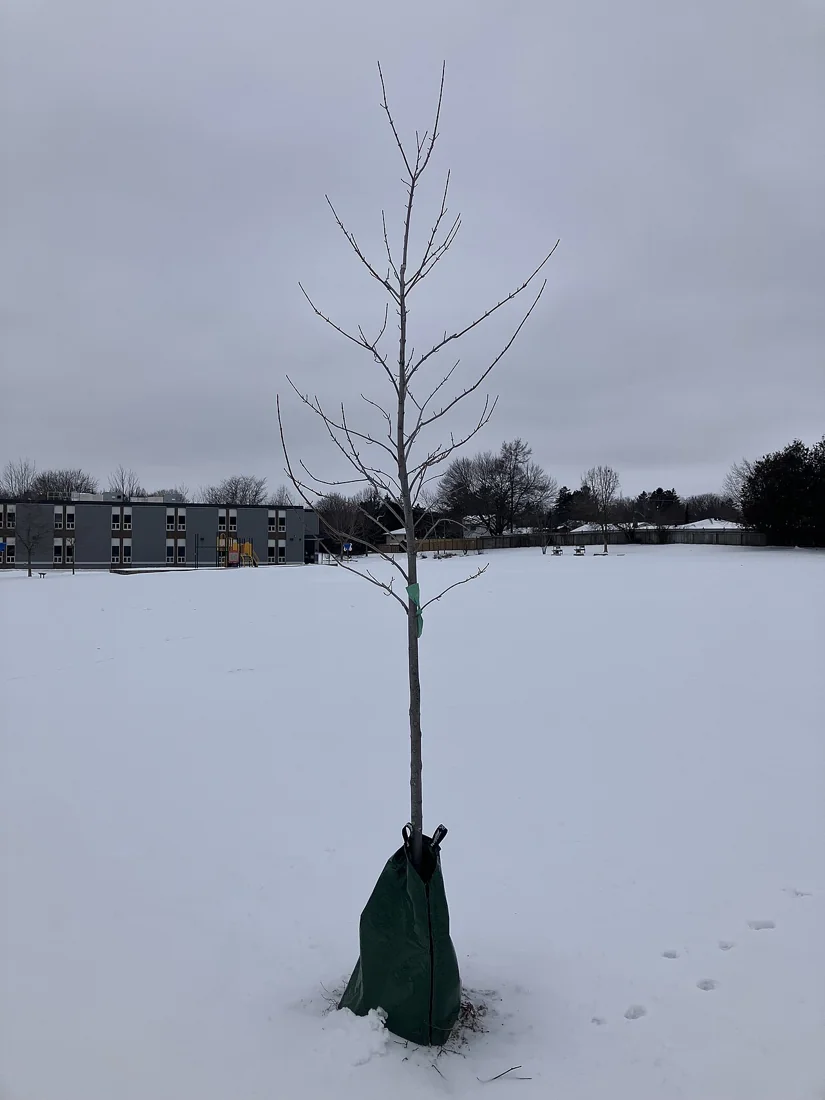
A community planting is maintained by knowing who checks the trees, what signs they look for and where to get local care advice. A calendar reminder can prompt a visit, but it cannot prescribe a universal watering schedule: tree needs vary with species, weather, soil and site conditions. The first task is to turn the planting plan into a continuing responsibility that volunteers can realistically carry.
Put responsibility on paper
List each tree’s location, species if known, planting date and the person or organization responsible for care. Identify a backup contact so a vacation or volunteer turnover does not leave the site unattended. Agree who can authorize supplies, communicate with the land manager and request professional help if a tree becomes damaged or hazardous.
A simple map and shared log prevent repeated guesswork. After each visit, record what was observed, what action was taken and what needs follow-up. This matters on public land, where several volunteers may inspect a tree at different times. The log should be accessible to the people doing the work and the site manager, without storing unnecessary personal information.
Observe before acting
Check the whole planting area, not just whether leaves look green. Look for physical damage, leaning, broken branches, exposed roots, compacted soil, standing water, vandalism, weeds competing close to young trees and signs that mulch or guards have shifted. Record observations consistently, and compare them with earlier visits rather than relying on memory.
Trees and vegetation can contribute to cooling in urban environments, but that benefit depends on trees being established and suited to the setting [1]. If a tree appears stressed, the cause may be water, drainage, planting damage, pests or another factor. Volunteers should avoid diagnosing from a single symptom. Ask the responsible arborist, municipal forestry staff or local extension service when the cause is unclear or the tree could pose a safety concern.
Use local guidance for water and mulch
New trees often need attention as they establish, but how much and how often depends on the tree, soil, recent rainfall and local climate. Check soil moisture and follow guidance from the tree supplier or local tree-care authority. A fixed schedule copied from another region can waste water or leave roots too dry. In a hypothetical dry spell, the care lead could inspect the root zone and contact the local forestry adviser before changing the group’s routine.
Mulch can help protect soil and reduce competition when applied appropriately, but it should not be piled against the trunk. Use the planting project’s local instructions for mulch type and placement, and keep the base of the tree visible enough to inspect. Avoid adding fertilizer or other treatments simply because growth looks slow; first ask whether the species, site and season explain what you see.
Keep the site usable and the work safe
Community trees share space with paths, play, parking and maintenance equipment. Check that guards do not obstruct visibility, paths remain accessible and the planting has not created a trip hazard. Ask the land manager before changing mowing boundaries, adding signs, moving stakes or altering nearby drainage. If work involves digging, arrange utility location through the appropriate local service before breaking ground.
Set volunteer tasks to match their training and the group’s equipment. Routine observations, litter removal and reporting are different from pruning or responding to a damaged tree. Do not ask volunteers to work near live electrical lines or use hazardous equipment. Escalate unstable trees, major damage or work at height to the appropriate qualified professional.
Plan for seasons and volunteer turnover
Make a care calendar that prompts inspections at locally useful times, while allowing the responsible person to respond to actual weather and site conditions. Schedule a handover before the original organizers leave. Keep supplier information, site permission and maintenance contacts with the map so a new team does not have to reconstruct the project.
Restoration can succeed through ongoing care or by removing pressures that prevent natural recovery; planting alone does not guarantee a functioning ecosystem [2]. For a community project, that means maintenance may include protecting a planting from trampling or adjusting site use, not just adding inputs. At the next volunteer meeting, review the log and identify one specific unresolved need. Assign that task to a named person and choose a check-in date.
Follow the evidence
Primary sources used in this story. Practical examples are illustrative unless a source states otherwise.
- US EPA: Using trees and vegetation to reduce heat islands ↗
- UN Decade: What is ecosystem restoration? ↗
Read our editorial standards. Have a correction? Identify the article and relevant source in your feedback to the site owner.