tree day
Guide
Organic vs conventional farming?
Organic and conventional describe different production rules and choices, not a simple environmental score. Compare the food you buy, the farm practices that matter to you and whether the food will be used rather than wasted.
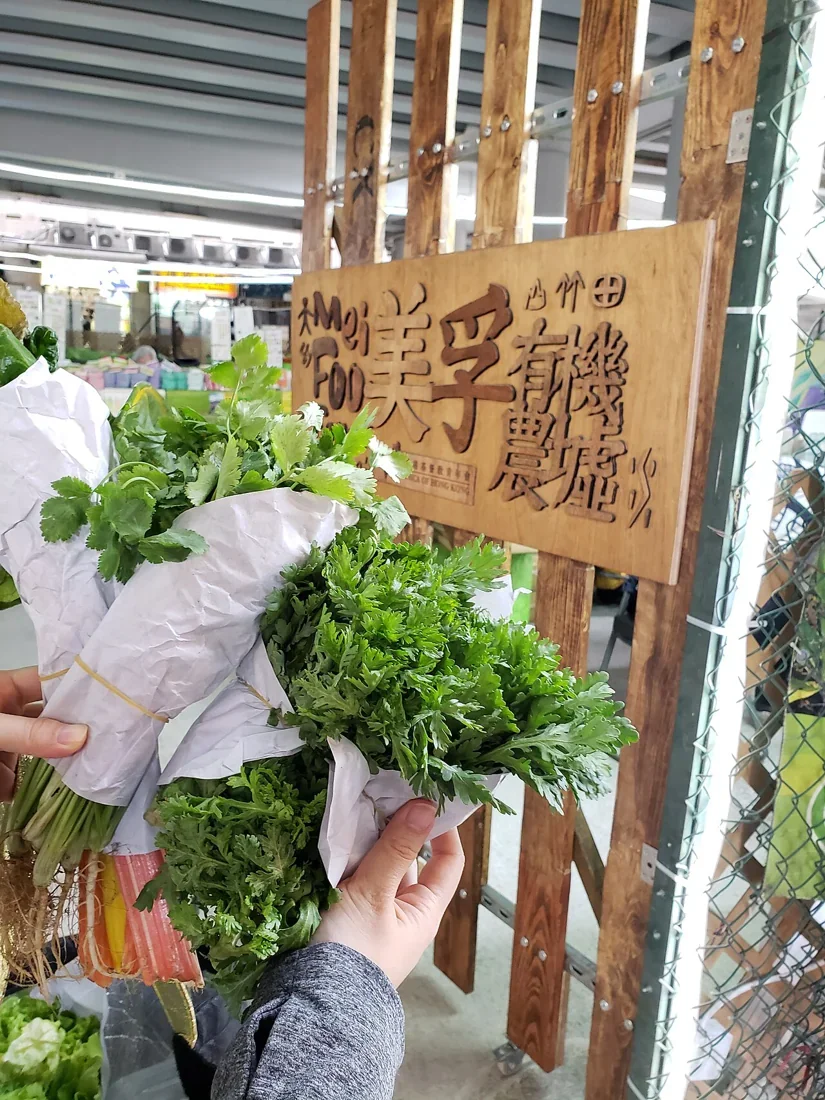
A produce label can tell you something about how food was grown, but it cannot by itself tell you the full environmental story. Organic and conventional farms may differ in inputs and management, while both operate within soils, weather and local constraints. If you are choosing between them, start with the impact you care about and the information the label actually provides, then consider price, availability and whether you will use the food.
A label answers a limited question
Organic is a production category governed by standards; conventional is a broad category covering farms that do not use that certification. The references do not set out the detailed certification rules, so a label should not be read here as proof of a particular yield, soil condition or climate outcome. It identifies a way food was produced under a defined system, not a complete environmental report card.
The UN explains that food impacts arise across growing, processing, transport, storage, preparation and disposal, with agriculture and land use the largest share of food related greenhouse gas emissions. A farming label can speak to some production choices, but it does not reveal every stage. Nor does one category tell you how a particular farm manages its land. [1]
Ask which outcome you are comparing
Environmental impact can mean greenhouse gas emissions, land and water use, soil function, or the amount of food that goes uneaten. These are related but distinct questions. A claim about one does not settle the others. For example, the UN source says plant based foods generally have lower greenhouse gas intensities than animal based foods; it does not establish that every organic vegetable has a lower footprint than every conventionally grown one. [1]
Soil offers another useful lens. USDA’s Natural Resources Conservation Service describes soil health as the continuing capacity of soil to function as a living ecosystem. It says soil performance depends both on inherent properties such as texture and slope and on management that can change over time. The label alone does not show how those factors play out on an individual farm. [2]
Management matters alongside category
A careful comparison asks about actual practices: how nutrients are supplied, how soil is protected, and how a farm responds to its site and climate. The NRCS source notes that farming methods intended to build soil health often aim to work with soil system functions, including water movement, nutrient cycling and plant production. It also emphasizes that management has limits set by the soil’s inherent characteristics. [2]
Those points matter whichever system a farm uses. Organic status does not guarantee that every practice suits a particular soil or that every environmental outcome is favorable. Conventional status does not establish that a farm ignores soil function. Without farm specific evidence, avoid turning either label into a claim about all farms in that category.
A realistic shopping example
Suppose you are choosing between two bags of carrots, one organic and one conventional. If your priority is a particular certification, the label may help answer that question. If your priority is climate impact, the references do not give enough information to rank those two bags; farm management and production details would matter. If the organic option costs more than your budget allows, buying conventional carrots you will cook is a more practical outcome than leaving vegetables unused because the ideal choice felt unaffordable.
Food waste belongs in this decision too. The EPA advises planning meals, checking existing supplies and buying quantities that match the meals a household expects to eat. That helps avoid wasting the resources embodied in either kind of food. Imperfect produce can also be worth considering when it is safe and usable. [3]
Make the choice specific
If you have trustworthy information about a producer’s practices, use it to assess the outcome you care about. If you do not, treat organic or conventional as a limited signal and avoid assuming it settles soil, climate or water questions. For a broad climate priority, the UN points to shifting toward more plant rich eating patterns where appropriate and reducing food waste; those decisions address a different scale of choice than a label on one vegetable. [1]
Next time you shop, decide which question matters most to you—certification, a producer’s documented practices, budget or avoiding spoilage—and choose the food you can use within that priority.
Follow the evidence
Primary sources used in this story. Practical examples are illustrative unless a source states otherwise.
- UN: Food and climate change ↗
- USDA NRCS: Soil health in Virginia ↗
- US EPA: Preventing wasted food at home ↗
Read our editorial standards. Have a correction? Identify the article and relevant source in your feedback to the site owner.