tree day
Guide
No till farming explained?
No till farming grows crops without the usual full-field plowing or soil inversion, though planting still requires some soil disturbance. Its suitability depends on the field, equipment and broader management plan.
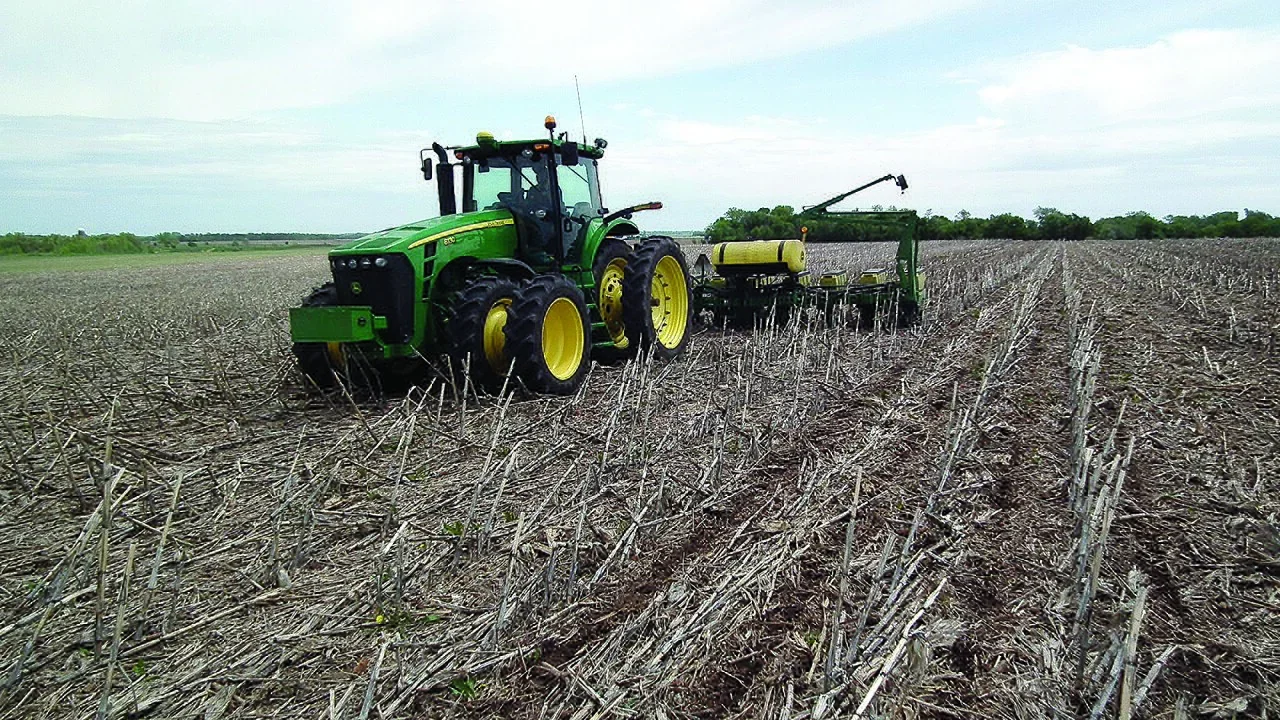
No till farming is a way of establishing crops without routinely plowing or turning over the full field before planting. It does not mean that no soil is ever disturbed: a planter still opens a narrow space for seed, and farmers may make other targeted interventions. The term describes a tillage approach, not a complete verdict on soil health or environmental performance.
What changes in a no till field
In conventional full-field tillage, soil is disturbed across much or all of the planted area before seeding. In no till systems, the aim is to plant directly into the existing soil surface, often through crop residue, while limiting that broad disturbance. The exact equipment and management vary by farm, crop and region.
USDA’s Natural Resources Conservation Service notes that tillage can change dynamic soil properties, while properties such as soil texture, slope and depth are largely inherent. That distinction helps explain why a tillage decision can affect some aspects of soil management without changing the site’s underlying characteristics. It also cautions against assuming a single method suits every field. [1]
Why a grower may consider it
Soil has multiple functions: it supports plant growth, absorbs and stores water, drains excess and recycles organic material. A grower evaluating tillage may consider how field disturbance fits those functions, alongside crop establishment, weed management, residue handling and equipment needs. The supplied NRCS source identifies tillage as a management influence but does not quantify the outcomes of a no till system. [1]
The UN describes improved agricultural practices as one part of reducing food related emissions, but its overview does not establish a specific climate benefit for no till farming. A claim about emissions should therefore be tied to evidence about the particular system and accounting method, rather than inferred from the label. [2]
No till is not no management
Farmers still have to plant, manage weeds, handle crop residues and decide what to grow. Those tasks may be handled differently depending on the system. A field that is not plowed can still face production challenges, and a no till label does not tell a reader what other practices are used. It is one management choice within a larger farm plan.
No till also does not mean that soil is automatically healthy. NRCS defines soil health by the capacity of soil to function and says that both inherent properties and management shape that capacity. Because many soil properties change slowly, a management change should be assessed over time and in the context of the field’s starting conditions. [1]
A hypothetical transition decision
Imagine a grower who is considering reducing tillage on a field. The decision could begin with a clear question: what problem is the change meant to address, and what equipment or crop requirements could make it difficult? The grower would then check whether planting into the existing surface is feasible for the crop, how weeds and residue will be managed, and what observations will help assess results. This example is hypothetical; it does not promise improved yields or reduced costs.
The trade off is that changing equipment and management can require learning and investment, while results depend on local conditions. A farmer should not switch an entire operation based on a slogan or a practice that worked elsewhere. Starting with a limited, well-understood field and advice from local agricultural specialists can make the decision more grounded.
Read claims with the right scope
If a food label or farm description says “no till,” ask what the farm means by the term, how planting and weed management are handled, and what outcome is being claimed. The name alone does not establish how much soil disturbance occurs in every part of the field, nor does it prove an environmental result. Specific descriptions are more useful than treating tillage categories as a simple good-versus-bad ranking.
If you manage land, identify the field constraint you want to address and review equipment, crop and soil conditions with a local adviser before changing tillage practices.
Follow the evidence
Primary sources used in this story. Practical examples are illustrative unless a source states otherwise.
Read our editorial standards. Have a correction? Identify the article and relevant source in your feedback to the site owner.