tree day
Guide
How to organise a river clean up?
A river clean up requires a site-specific plan for access, land permission, water conditions, waste handling and volunteer limits. Keep the event on safe ground and refer hazards or water-quality concerns to the appropriate local authorities.
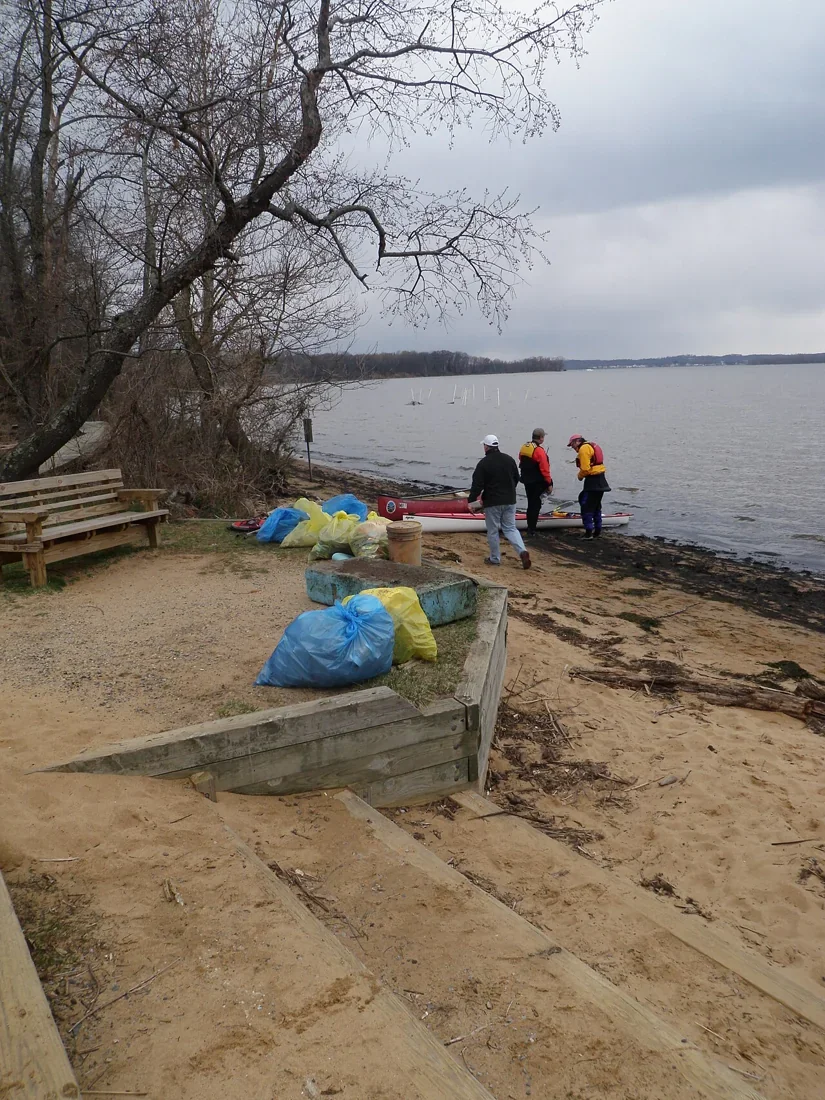
A river clean up should be planned around the river’s conditions, not around a volunteer headcount. Start by selecting an accessible stretch from safe ground, confirming who manages it and finding out how collected waste will be removed. Water levels, banks and unseen hazards can change the task quickly, so a responsible event has firm limits and a way to cancel or redirect work.
Choose a stretch and confirm access
Walk the proposed area from established paths or other permitted access points. Look for steep or unstable banks, slippery surfaces, dense vegetation, traffic crossings, private property and places where litter has accumulated. Contact the landowner or managing agency before advertising the event; ask about access, permits if applicable, waste pickup and any known restrictions. The requirements differ by place, so use the local authority’s guidance.
Define a short route with a clear start and end. Keep volunteers on stable ground and do not design the event around entering the river, climbing down a bank or crossing water. If the site cannot be viewed safely from an established access point, choose another stretch or ask the managing agency whether trained personnel can assess it.
Check conditions close to event day
Ask the site manager which conditions should trigger postponement, and check official local advisories for relevant weather, flooding or water-quality information. A river can rise or become more hazardous after rain, and a site that looked accessible during planning may not be safe on the day. Do not interpret the absence of a posted warning as proof that water is safe to enter.
Set a named person to make the go-or-cancel decision and communicate it to participants. Give volunteers a way to receive updates and identify an alternate date or land-based task. EPA research describes stormwater runoff as a route by which trash, chemicals, oils and dirt can reach nearby waterways [1]. This supports careful planning around runoff and litter, but it does not establish the condition of a particular river.
Set a strict collection boundary
Tell volunteers to pick up only ordinary litter that is visible, reachable from stable ground and safe to handle with the equipment supplied. Do not touch needles, containers with unknown contents, chemical waste, dead animals, tangled fishing line around wildlife, or bulky or sharp objects. Mark the location from a safe distance and report it to the relevant local authority or site manager.
Keep participants away from outfalls, fast-moving water, undercut banks and areas where footing is uncertain. Do not use boats, enter water or assign work that needs technical rescue or hazardous-material training. Provide gloves and grabbers where appropriate, but make clear that equipment does not make every object safe. A volunteer can help most by recognizing when an item is outside the event’s scope.
Arrange waste handling before recruitment
Find out where collected materials should go and whether the local service can collect them. Ask specifically how to handle recyclables, fishing gear and bulky waste; local acceptance rules vary. Do not promise that an item will be recycled simply because it appears recyclable. Assign a staging area that does not block a path, access point or drainage feature, and name the person who will confirm pickup.
A hypothetical small group might work a short riverside path, bag ordinary packaging and record a large dumped object for agency follow-up. That division lets volunteers complete a safe task while ensuring the bulky item reaches someone equipped to handle it. Bring only supplies the group can carry and leave behind no loose bags or equipment.
Brief, supervise and follow up
At the start, show the route, boundaries, meeting point and emergency contact. Explain the stop-work rule, how to report hazards and what to do if weather or river conditions change. Keep volunteers in sight or use a buddy system appropriate to the site and group size. Ensure participants can choose an accessible land-based task and leave without pressure if conditions feel unsafe.
Afterward, verify that waste was collected and report outstanding hazards to the managing agency. Record the date, route and types of issues observed without presenting a litter count as a measure of water quality. Restoration can involve removing pressures that impede recovery, as well as active planting, and the right response depends on the ecosystem [2]. If the same debris returns, ask about upstream sources or service issues rather than scheduling an endless series of identical cleanups.
Follow the evidence
Primary sources used in this story. Practical examples are illustrative unless a source states otherwise.
Read our editorial standards. Have a correction? Identify the article and relevant source in your feedback to the site owner.