tree day
Guide
How to compare food environmental claims?
Compare food claims by asking which impact, production stage, quantity and comparison the claim measures. A single label or distance figure rarely describes a food’s full environmental footprint.
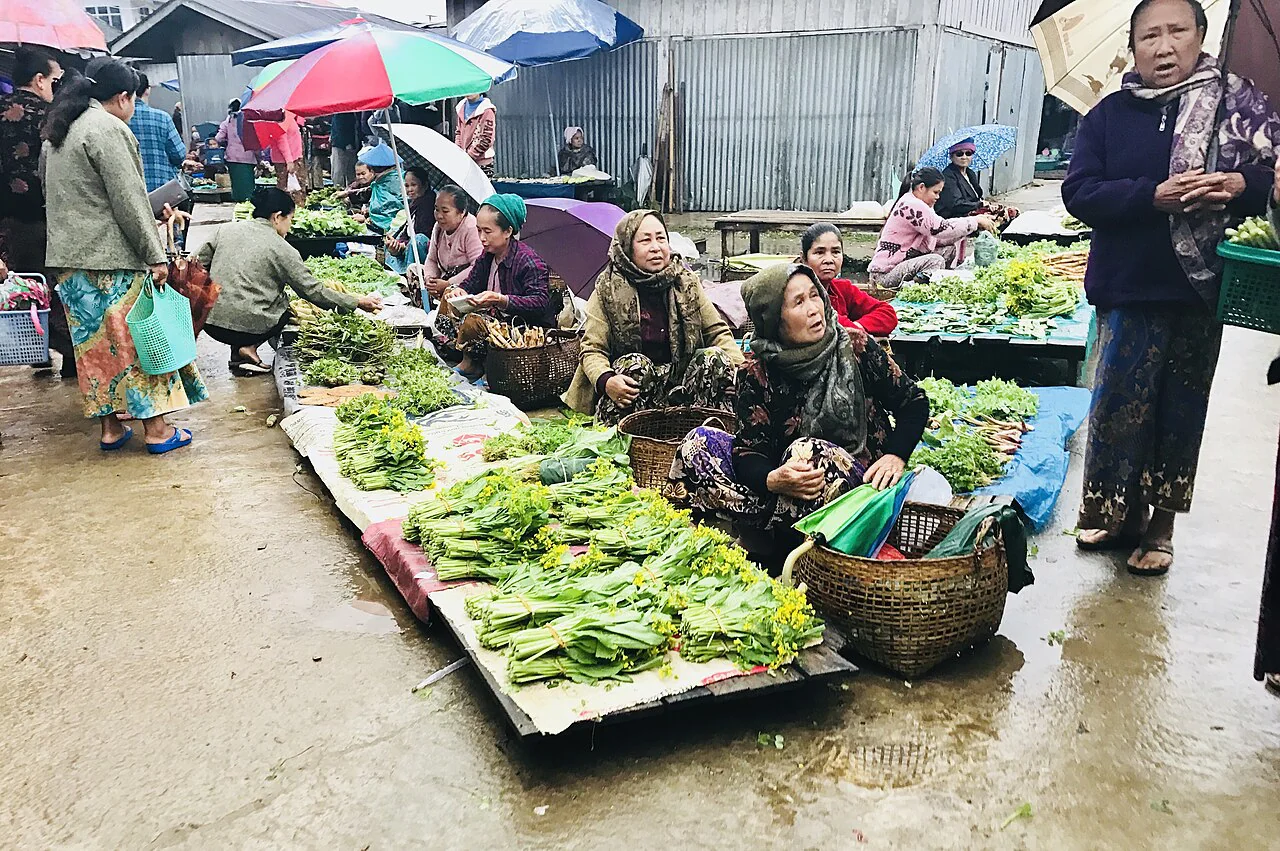
When two foods are described as “better for the planet,” ask: better in what way, measured against what, and for how much food? A claim about greenhouse gas emissions cannot automatically answer a question about water, land, biodiversity or pollution. The useful comparison is the one that names its boundary and unit, then matches the choice you are actually making.
First identify the impact being measured
Food affects the environment through growing, land use, processing, transport, storage, preparation and disposal. The United Nations explains that greenhouse gases arise across these stages, with agriculture and land use accounting for the largest share of food-related emissions overall [1]. That broad pattern does not mean every individual food has the same profile, or that emissions capture every environmental concern.
Read the claim for its specific measure. It might report greenhouse gas emissions, land use, water use, nutrient pollution or another impact. These are different questions. A product can perform better on one measure and worse on another, so a broad phrase such as “low impact” deserves a definition. If the claim does not say what it measures, treat it as incomplete rather than as a precise comparison.
Check the unit and the comparison
A figure per kilogram compares equal weights. That can be useful for ingredients, but it may not reflect how foods supply nutrition. The UN notes that food emissions can also be compared per unit of protein or per calorie [1]. The suitable unit depends on the question: comparing equal portions, protein sources or energy sources can lead to different interpretations.
Also ask what the food is being compared with. “Lower emissions” could mean lower than a particular product, an average, or a specific production method. A claim about one farm or one product should not be generalized to all foods in that category. Look for a defined baseline, the region and period represented, and whether the comparison uses the same method for both foods. If those details are absent, the claim may be directionally informative but not enough to rank products confidently.
Trace the stages included
Some claims focus on a farm gate, while others attempt to include processing, packaging, transport, retail, household storage and disposal. A narrow boundary can be useful if it is clearly stated, but it leaves out other stages. The UN says transport and packaging are typically a smaller fraction of food greenhouse gas emissions than production, though the share varies by product and context [1]. That is a reason to inspect the whole chain, not to assume packaging never matters.
For example, a hypothetical shopper comparing a locally grown vegetable with an imported one should ask how each was grown and stored, not use distance alone as a verdict. Heated greenhouse production or long refrigerated storage could alter the comparison; the particular facts would need evidence. Similarly, a lightweight package may reduce material use yet still be a poor choice if it contributes to food spoilage. The relevant trade-off depends on the product and what the claim includes.
Treat labels as clues, not complete answers
Words such as “natural,” “regenerative,” “sustainable” and “climate friendly” can describe goals or practices, but they do not by themselves disclose measured results. Ask what was done, where, over what period, and who checked the claim. A method such as improved fertilizer management may matter for emissions, while soil condition has its own dimensions and local context. USDA’s soil-health guidance distinguishes relatively enduring characteristics such as texture from dynamic properties that management can change over time [2].
A single certification can provide a defined standard, but its scope may be narrower than the environmental question on your mind. Check the standard’s criteria and whether it addresses the product, farm, ingredient or packaging. Avoid comparing a verified number for one impact with an unspecific promise for another. That is not a fair test.
Make the comparison useful for a meal
Suppose a household wants to lower the climate impact of a weekly meal. It can compare foods that serve a similar role, use a consistent unit, and consider whether the ingredients will actually be eaten. The UN reports that plant-based foods generally have lower greenhouse gas intensities than animal-based foods, while also recognizing that animal products can be important for nutrition and livelihoods in many settings [1]. That broad evidence can inform choices without pretending one menu fits every person.
Food waste belongs in the calculation too: producing food that is discarded uses land, energy and other inputs without delivering the intended meal [3]. A practical next step is to choose one claim on a label or website and write down its impact, unit, comparison and boundary. If one of those is missing, seek a clearer source or make a narrower decision based on the evidence you do have.
Follow the evidence
Primary sources used in this story. Practical examples are illustrative unless a source states otherwise.
- UN: Food and climate change ↗
- USDA NRCS: Soil health in Virginia ↗
- US EPA: Preventing wasted food at home ↗
Read our editorial standards. Have a correction? Identify the article and relevant source in your feedback to the site owner.