tree day
Guide
Heat pump water heaters explained?
A heat pump water heater moves heat from surrounding air into a tank of water. Learn how that differs from direct heating, what to assess in its location and what to clarify before replacement.
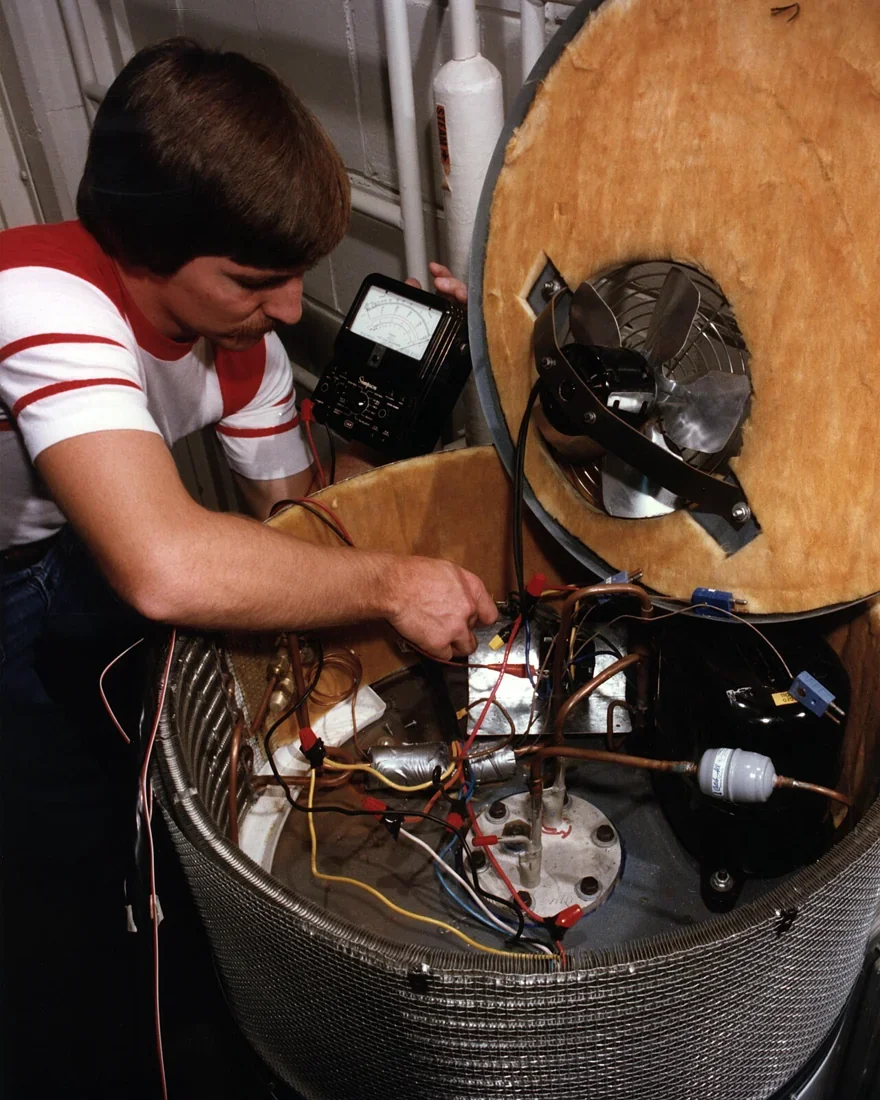
A heat pump water heater heats stored water by moving heat from the surrounding air into the tank. It uses a heat-pump cycle rather than relying only on direct electrical resistance to create heat. That means the room around the unit, household hot-water use, installation requirements and existing plumbing all belong in the replacement decision.
The water heater borrows heat from air
A heat pump water heater has an evaporator that absorbs heat from nearby air, a compressor that raises the refrigerant’s temperature, and a heat exchanger that transfers the heat into stored water. In extracting heat, it cools the surrounding air. The system uses electricity to move heat, and a backup heating element may be part of some equipment, depending on the model.
This operation differs from a conventional resistance tank, which heats water directly with electric elements. It also differs from a furnace or boiler that heats water by burning fuel. ENERGY STAR lists heat pump water heaters among its certified product categories, making them one option to compare when considering water-heating equipment [1]. The source does not establish which model suits a given household or what its energy use will be.
The installation space matters
Because the unit takes heat from its surroundings, the location and room conditions matter. The installer should explain clearance, airflow, condensate handling, noise and how the unit’s air movement affects the space. A small enclosed closet may present different constraints from a larger utility area. Do not assume that an existing tank’s location is automatically suitable for the replacement.
The change can affect the room as well as hot-water production: the unit’s cooling effect may be unwelcome in a space people rely on for warmth, while it may be less noticeable in another location. The practical answer depends on the house and equipment. Ask the contractor to inspect the proposed site and describe how the unit will be installed and maintained.
Match capacity to household use
A tank stores hot water for use across the day, so household routines matter. Several showers close together, laundry and dishwashing can create a different demand pattern from a household that spreads hot-water use out. Ask the installer to explain tank capacity, recovery behavior and any operating modes, including when backup heat may be used.
A hypothetical household might track when it tends to run out of hot water before asking for a replacement estimate. That history gives a contractor a practical starting point, but it does not by itself determine the right tank size. People’s future routines, incoming water temperature and equipment settings also matter. Compare proposals using the same description of household demand rather than choosing only by tank dimensions.
Consider the whole home project
Water heating is one part of household energy use. ENERGY STAR notes that energy used by water heating, appliances and lighting can represent a substantial part of a utility bill, and identifies efficient water-heating equipment among possible upgrades [2]. If other home projects are planned, ask whether they affect electrical service, equipment placement or the sequence of work.
A common mistake is focusing on the equipment label while overlooking the room and installation. Ask what electrical work, plumbing changes and condensate provisions are included; how noise and cooling are addressed; and what routine maintenance the manufacturer calls for. Local product availability, installation practices and incentives can differ, so confirm current details with qualified local professionals rather than relying on a generic estimate.
Follow the evidence
Primary sources used in this story. Practical examples are illustrative unless a source states otherwise.
Read our editorial standards. Have a correction? Identify the article and relevant source in your feedback to the site owner.