tree day
Guide
Heat pump vs furnace?
A heat pump moves heat and can often provide both heating and cooling, while a furnace makes heat by burning fuel or using electricity. Compare climate, existing equipment, energy sources and the full home system before replacing either.
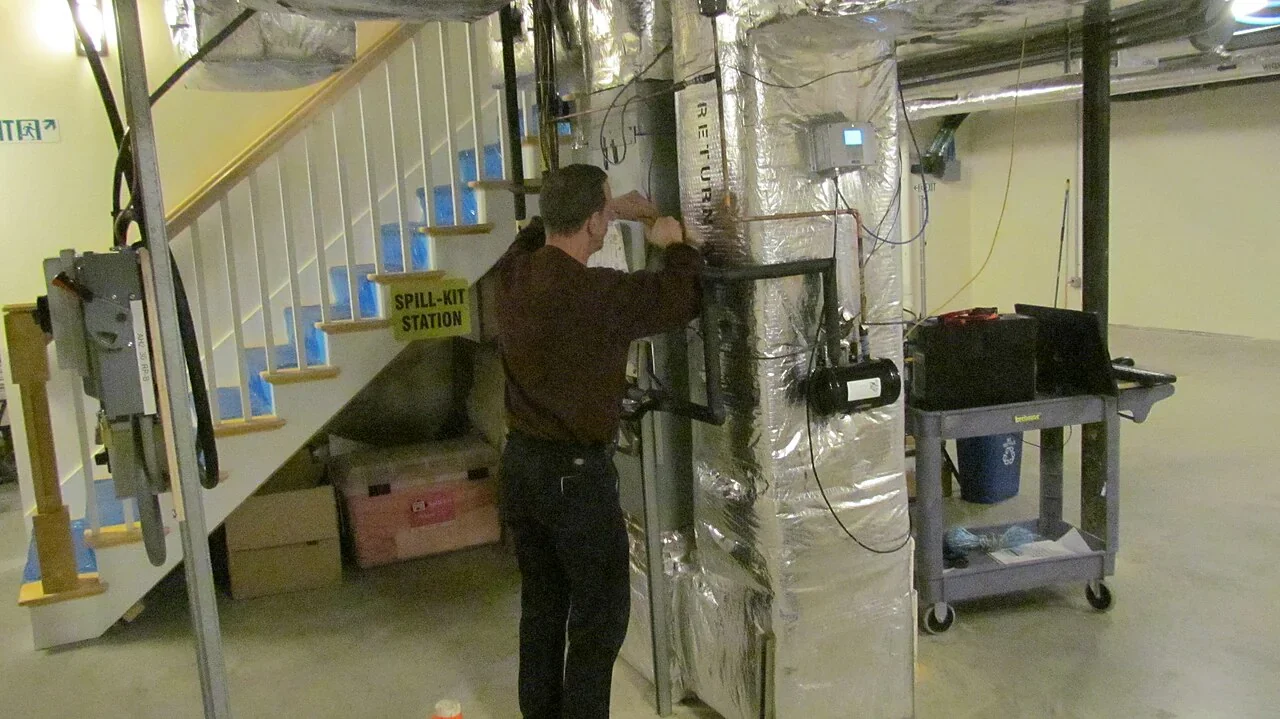
A heat pump and a furnace heat a home in different ways. A heat pump transfers heat from outdoors to indoors and can usually reverse direction to cool the home; a furnace generates heat, commonly by burning fuel or using electric resistance. Which suits a particular house depends on climate, equipment, energy supply, ducts and whether cooling is also needed.
Moving heat versus making it
A heat pump uses a refrigeration cycle to move heat rather than create it directly at the point of use. In heating mode, it draws heat from outdoor air or another source and delivers it indoors; many air-source systems can reverse the process for cooling. A furnace heats air or water by combustion or electric resistance, depending on its type. [3]
That difference affects what the household is buying: a heat pump may replace both heating and cooling equipment, while a furnace may pair with a separate air conditioner. Product details matter, and systems vary in how they perform across outdoor temperatures.
Climate changes the comparison
The outdoor conditions a heat pump must work in influence its capacity and efficiency. Cold-climate models are designed for lower outdoor temperatures, but the right selection and installation still depend on the local climate and building. Some homes use supplemental heat during especially cold conditions; whether that is needed depends on the equipment and design.
A furnace’s heating output does not depend on extracting heat from cold outdoor air in the same way, but fuel availability, operating cost and emissions depend on the specific appliance and local energy sources. Avoid choosing from a broad label alone. Ask for performance information at the temperatures your area actually experiences and compare it with the home’s heating load.
Compare the whole system, not just the box
Existing ducts, electrical service, fuel lines, insulation and air leakage can all shape the project. ENERGY STAR recommends assessing the home and working with an energy expert on improvements with strong comfort and savings potential. [2] The organization also identifies air-source heat pumps among efficient product options and notes that sealing and insulating can be important first steps. [1]
In a hypothetical replacement, a home with serviceable ducts and an aging furnace plus air conditioner might be evaluated for a central heat pump. Another home with limited electrical capacity, a fuel system in good condition and no cooling need may face a different set of costs and trade-offs. These are scenarios to assess, not universal recommendations.
Consider what happens in summer
If the home already needs air conditioning, a heat pump may provide heating and cooling through one system. A furnace alone does not cool, so it generally requires separate cooling equipment if summer cooling is desired. If the household rarely needs cooling, that capability may be less valuable than other factors such as installation complexity or available energy.
Efficiency also depends on the building and distribution. Leaky ducts can lose conditioned air, and weak insulation can make any system work harder. ENERGY STAR includes duct sealing and heating, cooling and ventilation improvements among projects that can improve home comfort and efficiency. [2]
Make a replacement decision with local numbers
Compare installed proposals that specify equipment model, capacity, expected performance across local conditions, backup strategy, duct work, electrical work and maintenance. Ask contractors to explain how they sized the system and how it will perform in the coldest and hottest conditions expected in the area. Consider utility rates and fuel costs using your own bills rather than generic savings claims.
If the existing system still works, an assessment can help prioritize air sealing, insulation or repairs before replacement. If it is near failure, obtain more than one qualified proposal and compare the full scope, not just the equipment price. The next choice is to request a home-specific comparison that includes both comfort and operating assumptions.
Follow the evidence
Primary sources used in this story. Practical examples are illustrative unless a source states otherwise.
- ENERGY STAR: Energy savings at home ↗
- ENERGY STAR: Home energy improvements ↗
- ENERGY STAR: Air-source heat pumps ↗
Read our editorial standards. Have a correction? Identify the article and relevant source in your feedback to the site owner.