tree day
Guide
Why wildfire smoke travels far?
Wildfire smoke can affect communities hundreds or even thousands of miles from a fire because winds carry its pollution through the atmosphere. Here is why distance from the flames does not always mean clean air.
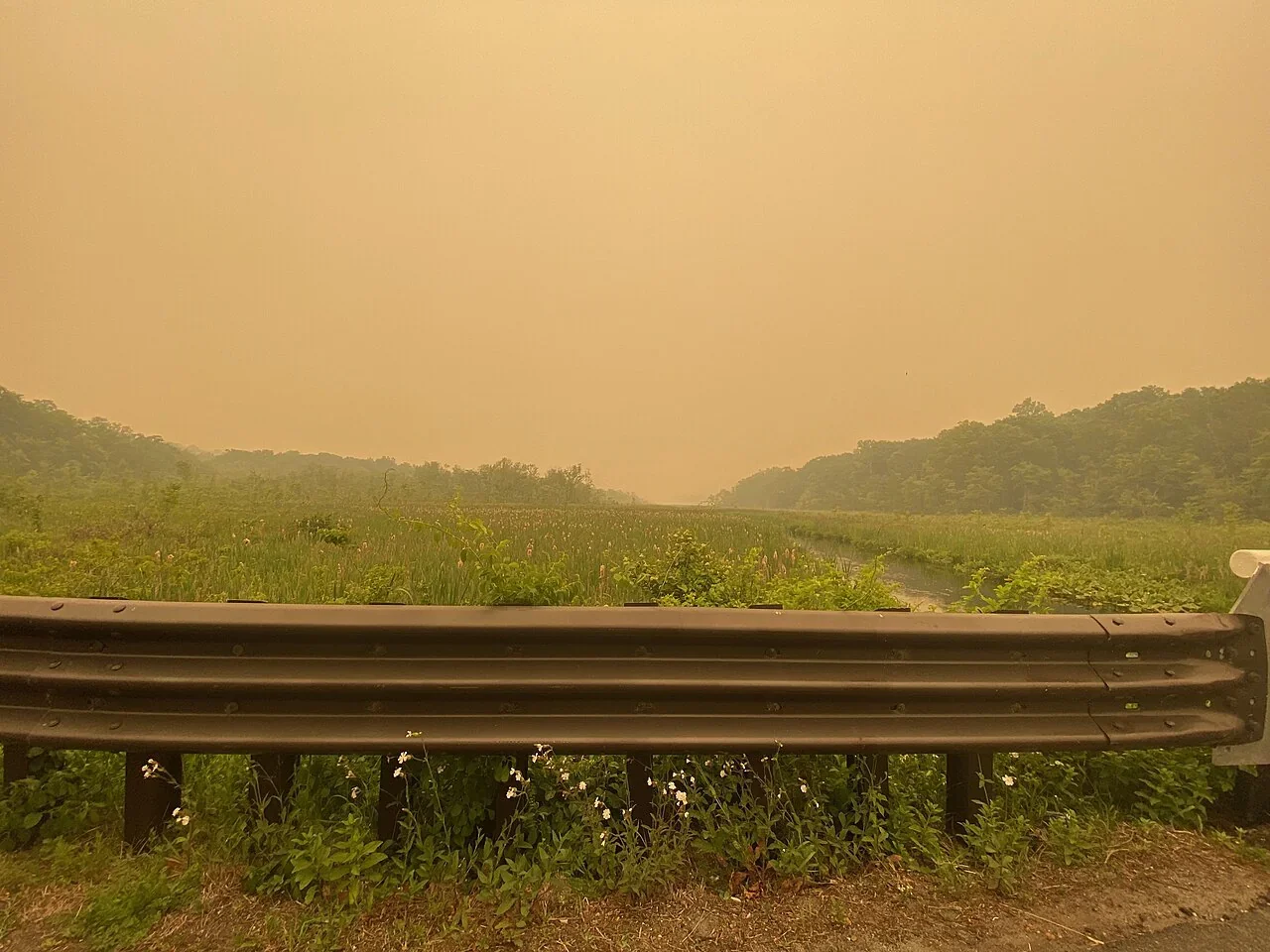
A town far from a wildfire can still see smoky skies because smoke does not stay at the fire line. Winds move it through the atmosphere, sometimes across hundreds or thousands of miles, so the source and the affected community may be widely separated. The haze is more than a distant view: smoke contains a mixture of air pollutants, including fine particles that are a major health concern.
The fire is a source, not a boundary
Wildland fire smoke is a complex mixture of air pollutants. The U.S. Environmental Protection Agency identifies fine particulate matter, known as PM2.5, as the pollutant of greatest health concern in smoke. Its FAQ notes that smoke can travel hundreds to thousands of miles and affect people far from the fire. [1]
That makes a fire map and a local air-quality reading answer different questions. A map can show where a fire is burning; an air-quality monitor or smoke map can help indicate what is reaching the air where you are. Being outside the evacuation area does not, by itself, tell you whether the air is smoky.
Winds move the plume
Once smoke rises into the air, winds can carry it away from the flames. The destination depends on atmospheric movement, so smoke may cross county or state lines and reach communities that have no direct fire activity. The path can change with conditions; a community that is clear at one point may need to check again later. [1]
A visible plume is not a precise measure of exposure. Haze can be apparent, but the amount of particulate pollution at ground level is better judged using air-quality information for your area. The EPA points people to the AirNow Fire and Smoke Map and app for current and forecast air-quality data, smoke plumes and information about individual fires. [1]
Fine particles can matter at a distance
PM2.5 refers to particles with an aerodynamic diameter generally no greater than 2.5 micrometres. The EPA calls this the pollutant of greatest health concern in wildfire smoke. The practical point is that the smoke arriving in a community is an air-quality issue even when the fire itself is far away. [1]
Smoke exposure can irritate eyes and airways, among other possible effects. The EPA notes that children, older adults, pregnant people and people with certain heart or lung conditions can face greater risk. It also advises everyone to take precautions when air quality reaches unhealthy levels, with more precautions for sensitive groups. [1]
Smoke varies through the day
Conditions are not fixed just because the fire is distant. The EPA says smoke concentrations can change quickly during a wildfire, which is why it recommends checking the Air Quality Index frequently for updates to current smoke levels and predictions. One morning's air reading is not a guarantee about the afternoon or the next day. [1]
For someone deciding whether to exercise outdoors, this means checking a current local reading rather than relying on yesterday's sky or a distant fire report. The plume location offers context; the local AQI and its guidance are more directly relevant to the air you may breathe.
Distance calls for information, not guesswork
If smoke is reported nearby, check official local air-quality information and follow the recommendations for the current AQI category. The EPA notes that when smoke is in unhealthy categories, people who must be outdoors should spend as little time outside as possible, reduce activity and take breaks in cleaner air if available. Its guidance also describes options for reducing smoke indoors. [1]
This is not a way to predict exactly when a plume will arrive. Atmospheric movement and changing fire conditions make that uncertain. The useful distinction is between the fire's location and the air quality where you live: monitor the second to decide what to do next.
Follow the evidence
Primary sources used in this story. Practical examples are illustrative unless a source states otherwise.
Read our editorial standards. Have a correction? Identify the article and relevant source in your feedback to the site owner.