tree day
Guide
Why seagrass matters?
Seagrass grows underwater, but its value is best understood through the broader roles of wetlands: habitat, water quality, flood storage and watershed connections. Learn what those roles suggest and what to check locally.
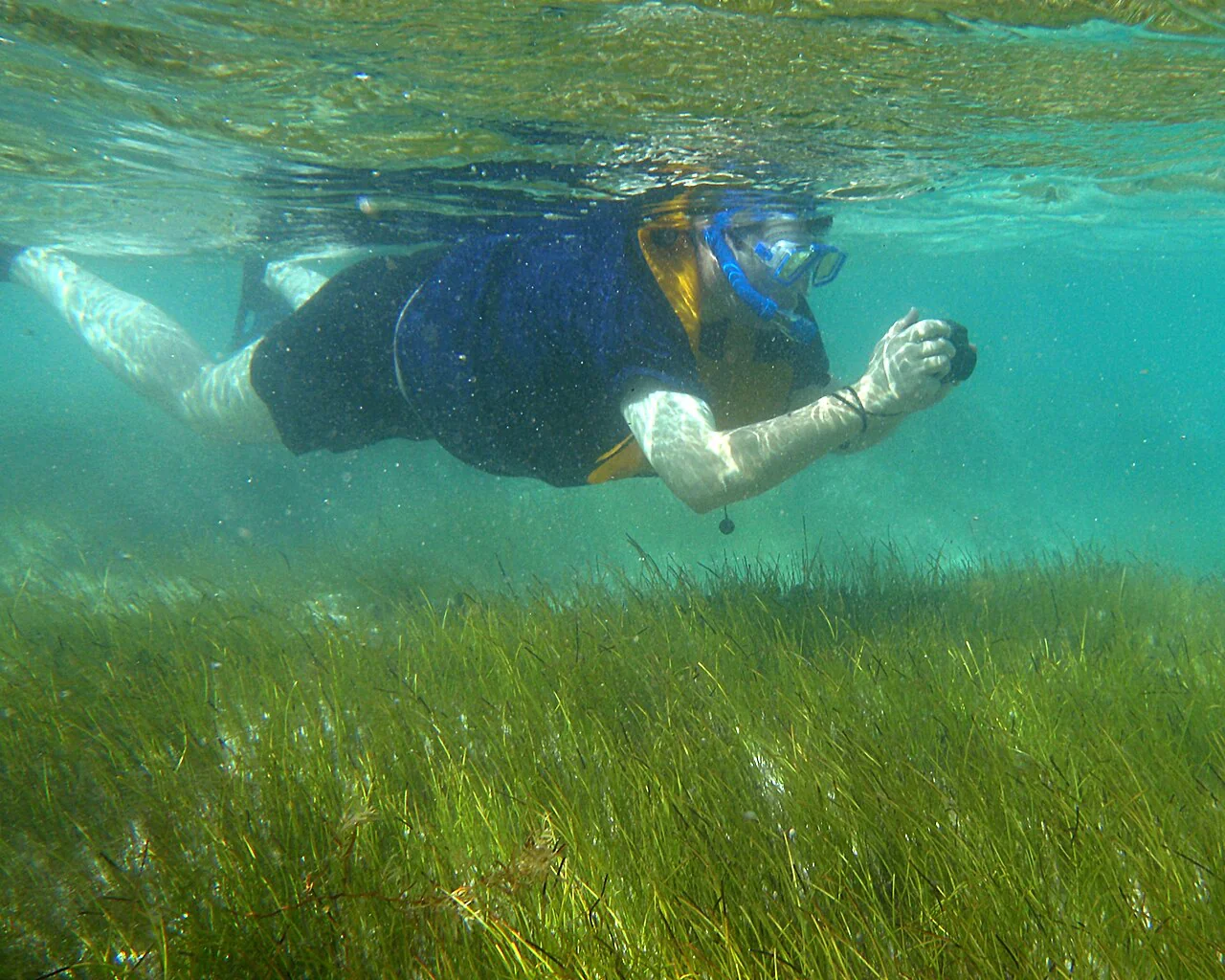
Seagrass matters because an underwater meadow can be part of a larger coastal wetland landscape, where shallow water, plants, animals and watershed flows meet. Wetlands provide habitat, help improve water quality, and store and slow water. Those are useful ways to understand why submerged vegetation deserves attention, while recognizing that broad wetland evidence does not answer every question about a particular seagrass bed. [1]
Look below the surface
A shoreline is not only the dry edge visible from a path or road. Shallow areas under water can also support plant life and animals, and conditions there are connected to what flows in from land. A watershed carries water, sediment and dissolved material toward a shared outlet. Because wetlands are part of watershed ecology, a change upstream may influence coastal habitat downstream. [1]
That connection helps explain why seagrass conservation cannot be reduced to a question of whether plants are present. The quality and movement of water, the shape of the coast, geology and climate all help determine which organisms inhabit a wetland. The right local description of a meadow therefore needs more than a photograph or a boundary on a map. [1]
Habitat is a network of relationships
Wetlands support food webs that begin with plants and microbes. When plant leaves and stems break down, the resulting organic material can feed small aquatic organisms, which may become food for larger fish, birds and other animals. Coastal wetlands are also important to fish and shellfish for food, shelter and breeding grounds. These are general wetland functions that help frame the value of coastal plant habitat. [1]
The practical point is that habitat has relationships and timing. An area can offer food or shelter to one species at one stage of life and matter differently to another. It would be a mistake to infer from the general importance of wetlands that every seagrass bed has the same species, abundance or role. Local ecological information is needed for those specifics.
Water quality starts across the watershed
Wetlands can improve water quality, but they are not isolated filters that make all incoming water safe. EPA describes water quality improvement as one of several wetland functions, alongside habitat and flood storage. The USGS explains that runoff can carry chemicals, sediment and sewage into rivers and lakes, and that human land use affects water quality. Taken together, these sources point to a practical connection: protecting coastal habitat also means paying attention to what enters the water upstream. [1] [2]
For example, a hypothetical neighborhood that reduces soil and fertilizer runoff may address part of the pressure on nearby waters. That does not establish the condition of a seagrass bed or prove that one action will restore it. It does show why land drainage, water quality and coastal habitat belong in the same conversation.
Why a meadow is not a flood-control guarantee
Wetlands can trap and slowly release water, while vegetation can slow floodwater and distribute it across a floodplain. That can reduce flood peaks and erosion, especially where wetlands remain connected to the wider landscape. The extent of a site’s contribution depends on its relationships with the watershed; it should not be described as a guarantee against a particular coastal flood. [1]
The same care applies to climate claims. Wetland plants and soils store carbon, according to EPA. That broad finding supports conserving wetlands, but it is not a measurement of the carbon stored by any individual meadow. A credible local claim should say what site was assessed and how the estimate was made, rather than borrowing a general statement as a precise number. [1] [3]
Choose a local way to help
If you want to protect seagrass, begin with local information: ask a coastal or watershed organization whether it tracks underwater habitat, water quality or shoreline projects in your area. Find out whether a proposed activity is intended to protect existing habitat, reduce pollution, or restore a damaged site. Those are related aims, but they call for different work.
Avoid entering shallow habitat or transplanting plants based on a general online guide. Local conditions and species matter, and an unsuitable intervention can waste effort. A useful next choice may be supporting a watershed project that reduces runoff, joining a shoreline monitoring effort led by local experts, or simply learning which coastal habitat is present nearby. Start with the locally documented pressure and choose an action designed for it.
Follow the evidence
Primary sources used in this story. Practical examples are illustrative unless a source states otherwise.
- US EPA: Why wetlands are important ↗
- USGS: Water Science School ↗
- NOAA Ocean Service: What is blue carbon? ↗
Read our editorial standards. Have a correction? Identify the article and relevant source in your feedback to the site owner.