tree day
Guide
Why mangroves matter?
Mangroves matter because coastal wetlands connect habitat, water quality and shoreline protection. Here is how those benefits work, what they can and cannot do, and how to make a useful local choice.
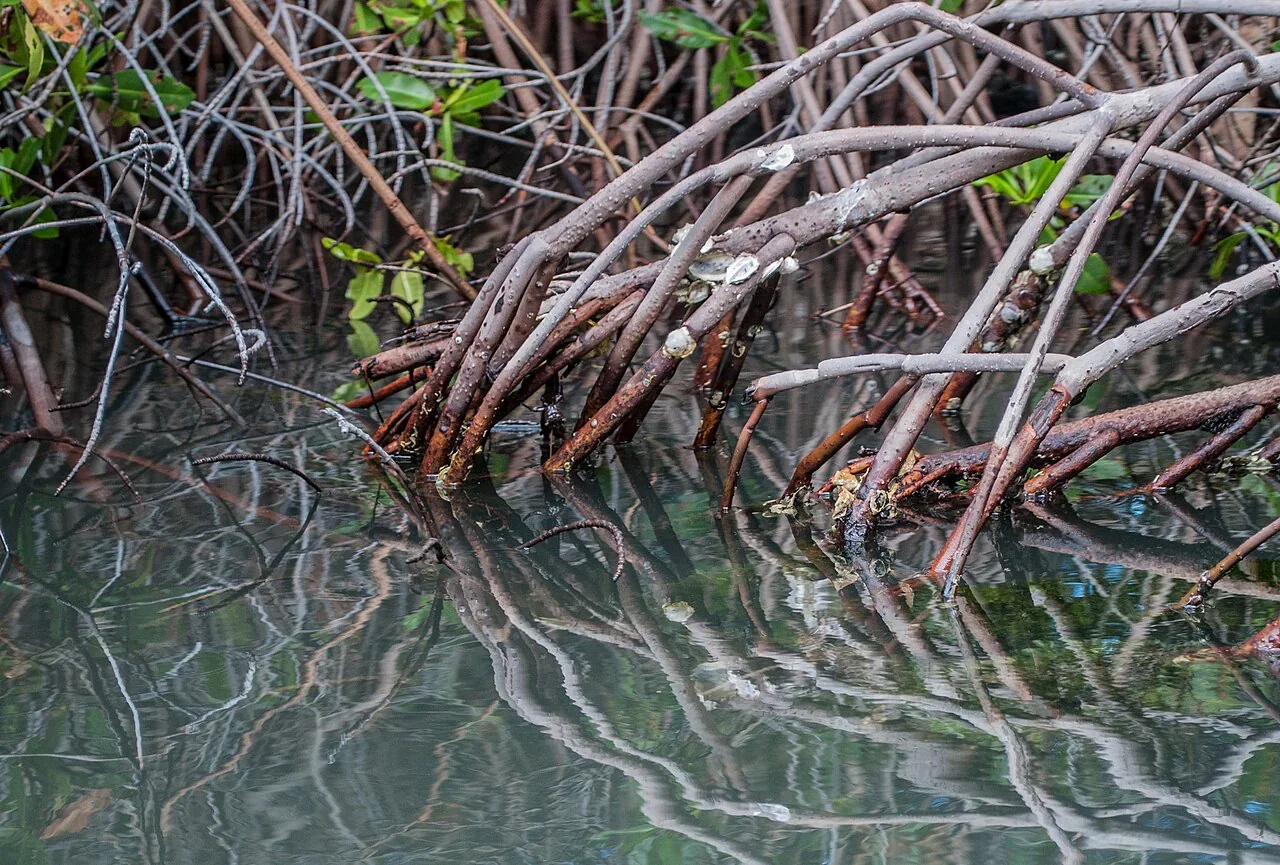
Mangroves are coastal trees growing where land meets salt water, but their importance is larger than the strip of shoreline they occupy. They are part of a wetland system: plants, soils, shallow water and wildlife interact, while water and material move through the surrounding watershed. Wetlands can improve water quality, shelter wildlife, store floodwater and help control shoreline erosion. Understanding those connected roles makes it easier to value mangroves without treating them as a magic barrier against every coastal risk. [1]
A living edge, not a wall
A mangrove fringe can slow water and help hold a shoreline in place through vegetation and root structure. That is a different kind of protection from a seawall. A wall draws a hard line; a wetland is a living edge whose condition depends on water, sediment, soils and plants. EPA describes wetlands as helping control shoreline erosion and notes that vegetation slows floodwater. Those functions can reduce pressure on nearby places, but they do not mean every mangrove stand prevents flooding or erosion in every storm. [1]
The distinction matters when choosing what to protect. A narrow patch cannot be assumed to replace a broad wetland, and the value of a site depends on its place in the landscape and its connections to other habitats and waters.
Shelter and food begin in shallow water
Wetlands support complex food webs. Plant material breaks down into organic particles that feed small aquatic organisms; those organisms can in turn support larger animals. Coastal wetlands also provide food, shelter and breeding habitat for fish and shellfish, while birds and mammals may use wetlands for feeding, nesting or resting. Mangroves are one kind of coastal wetland, so these broad wetland functions explain why a wooded shoreline can matter beyond the trees themselves. [1]
That is a system-level benefit: keeping habitat intact can preserve places where different parts of a life cycle occur. It does not establish that every species depends on every mangrove site, or that a particular local fishery will improve if one patch is planted. Local species and conditions matter.
Water quality and carbon are connected
Wetland plants and soils can help improve water quality, and wetland soils and plant communities store carbon. These functions are tied to the wetland’s ecological relationships, not simply to a count of trees. Water carries sediment and dissolved materials across watersheds, so a coastal wetland’s role is connected to what happens upstream as well as at the shoreline. [1] [3]
This is why protecting an existing wetland and creating a new planting are not automatically equivalent actions. A planting effort may not recreate the water movement, soils, or habitat relationships of a functioning wetland. Before supporting a project, look for a clear account of the site, its water connections, and how success will be judged over time.
What protection cannot promise
A wetland can store and slowly release water, spread floodwater and slow its movement. That can lower flood peaks and reduce erosion, but it is not a guarantee that nearby homes will remain dry. EPA emphasizes that wetland benefits depend on complex relationships with the watershed. The water cycle also changes with human land use and climate, affecting where water is stored, how it moves and how clean it is. [1] [2]
A common mistake is to treat planting as a quick substitute for addressing the cause of damage. If shoreline changes, drainage, pollution or land development affect the site, planting alone may not fix those pressures. Any proposal should explain what conditions the plants need and what other changes are part of the work.
A practical next step
If you live near a mangrove shoreline, start by learning whether the area is an intact wetland, a restoration site, or a place with a specific erosion or flooding concern. Ask a local conservation or water-management office which agency maintains maps and guidance for that location. A useful project description should identify the site’s wetland and watershed connections, explain what is threatening them, and distinguish expected benefits from guarantees.
For an everyday decision, support protection of existing coastal wetlands and avoid assuming that a generic planting kit is suitable. If you are considering a volunteer event, check whether local experts have selected native plants and a site where planting is appropriate. The most useful choice is the one that keeps the whole wetland functioning, rather than focusing on trees alone.
Follow the evidence
Primary sources used in this story. Practical examples are illustrative unless a source states otherwise.
- US EPA: Why wetlands are important ↗
- USGS: Water Science School ↗
- NOAA Ocean Service: What is blue carbon? ↗
Read our editorial standards. Have a correction? Identify the article and relevant source in your feedback to the site owner.