tree day
Guide
Why is the ocean warming?
The ocean is warming because it absorbs much of the excess heat trapped by human-driven climate change. Ocean circulation redistributes heat, while the resulting changes affect marine ecosystems and coastal conditions over time.
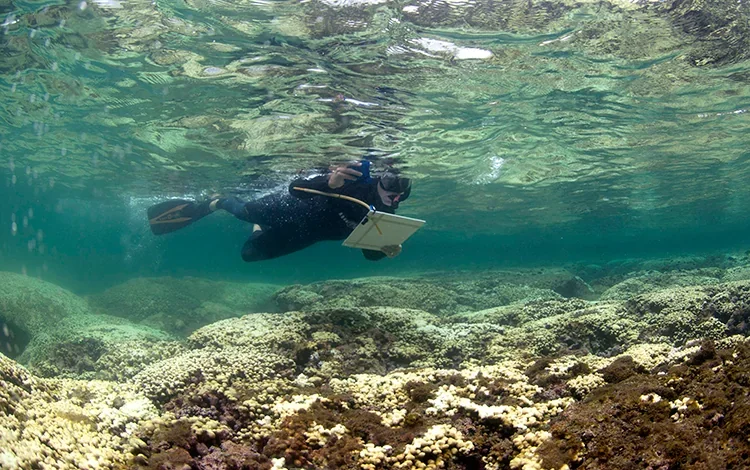
The ocean warms when it takes up heat from an atmosphere made warmer by rising greenhouse gases. It is not a uniform bath: currents mix and move heat, and sunlight and weather vary across the surface. But the basic mechanism is straightforward. Human activity changes the climate system’s energy balance, and the ocean absorbs a large share of the added heat, with consequences that unfold across seasons and generations.
The ocean takes up excess heat
Burning fossil fuels and other human activities add heat-trapping greenhouse gases to the atmosphere. As the climate warms, the ocean absorbs much of the extra heat. Because seawater moves and mixes, that heat does not remain at the surface in one place. Circulation transports it horizontally and vertically, producing differences by depth, current and region. [2]
The USGS source explains that the sun’s energy and gravity drive water’s movement, and that circulation mixes the oceans. It also states that climate change affects the water cycle and ocean conditions. [1] This source supports the role of circulation and climate change in water movement, but it does not quantify ocean heat uptake or provide a current temperature measurement.
Why warming is uneven
A global tendency does not mean every location warms at the same pace. Currents carry water and heat from one region to another. Wind and weather mix the upper ocean, while depth and local conditions influence how quickly heat penetrates. A short period in one coastal area can therefore differ from the longer pattern across the ocean.
This distinction is useful when interpreting a local report: a warm marine heatwave in one region is not itself a complete measure of global ocean warming, and a single cool observation does not negate the larger process. A useful comparison needs observations over many years and a clear account of the region, depth and season being measured.
Warming changes water and ecosystems
Heat changes the conditions marine organisms experience. The USGS notes that climate change is affecting water quantity and timing, changing precipitation patterns and the frequency, intensity and length of extreme events. It also identifies rising sea levels and ocean acidification among climate-related water changes, and says acidification damages shells and skeletons of many marine organisms. [1] Ocean warming and acidification are related consequences of climate change, but they are different processes: one concerns heat; the other concerns seawater chemistry.
For coastal communities, warming oceans matter as part of a wider set of changes in the water cycle and sea level. A particular effect depends on location and ecosystem, so a general explanation should not be treated as a forecast for one beach, fishery or storm season. Local conditions require local data and guidance.
An everyday way to picture the mechanism
Imagine a shallow pan and a deep basin receiving warmth from the same room. The shallow pan changes temperature more quickly; the deeper water mixes warmth through a larger volume. The analogy is imperfect because oceans are moved by currents, winds, tides and uneven heating, but it helps show why the surface can respond differently from deeper water and why heat can be redistributed.
The ocean’s circulation is not simply stirring in place. It moves water between regions and mixes layers, so a change in one place can connect to conditions elsewhere. The USGS describes this circulation as a process that mixes ocean water. [1] The analogy is useful for understanding movement, not for estimating the timing or size of real-world warming.
What to watch in a local context
If you live near the coast or depend on marine life, follow monitoring and advisories from local scientific and public agencies. A seasonal outlook does not predict the exact conditions at a particular shoreline, and a broad climate explanation cannot tell you when a local marine heat event will occur. For immediate conditions, use current local reports.
The larger process is driven by accumulated heat, so it is not reversed by one cool week. A grounded next step is to learn which local agency reports coastal water conditions, then use its current information when making decisions about recreation, fishing or habitat work.
Follow the evidence
Primary sources used in this story. Practical examples are illustrative unless a source states otherwise.
Read our editorial standards. Have a correction? Identify the article and relevant source in your feedback to the site owner.