tree day
Guide
Why is my new tree wilting?
A newly planted tree can droop from dry roots, excess water, heat or transplant stress. Learn how to inspect the root zone and choose a measured next step.
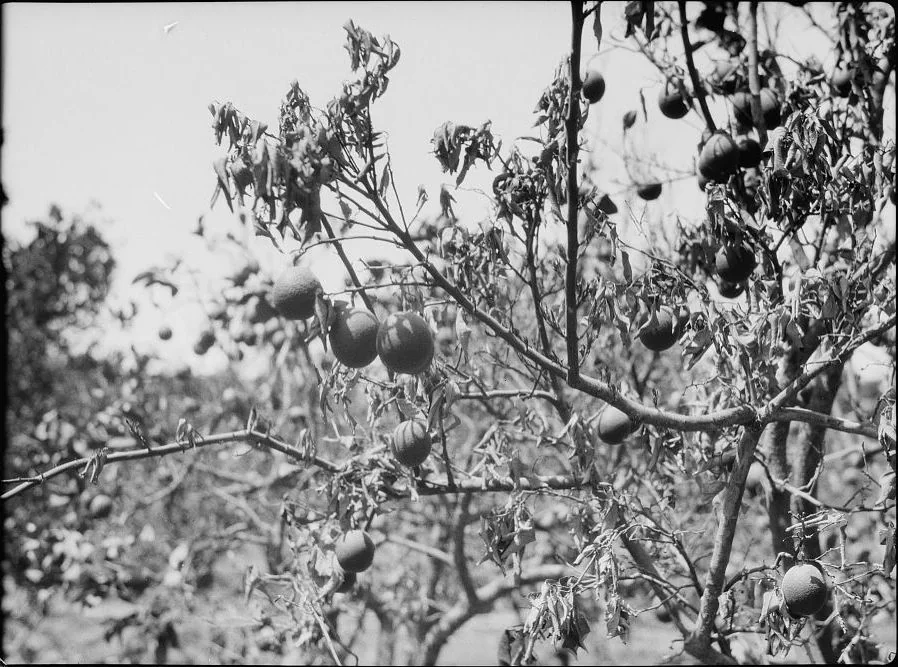
A newly planted tree with drooping leaves needs a check of the soil around its roots before it needs another bucket of water. Wilting can follow drying, waterlogged soil, or the stress of moving roots into a new site. Start by feeling below the mulch, then consider when the tree was planted, recent weather, and whether the planting depth and site suit the species.
Check the root zone first
Move mulch aside and feel the soil a few inches below the surface near the root ball. If it is dry there, water slowly over the root area so moisture can soak in rather than run off. If the soil is still wet or muddy, pause; adding water may leave roots short of air. Surface dryness alone is a weak signal because mulch can dry while deeper soil remains moist.
The right amount depends on the species, soil, weather and how the tree was planted. A newly planted tree needs water that reaches the root zone, but neither a fixed calendar nor a quick splash at the trunk answers whether it needs water today. [1] [2] [3]
Allow for transplant stress
Planting disturbs roots, which must begin growing into surrounding soil before the tree can draw water as effectively as an established one. Heat and a dry site increase the strain. A tree planted in summer faces more stress than one planted in a suitable dormant-season window; New York DEC identifies late winter or early spring before buds open, or late fall after dormancy and before the ground freezes, as its guidance for New York conditions. Local timing differs with climate and species. [2]
Look at the whole plant and the recent conditions, not one wilted afternoon. If leaves droop during hot sun but recover as the day cools, that pattern alone does not establish that the soil is dry. Check the soil before watering and continue to monitor the tree over the next several days.
Look for planting and site problems
A tree planted too deep may struggle, and roots that circle tightly in a container can have trouble spreading. The trunk flare, where roots begin to branch from the trunk, should sit at the soil line. If you suspect a buried flare, inspect gently rather than excavating aggressively around a stressed tree. [2]
Also consider whether the site fits the tree: soil type and drainage, light, wind exposure, and available root space all matter. A tree that repeatedly wilts despite appropriately moist soil may be poorly matched to its conditions or affected by a pest or disease. Regional tree problems vary, so an arborist or local extension service can help assess persistent symptoms. [1] [2]
Make one careful adjustment
Suppose a young tree in a mulched yard looks limp after a warm, dry stretch. You check below the mulch and find dry soil through the upper root zone. Slow watering over that area is a reasonable next step; then check again rather than watering repeatedly by the clock. If the soil is already damp, leave the hose off and investigate drainage, planting depth and exposure instead.
Mulch can buffer soil temperature and retain moisture, but piled mulch against the trunk can contribute to decay or pest problems. Keep a layer around the tree without letting it touch the trunk. Avoid adding fertilizer as a rescue measure: DEC says first-year fertilizing is unnecessary, and feeding does not solve a water or planting problem. [1] [2]
Know when to get help
If wilting persists, branches die back, leaves change unusually, or you cannot tell whether the root zone is staying saturated, record what you observe and ask a local arborist or extension office to assess it. Tree pests and diseases differ by region, making diagnosis difficult from a single symptom. [1]
For now, check soil moisture near the roots and compare it with the tree’s recent weather and planting conditions. Water only if that inspection shows the root zone is dry; if it is moist, look for another cause before intervening.
Follow the evidence
Primary sources used in this story. Practical examples are illustrative unless a source states otherwise.
- Arbor Day Foundation: Tree care and maintenance ↗
- New York DEC: How to plant a tree ↗
- Arbor Day Foundation: Planting bare-root trees ↗
Read our editorial standards. Have a correction? Identify the article and relevant source in your feedback to the site owner.