tree day
Guide
Why birds migrate?
Bird migration is a seasonal response to changing opportunities and conditions: birds move when a different place offers better prospects for food, breeding or survival, though the details vary by species.
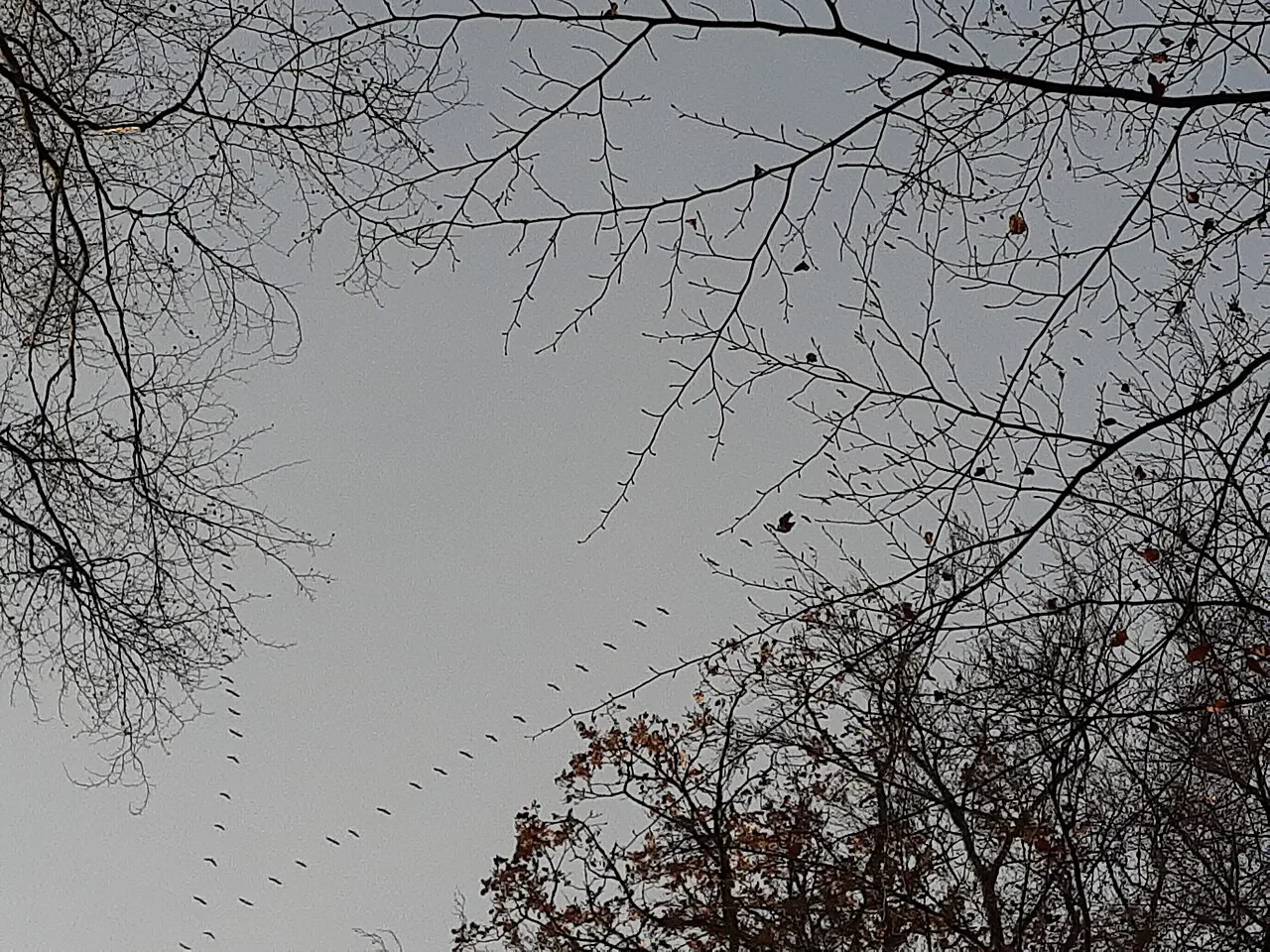
Birds migrate because the conditions they need change through the year. A place that offers food and suitable nesting space in one season may become harder to use later, while another region offers better prospects. Migration is not one uniform journey shared by every bird: species differ in where they travel, how far they go and whether they move at all.
A seasonal shift in opportunity
For a migrating bird, the relevant question is not simply whether a season has changed, but what the change means for daily life. Food may become scarce or harder to reach; temperatures and daylight shift; breeding opportunities may be better elsewhere. Moving can let a bird use different places for different parts of the annual cycle. The costs of travel are real, so migration makes sense only when the seasonal advantages are worth the risks for that species.
Earth’s seasons arise from the tilt of its axis. As the Northern Hemisphere tilts toward or away from the Sun, sunlight and day length change across the year. [1] Those changes provide a broad seasonal backdrop, but they do not explain every departure date or route. Local food, weather and a bird’s own biology also matter, and different species respond in different ways.
The trip is not the same for every bird
Some migrants travel long distances between breeding and nonbreeding areas; others move shorter distances or shift elevation. Some birds stay in one region year-round. Even within a species, individuals may vary in timing or route. A familiar bird that disappears from a yard may have moved, but its absence alone does not establish where it went or why.
Think of a hypothetical small bird that feeds on insects during its breeding season. If the local supply becomes less dependable as the year changes, another region may offer more food. That is a simple way to picture the trade-off, not a universal explanation for every migrant: diets, habitats and timing differ. For another species, the key seasonal advantage may be a place to raise young rather than a particular food source.
Migration involves costs as well as benefits
Travel uses energy and exposes birds to hazards along the way. A route must connect places that work for different parts of the year, and a stop along the way may matter if a bird needs to rest or feed. The journey is therefore not just an answer to cold weather. Some birds leave before the harshest conditions, and others do not make the same move at all.
This distinction helps with a common misunderstanding: migration is not a simple rule that all birds fly south when winter arrives. Hemisphere, species, habitat and food supply affect what movement makes sense. A bird may travel north or south, move locally, or remain where it is. The useful question is what seasonal resources that particular bird needs, rather than whether every bird follows one compass direction.
Reading a local disappearance carefully
A bird’s absence from a feeder or a familiar tree can have several explanations. It may have migrated, changed its local feeding area, or become less visible. A single missed sighting cannot settle the question. Repeated observations over the season—what species appear, when they are seen and in what habitat—give a clearer picture of local change.
If you want to observe movement, choose a fixed place and make short, regular visits. Note what you actually see and avoid turning a quiet day into a claim that a species has left the region. A field guide or local birding group can help identify species, but the basic record is useful on its own: date, place, weather and observation.
Let birds use the places they need
Birds need access to habitat across the year, including places where they can feed or rest. When watching them, keep your distance and do not follow or feed them; the National Park Service’s Leave No Trace principles recommend avoiding wildlife disturbance, especially during sensitive periods. [2] A good observation spot lets you watch without changing what the birds are doing.
Next time a seasonal visitor vanishes, note the date and the last place you saw it. Then keep watching the same area for other species and returning patterns. The observation will be more informative than guessing at a destination from a single empty branch.
Follow the evidence
Primary sources used in this story. Practical examples are illustrative unless a source states otherwise.
Read our editorial standards. Have a correction? Identify the article and relevant source in your feedback to the site owner.