tree day
Guide
Why are wetlands important?
Wetlands support wildlife, store floodwater, help improve water quality and provide natural products and places for recreation. Their benefits depend on local conditions and on connections to the surrounding watershed.
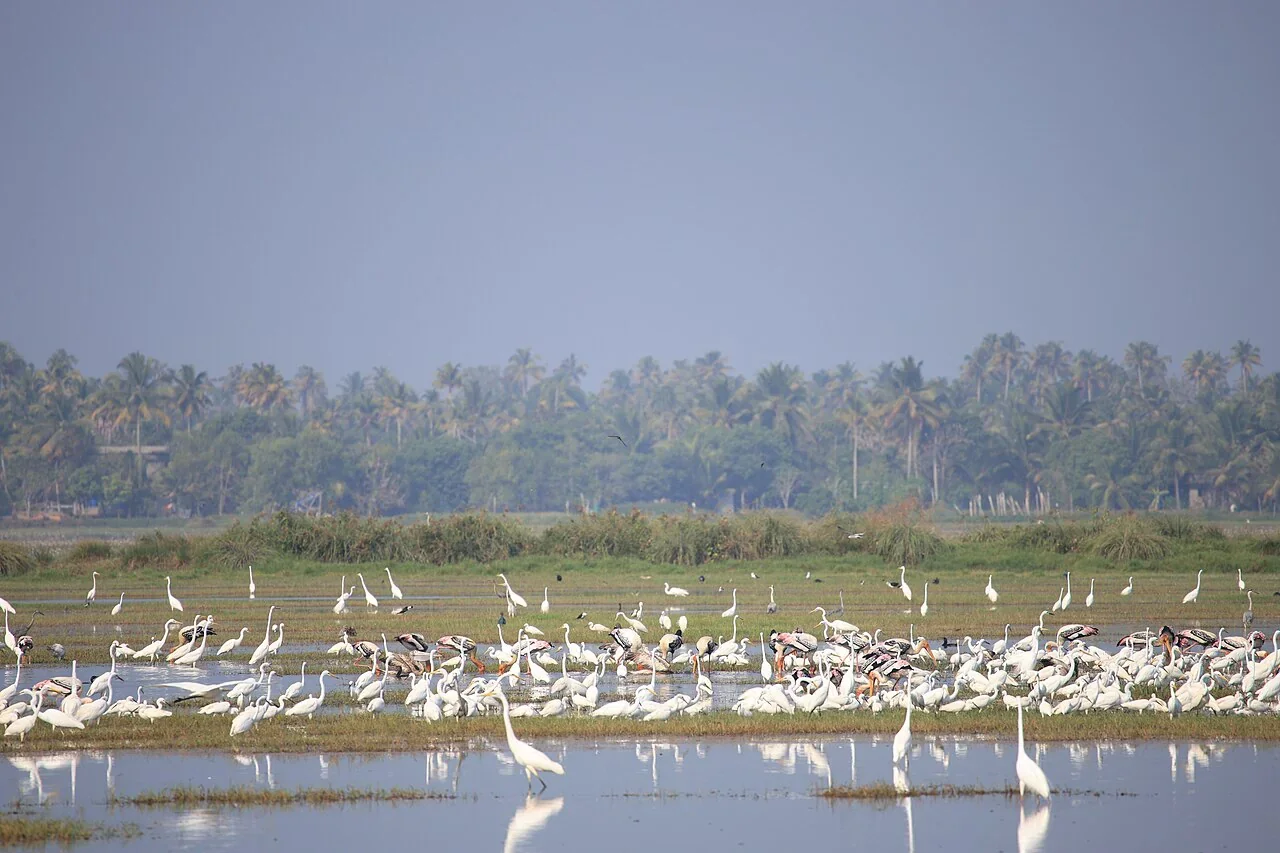
A wetland can be valuable even when it looks like a patch of mud, reeds or shallow water. It may hold floodwater, support wildlife, slow erosion and contribute to water quality, while also connecting to streams and other habitats. These benefits are not identical at every site: wetlands differ by climate, landscape, geology and water movement. Understanding what a particular wetland does helps explain why its loss can matter beyond its boundary.
Room for water when it arrives fast
Wetlands can store rain, snowmelt, groundwater and floodwater, then release some of that water gradually. Vegetation, roots and shallow terrain slow water moving across the landscape. By lowering the speed of flow, wetlands can reduce erosion and help lower flood peaks, especially where runoff from paved areas reaches low ground. [1]
This is a natural storage function, not a promise that a wetland will prevent flooding in every storm. The benefit depends on where the wetland lies in the drainage system and how much water it can hold at that time. EPA notes that wetlands and other forms of water retention can contribute to flood control. A community considering flood risk should treat wetlands as one element of a broader system. [1]
Water quality and the route downstream
EPA identifies water-quality improvement as a wetland function. As water moves through wetland soils and vegetation, the wetland can influence what continues downstream. How much it can do depends on the site and the incoming water, so wetlands should not be treated as a universal treatment system. [1]
The watershed connection matters here. A wetland receives water and materials from the landscape around it, and its functions depend on relationships with other ecosystems. Runoff from streets, farms and developed areas can carry sediment or other substances into waterways. Protecting a wetland is most effective when decisions also consider what drains into it. [2][1]
Habitat built from shallow water and food
Wetlands are productive habitats for many kinds of life, from microbes and insects to fish, birds and mammals. Shallow water and nutrient-rich conditions support the base of food webs. As leaves and stems decay, they form detritus that feeds small organisms, which may then be eaten by larger animals. [1]
Different wetlands support different communities. A coastal marsh and an inland wetland do not provide the same conditions, and wildlife may use a wetland for only one part of its life cycle. Some species depend on wetlands for breeding, feeding or shelter; migratory animals may use them as resting and feeding places. Their value is therefore both local and connected across landscapes. [1]
Benefits people can use and enjoy
Wetlands support natural products such as fish, shellfish, berries, timber and wild rice in some places, and they offer opportunities for recreation and aesthetic appreciation. Their value reaches beyond material use: a wetland can provide a nearby place to observe birds, learn about water or experience a different landscape. Which benefits apply depends on the wetland and region. [1]
A practical example is a neighborhood beside a stream and wetland. The wetland may slow runoff, provide habitat and create a public place for walking, while the stream carries water onward. If the wetland is filled or drained, those functions can change; impacts can extend to water flow, habitat and downstream conditions. The specific outcome depends on the site, so local assessment matters. [1]
Why the surrounding watershed matters
A wetland is not an isolated feature that works independently of its surroundings. Its plants and animals respond to water abundance and movement, while its flood, habitat and water-quality functions depend on broader watershed relationships. That means upstream land use can influence what enters a wetland, and downstream communities may be affected by changes in storage and flow. [1]
If a wetland near you is under pressure or simply unfamiliar, start by locating it on a watershed map and finding the streams or developed areas that drain toward it. Then consult local wetland information before proposing changes. Knowing the wetland’s role is a more useful first step than judging its worth by whether it appears dry, muddy or overgrown on one visit.
Follow the evidence
Primary sources used in this story. Practical examples are illustrative unless a source states otherwise.
Read our editorial standards. Have a correction? Identify the article and relevant source in your feedback to the site owner.