tree day
Guide
What to pack for a day hike?
Pack for a day hike by matching supplies to the route, weather, distance from help and the people in your group. A reliable core kit covers navigation, water, food, layers, light and basic first aid without pretending every trail needs identical gear.
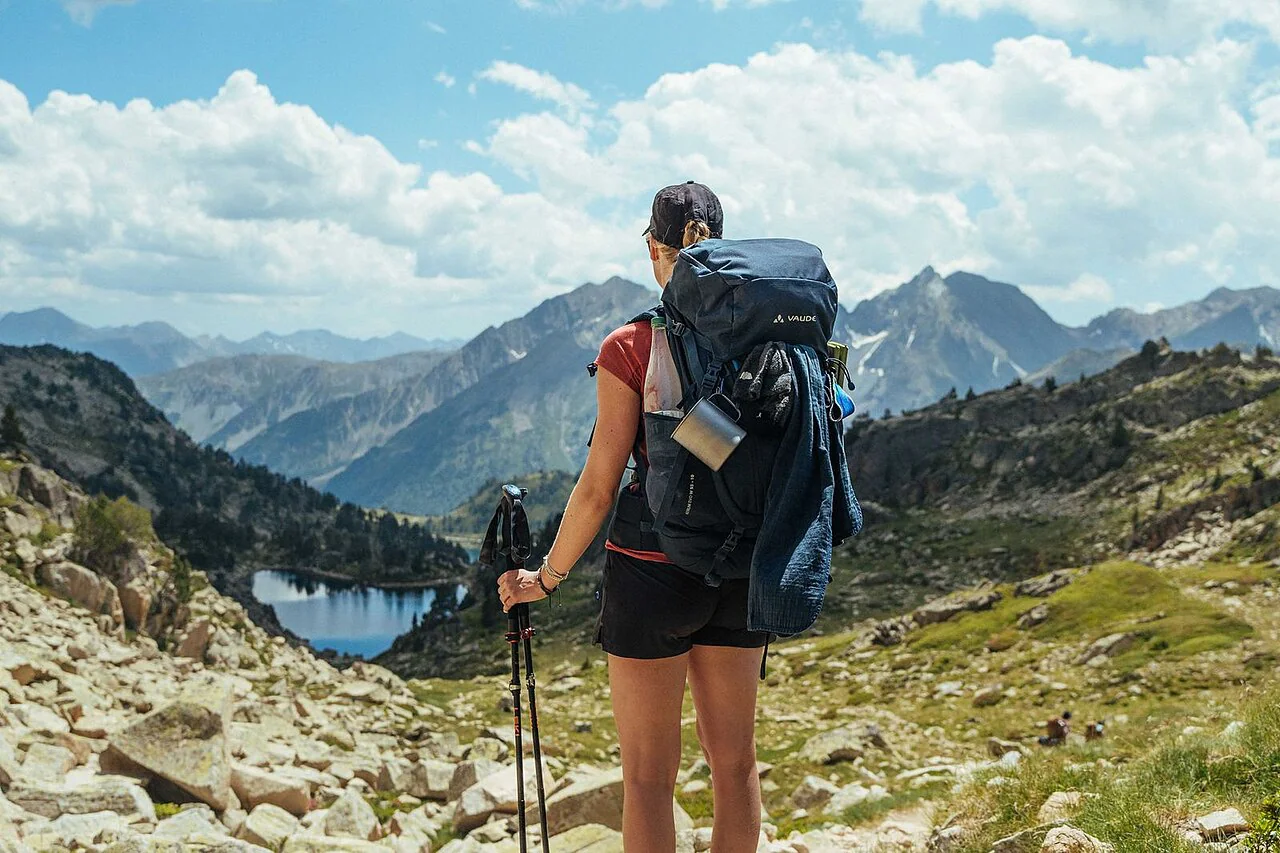
For a day hike, pack enough to navigate, stay comfortable through changing conditions and handle a small delay. The right kit depends on the route: a short, busy trail near town presents different needs from a remote ridge with no shade. Check the forecast and trail notices, then prepare for the conditions you may encounter rather than packing by habit. The National Park Service advises planning for extreme weather, hazards and emergencies before an outdoor trip. [1]
Start with route and weather
Read the trail description and map before choosing gear. Note distance, elevation, exposed sections, water access, expected daylight and whether the route has reliable phone service. Look for closures or special rules, too. The NPS recommends learning an area’s regulations and special concerns before visiting. [1]
Check local conditions close to departure. A forecast can change, and a hot, exposed path calls for different clothing and water planning than a cool wooded route. The EPA notes that vegetation can have a cooling effect in urban environments, but a shaded trail can still become hot; use local guidance for heat and make a plan to turn back if conditions are beyond the group’s comfort. [2]
Carry the essentials you will use
Bring water suited to the route and your group, plus food if the hike overlaps a meal or lasts long enough to need a snack. There is no single volume that fits every person, temperature or effort level, so consider the route and access to reliable refill points. Do not assume a stream is safe to drink untreated.
Wear footwear appropriate to the surface and carry a layer for conditions that could shift. Sun protection matters on exposed trails; a rain layer may matter more where showers are expected. Keep a map or route information available offline if service may be absent. A charged phone is useful, but it should not be the only way you know where you are.
Add a small backup kit
A compact light, basic first-aid supplies, and a whistle or other way to signal can help if a hike takes longer than expected. What belongs in a first-aid kit depends on the group’s needs and the length or remoteness of the trip. Carry any personal items you already know you may need, and know how to use what you bring.
For a hypothetical two-mile loop close to home, a hiker might carry water, a snack, a light layer, a map and a small first-aid kit. A longer, remote route could require more food, warmer clothing, extra navigation backup and a clearer emergency plan. The point is to scale the kit with exposure and consequences, not distance alone.
Keep the pack organized and light
Put items used during the walk where they are easy to reach, and secure loose objects so they do not fall onto the trail. Repackage food to reduce unnecessary packaging, as the NPS recommends. [1] Carry out all wrappers and food scraps; the NPS advises packing out trash and leftover food. [1]
Overpacking can make a modest trail tiring, but cutting basics to save weight creates a different problem. A common mistake is packing extra clothing while forgetting a map or light. Lay everything out before departure and ask what each item is for, while keeping a margin for a slower return or weather change.
Leave a plan behind
Tell someone where you are going and when you expect to return, particularly for a remote hike. Set a turnaround time that leaves enough daylight to retrace the route. If the forecast worsens or the trail is more difficult than expected, turning around is a sound use of the plan rather than a failure.
Before leaving, make one final check of the route, conditions and essential items. Keep the kit simple enough to carry comfortably and complete enough to meet the plausible needs of that specific hike.
Follow the evidence
Primary sources used in this story. Practical examples are illustrative unless a source states otherwise.
- US National Park Service: Leave No Trace seven principles ↗
- US EPA: Using trees and vegetation to reduce heat islands ↗
Read our editorial standards. Have a correction? Identify the article and relevant source in your feedback to the site owner.