tree day
Guide
What is ocean acidification?
Ocean acidification is a change in seawater chemistry as the ocean absorbs carbon dioxide, making the water less alkaline. It can make shell and skeleton formation harder for some marine organisms, though effects differ by species and conditions.
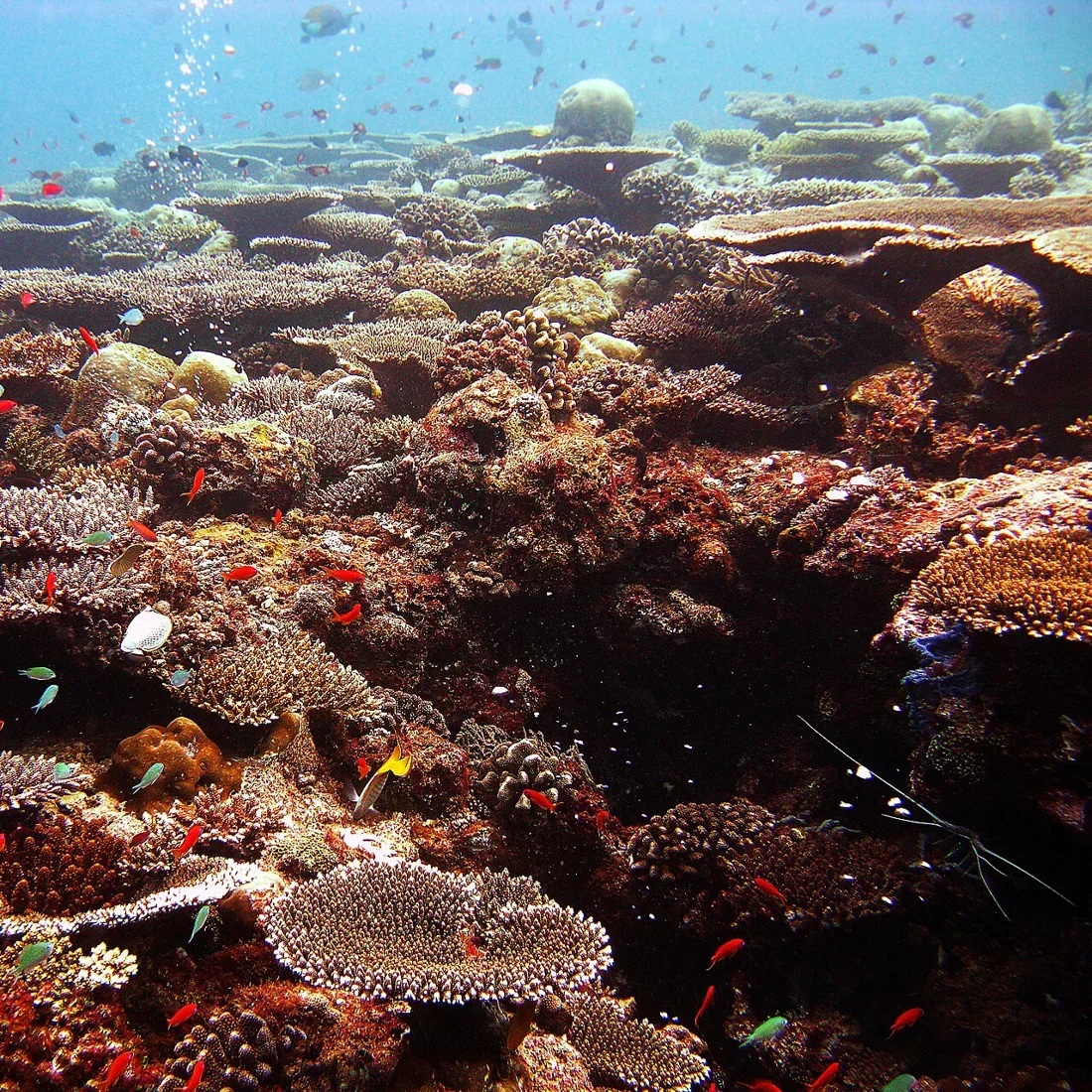
Ocean acidification is a gradual shift in seawater chemistry caused largely by the ocean absorbing carbon dioxide from the atmosphere. It does not mean the ocean has become an acid bath. Instead, seawater becomes less alkaline, which can affect the chemistry organisms use to build shells and skeletons. The change is distinct from ocean warming, even though both are linked to climate change.
What the term means
The ocean absorbs carbon dioxide from the atmosphere. When that carbon dioxide dissolves in seawater, it changes the balance of dissolved carbon compounds and lowers pH. Because seawater remains alkaline, “acidification” describes a direction of change rather than a claim that ordinary ocean water has turned acidic. [2]
The USGS water-cycle page identifies ocean acidification as a climate-related change and says it damages the shells and skeletons of many marine organisms. [1] It does not provide the chemistry, a rate of change or a measured pH value, so those details should be checked against an appropriate scientific source when needed.
Why chemistry matters to shells
Many organisms use dissolved minerals to build shells or skeletal structures. Changes in seawater chemistry can affect how available those building materials are and how much energy an organism must spend maintaining them. The outcome depends on species, life stage, habitat and other local conditions; it is not a uniform effect on every marine organism.
A shell-forming animal in a coastal habitat experiences its surrounding water directly. If conditions shift, the organism may have to cope with that chemistry alongside temperature, food availability and other pressures. The USGS source supports the broad point that shells and skeletons of many marine organisms are damaged by ocean acidification, but it does not identify particular species or quantify the consequences. [1]
Not the same as ocean warming
Warming and acidification are often discussed together because both are driven by human-caused climate change and affect marine environments. They work through different mechanisms. Warming is a change in temperature as the ocean absorbs excess heat; acidification is a change in chemistry as it absorbs carbon dioxide. One can occur alongside the other, but a temperature reading alone does not measure acidity.
The distinction is practical: monitoring temperature cannot substitute for measuring seawater chemistry, and a chemistry observation does not tell you the ocean’s heat content. The USGS describes climate change as affecting water quantity, timing and quality, and separately names ocean acidification as a water-quality impact. [1]
How a local observation fits the larger picture
Suppose a coastal researcher or agency reports a change in seawater chemistry at a particular station. That measurement describes conditions at that place and time. It does not automatically show the exact exposure every organism experiences across a region, nor predict how a fishery will respond. Water moves and mixes, and local environments differ.
For the same reason, a shell found on a beach is not enough on its own to diagnose acidification. Many factors influence shell condition, and a conclusion needs appropriate measurements and evidence. The reference gives the broad mechanism’s ecological relevance, not a field method or diagnostic test. [1] Follow the issuing agency’s explanation of what was measured and how it relates to nearby habitats.
What readers can do with the information
For everyday choices, separate a general climate explanation from local seafood, recreation or habitat advice. Use current guidance from local environmental or public health authorities for water quality and coastal conditions. If you are involved in shoreline restoration or education, explain the difference between warming and acidification so people do not mistake one measurement for the other.
Reducing greenhouse gas emissions addresses the larger climate pressures behind both changes, though no single household action immediately resets ocean chemistry. A useful next step is to find a trusted local marine monitoring source and learn which measurements it tracks, especially if you make decisions tied to a specific shoreline.
Follow the evidence
Primary sources used in this story. Practical examples are illustrative unless a source states otherwise.
Read our editorial standards. Have a correction? Identify the article and relevant source in your feedback to the site owner.