tree day
Guide
What is a tree root flare?
The root flare is the transition where a tree’s trunk broadens and its first main roots emerge. Its position at planting helps you spot whether a tree may be buried too deeply.
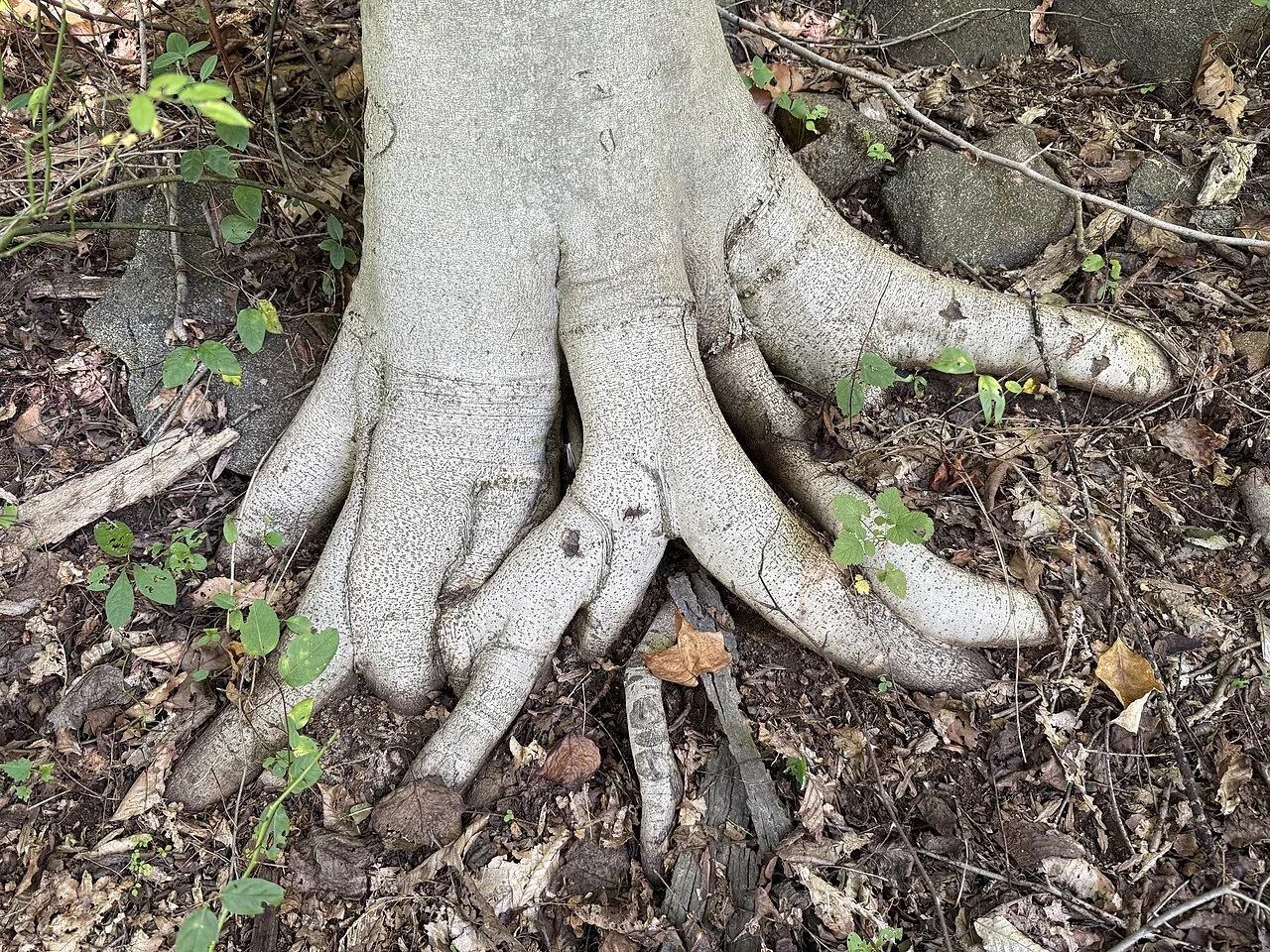
A tree’s root flare is the widening at the base of the trunk where the trunk transitions into the first main roots. On a well-sited planting, that transition should be visible at the soil line. If the trunk looks like a straight pole disappearing into soil, the flare may be buried, though mulch or surrounding grade can hide it.
Recognize the transition
Follow the trunk downward. Instead of continuing at the same width into the ground, a tree with a visible flare widens as it meets the soil, and larger roots begin to branch outward. Fine feeder roots extend farther into the soil, but the flare is the trunk-to-root transition, not every root near the surface.
New York DEC describes the trunk flare as the point where roots begin to branch from the trunk and says it should be at the soil line when planting. This gives a practical reference for assessing planting depth. [2]
Why planting depth matters
If a tree is planted too deeply, it can struggle to grow and its life may be shortened, according to DEC’s planting guidance. The flare’s position helps prevent that simple but consequential error. It also gives you a landmark when checking whether later soil or mulch has been piled against the trunk. [2]
The exact appearance varies by tree and by how much soil covers the base. A flare can be difficult to see on a small nursery tree or when lawn grade is uneven. Do not mistake a root visible at the surface for proof that the whole tree is correctly planted; look for the trunk’s natural widening and where the major roots begin.
Check without damaging roots
If the base is covered, gently move loose mulch away from the trunk and inspect the soil line. Avoid scraping bark or digging deeply around a young tree. If soil seems to cover the flare, take a small, careful look rather than excavating a wide area; a professional can assess whether correction is appropriate.
For a newly planted tree, the best reference is the planting instructions for its form and species. DEC advises planting at the root flare and backfilling with existing soil; it cautions that trees planted too deeply may struggle. [2]
Keep mulch clear of the trunk
Mulch helps insulate soil, retain moisture and reduce competition from grass, but it should not touch the trunk. Both the Arbor Day Foundation and DEC advise keeping mulch off the trunk or flare. A broad, modest layer around the tree can buffer the root zone without covering the transition. [1] [2]
A common mistake is building a cone of mulch against the trunk, sometimes called a mulch volcano. It hides the flare and creates prolonged contact between moist mulch and bark, conditions associated in the guidance with mold, pests and decay. Pull the mulch back so the base remains visible. [2]
Use it as one clue, not a diagnosis
A buried flare is a useful reason to investigate planting depth, but it does not explain every case of wilting or decline. Watering, drainage, species fit, soil and regional pests or disease can all matter. If the tree is mature or appears unstable, do not make a major excavation based on a quick visual check; ask an arborist to evaluate it. [1]
For a young tree, inspect the trunk base and clear mulch away if it touches the bark. If the flare appears buried under soil, get local professional advice on how to expose it safely before removing substantial soil.
Follow the evidence
Primary sources used in this story. Practical examples are illustrative unless a source states otherwise.
Read our editorial standards. Have a correction? Identify the article and relevant source in your feedback to the site owner.