tree day
Guide
What is a sustainable drainage system?
A sustainable drainage system manages rain close to where it falls, using storage, infiltration or slower release to reduce fast runoff. Understand its purpose, limits and the local checks to make before building one.
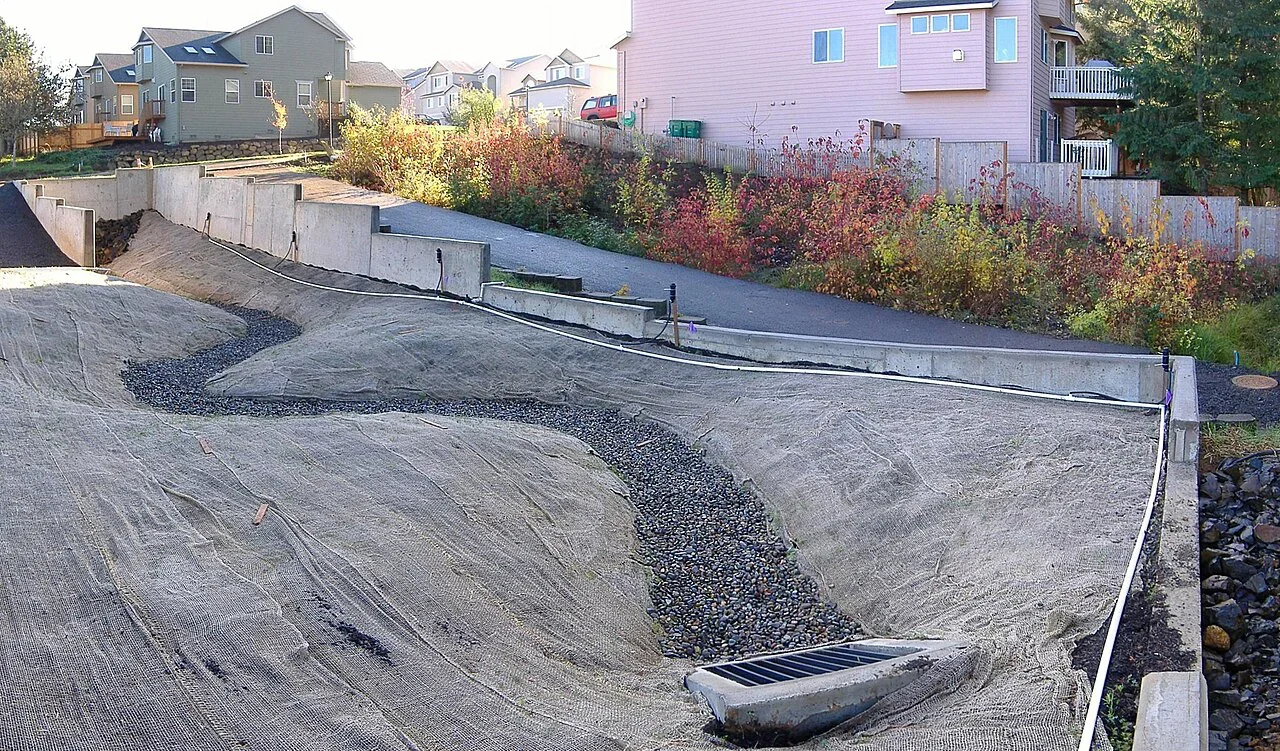
A sustainable drainage system manages rainwater so it does not rush straight from roofs and pavement into a drain or stream. It may use planted areas, shallow storage, permeable surfaces or other features to slow, hold or infiltrate water. The central idea is to work with water movement across a site, while recognizing that soil, slope, groundwater and local rules determine which method is suitable. [1]
Why slow runoff at all?
Rain moves across land as runoff or enters the ground through infiltration. The USGS explains that urban surfaces can contribute runoff carrying sediment, chemicals and sewage into rivers and lakes. EPA describes wetlands as storing floodwater and slowing its movement; wetlands within and downstream of urban areas can help counter increased runoff from pavement and buildings. These sources show why drainage design can affect both local flooding and water quality. [1] [2]
A sustainable system aims to manage water near its source, rather than relying only on a distant pipe to move it away. That does not mean every site should hold all rainfall or that infiltration is always safe. The goal is a design suited to the place and the water it must handle.
Common approaches, different jobs
A planted depression or rain garden can temporarily hold runoff and allow some water to soak into soil. A rain barrel stores roof runoff for later use. Permeable paving can allow water to pass through a surface where the underlying design and soil are appropriate. A wetland or retention area can store water over a broader landscape. These examples are concepts, not a construction prescription: each depends on local conditions and maintenance.
The distinction between storage and infiltration is important. A feature may hold water and release it slowly without sending much into the soil; another may be designed to promote infiltration. The USGS describes infiltration as a pathway into the ground and groundwater recharge as movement into aquifers. Whether infiltration is desirable depends on soil, contamination concerns and site conditions. [1]
A hypothetical roof-runoff example
Imagine a home whose downspout sends rain across a paved walkway toward a street drain. The owner could first check whether a rain barrel is suitable, or whether a planted area could safely receive some roof runoff. If the site has compacted soil, a steep slope, a nearby foundation or a high water table, the proposed feature may need a different location or design. If a barrel is used, it needs an overflow route that does not send water toward the house or a neighbor.
This is a planning example, not a claim that one feature will prevent flooding. Before digging, arrange utility location and check local drainage guidance. Local rules for rainwater capture and discharge vary, and some sites require professional design.
Trade-offs and maintenance
A system that captures water can also create problems if it is undersized, poorly placed or neglected. Sediment can clog an inlet; plants may need care; stored water needs safe handling; and overflow should have a deliberate path. Infiltration near a foundation can be inappropriate, while directing water into a low area may affect adjacent property. A project should account for these conditions before installation.
A frequent mistake is choosing a feature by appearance alone. A decorative basin is not necessarily designed for runoff, and a permeable surface cannot work as intended if its base or underlying soil is unsuitable. Sustainable drainage is a performance choice, so ask what volume it is meant to manage, how overflow works, who maintains it and what conditions would make it unsuitable.
Pick a first step that fits
Walk the site during or soon after rain from a safe place and note where water gathers, where it flows, and whether it carries soil. Check local stormwater guidance or consult a qualified drainage professional if water affects buildings, slopes or neighboring land. For a small, straightforward action, EPA WaterSense recommends fixing leaks and sweeping hard surfaces instead of hosing them; these habits reduce avoidable water loss and runoff. [3]
The best next move may be as simple as correcting a leaking irrigation line or redirecting a downspout after checking local advice. For a larger retrofit, compare options by site fit and maintenance demands, not by a universal promise of flood prevention.
Follow the evidence
Primary sources used in this story. Practical examples are illustrative unless a source states otherwise.
Read our editorial standards. Have a correction? Identify the article and relevant source in your feedback to the site owner.