tree day
Guide
What are microplastics?
Microplastics are tiny plastic particles, often discussed as fragments, fibers or other small pieces. Their small size makes them easy to overlook, but it does not reveal where they came from or what exposure means in a particular setting.
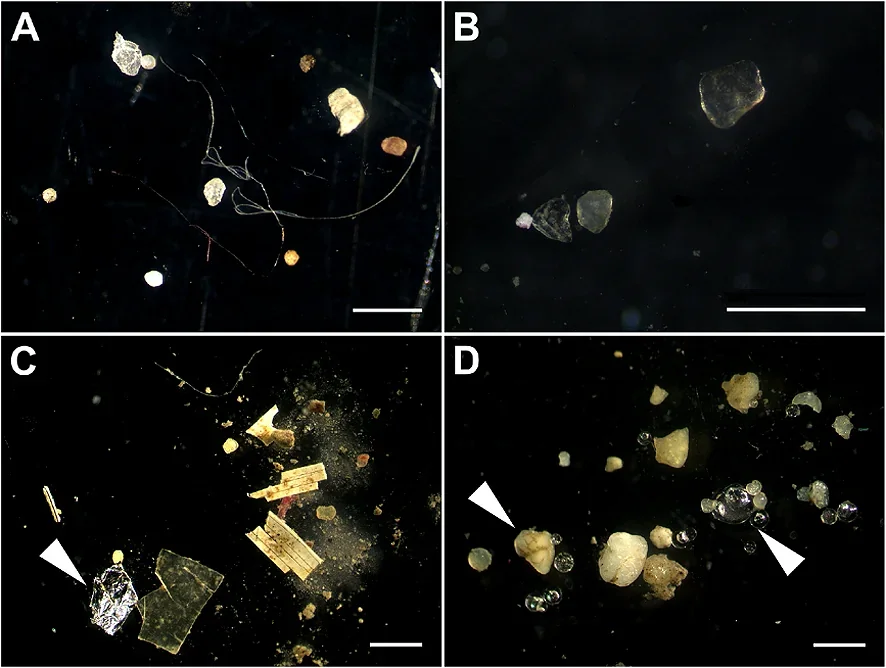
A plastic item can leave your hands and still remain in the environment in a less visible form. As larger pieces break down, they can become smaller fragments; other plastic particles are already small when released. These are commonly called microplastics. The term describes particle size, not a single source, chemical composition or level of risk, so context matters when interpreting a claim about them.
Small particles, many possible forms
Microplastics are tiny pieces of plastic. They may be fragments, fibers or other particle shapes, and can vary in size, material and origin. The label is useful because it distinguishes particles too small to notice easily from larger discarded items, but it does not tell you exactly what a particle is made of or how it entered a given place. [3]
The USGS water-cycle source explains that runoff and streamflow move materials across the landscape and that human activity affects water quality. [1] It does not define microplastics, set a size boundary or describe their health effects. For that reason, the safest plain-language definition here is broad: small plastic particles whose exact properties depend on the material and setting.
Some begin as larger objects
A bottle, wrapper or other plastic object exposed outdoors can be worn, cracked or broken into smaller pieces over time. Movement by water can carry plastic along, while contact with surfaces can change its shape. A particle can become harder to see without ceasing to be plastic.
This is different from a product or material that releases small plastic particles directly during use or disposal. The references do not document specific sources such as clothing, tires or personal-care products, so those should not be assumed in every case. If a report identifies a source, check whether it is describing a measured finding, a possible pathway or a general example. The distinction matters because prevention depends on where the particles originate.
Waterways can move particles out of sight
Runoff can carry loose material from developed land into drains and streams, and streamflow can move it downstream. The USGS describes these water pathways and explains that rivers, lakes, wetlands and groundwater are connected parts of the water cycle. [1] The same broad movement can help explain why a particle released inland may later be found in a different part of a watershed.
Movement is not the same as a confirmed destination. A particle may be retained in soil, sediment or vegetation, or transported onward; the references do not quantify microplastic transport or identify where particles accumulate. When reading a claim, separate what was found at a sampling location from conclusions about the route, source or effect.
What the word does not tell you
Calling something a microplastic does not by itself establish its toxicity, exposure level or effect on a person or ecosystem. Those questions depend on evidence about particle size and composition, the organisms or people exposed, and the amount and route of exposure. The source set for this article does not provide that evidence, so it cannot support a conclusion that every microplastic finding carries the same risk.
Likewise, a photograph of plastic fragments does not establish whether they are microplastics under a particular research or regulatory definition. Definitions and measurement methods can vary. Look for the study or agency’s stated size range, sampling method and limits before comparing results across locations or reports.
Reduce the routes you can see
You can still act on visible plastic litter, even when the smaller-particle pathway is uncertain. Keep plastic waste contained, pick up litter when safe, and prevent material from washing into street drains. EPA WaterSense recommends sweeping outdoor paved surfaces rather than hosing them, which also avoids using water to push loose material into runoff. [2] These are practical steps to reduce litter movement, not proof that they eliminate microplastics.
If you encounter a claim about microplastics in a particular water source or product, check who measured it, what they counted and what the result does and does not show. For everyday prevention, secure waste and keep it out of drainage pathways; for risk questions, rely on current guidance from the relevant public health or environmental authority.
Follow the evidence
Primary sources used in this story. Practical examples are illustrative unless a source states otherwise.
- USGS: Water Science School ↗
- US EPA WaterSense: Start saving ↗
- NOAA Ocean Service: What are microplastics? ↗
Read our editorial standards. Have a correction? Identify the article and relevant source in your feedback to the site owner.