tree day
Guide
Tree roots near foundations?
Roots near a foundation are a reason to assess the site, not assume that a tree is damaging a house. Look at soil, drainage, tree size and visible changes, then get qualified local advice before changing roots or removing a tree.
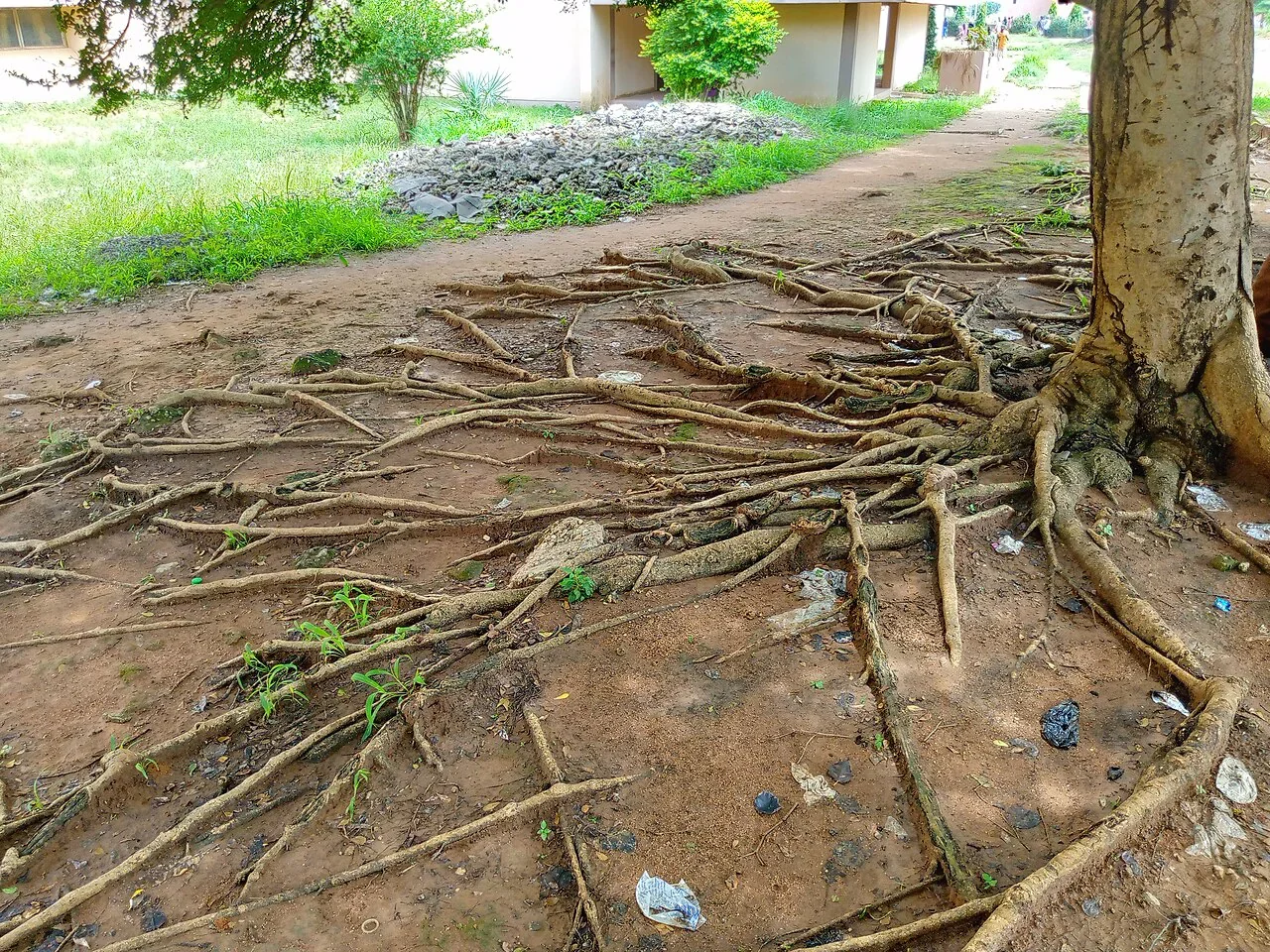
A tree beside a house does not automatically mean its roots are damaging the foundation. Roots generally grow through available soil, and the practical concern depends on the tree, site and what is happening around the building. Before taking action, distinguish a tree that simply stands nearby from signs of movement, drainage problems or direct root contact that merit professional assessment.
Proximity alone does not diagnose damage
A tree’s crown can suggest where its roots may extend, but it does not show exactly where roots are or what they are doing. New York’s Department of Environmental Conservation says most roots are within the top 18 inches of soil and extend beyond the canopy’s width. [2] This is useful context for planning, not proof that roots have reached or harmed a particular foundation.
The references do not provide a universal safe distance between trees and foundations, nor a diagnostic test for root-related damage. That distinction matters: removing or cutting roots based on proximity alone could harm a tree without addressing a building problem.
Look at the whole site
Consider the tree’s species and mature size alongside the foundation, paving, drainage and soil. A tree’s needs begin with choosing a location where it can thrive, and the Arbor Day Foundation advises considering mature height and spread, soil conditions and site limitations. [1] The DEC also recommends assessing whether a site is wet or dry and noting nearby buildings and other structures. [2]
If you see a new crack, lifting pavement, persistent water near the house or a change in how doors and windows fit, document what you observe and when it began. Those observations do not establish the cause; they help a building professional assess the condition. Avoid digging near the foundation to search for roots, since excavation can disturb both soil and tree roots.
Roots and water are connected, but not simply
Roots need air, water and nutrients in soil, and their distribution depends on the conditions available around the tree. The DEC describes roots as extending past the canopy and notes that restricted root space can be a challenge in urban settings. [2] That helps explain why a tree planted in a narrow strip may interact with its surroundings differently from one growing in open soil.
Still, a nearby tree should not be blamed for every wet basement or crack. Surface runoff, grading, plumbing and building conditions can also matter, and the tree-care sources do not establish causes for a particular home. A foundation professional can evaluate structural concerns; an arborist can assess the tree and its roots.
Do not cut roots as a first response
Cutting a major root can affect a tree’s stability and health, while removing soil near a foundation can disturb the ground. The source guidance stresses that early care influences a tree’s shape, strength and lifespan, and recommends contacting an arborist when concerned about tree health. [1] It does not provide a safe root-cutting prescription for trees near buildings.
If work is needed, ask a qualified arborist to assess the tree and coordinate with a foundation or drainage professional as appropriate. If digging is proposed, arrange utility location first. The right professional depends on the visible problem, not only on the distance between trunk and house.
Make a measured next choice
Start with dated photographs of the tree, building and any visible changes; note recent drainage or landscaping work. Share those observations with a qualified building professional if the concern is structural, and consult an arborist if the tree’s health, stability or roots need evaluation. The Arbor Day Foundation identifies certified arborists as professionals who handle tree care and consulting arborists as people who diagnose and advise. [1]
A measured assessment can separate a tree that is simply nearby from a problem that needs action. Until the cause is clearer, avoid cutting roots or making a removal decision based only on proximity.
Follow the evidence
Primary sources used in this story. Practical examples are illustrative unless a source states otherwise.
Read our editorial standards. Have a correction? Identify the article and relevant source in your feedback to the site owner.