tree day
Guide
Permeable paving vs concrete?
Permeable paving lets some rainfall pass through joints or pores into a prepared base, while conventional concrete sheds most water; compare drainage, upkeep, loading, and site conditions.
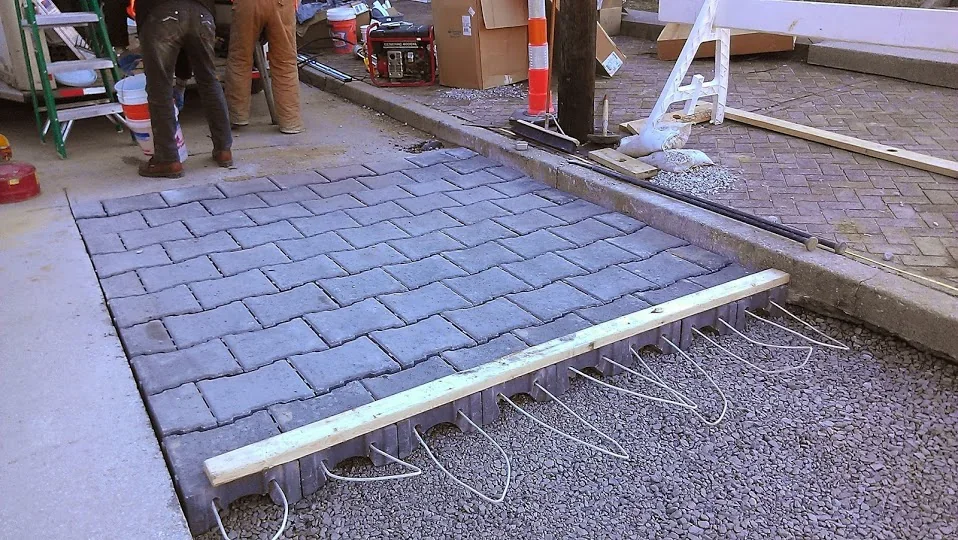
Permeable paving is designed to let water pass through openings or porous material into a prepared stone base and, where conditions allow, into soil. Conventional concrete forms a relatively continuous surface that sends most rain toward edges and drains. The better option depends on soil, slope, traffic, maintenance, and whether a site can safely store or infiltrate water beneath the surface.
The difference is the water pathway
With conventional concrete, rain typically runs across the surface until it reaches a low point, drain, or adjoining soil. A permeable pavement system routes water through joints or pore spaces and holds some temporarily in the layers below. Depending on design and soil conditions, water may then infiltrate into the ground or be directed to an outlet.
The USGS describes surface runoff and infiltration as distinct paths in the water cycle. [1] Changing the surface can change how much water follows each path, but the paving material alone does not determine the result. The stone base, soil beneath it, slope, drainage design, and storm size all matter.
Compare what each surface asks of you
Concrete is familiar, can provide a continuous surface, and is often straightforward to clear. It can also direct substantial runoff toward a drain or low area, particularly when it covers a large area. Permeable systems can reduce surface flow in suitable settings, but their joints or pores can clog with sediment and debris. They need maintenance appropriate to the product and site.
A permeable installation usually requires careful preparation below the visible surface. If the base is too shallow, soil is unsuitable, or water has nowhere to go, the system may not perform as intended. Conversely, a conventional slab may be a practical choice where a firm, smooth surface is needed, provided the drainage route is managed. Ask installers about the full assembly, not just the paver or concrete finish.
A driveway example
Imagine replacing a small, lightly used parking area. The owner compares a concrete slab that drains toward a planted strip with permeable pavers over a designed stone reservoir. The first option may be less complicated to maintain, while the second could allow more water to enter the subsurface if the soil and design support it. Both require a safe route for water beyond the capacity of the surface during heavy rain.
The choice changes if the soil drains slowly, groundwater is shallow, or the paving is near a building. In those cases, infiltration may be limited or inappropriate, and an engineered underdrain or another drainage approach may be needed. Local stormwater rules and site conditions determine what is acceptable; there is no universal paving choice for every driveway.
Do not confuse permeability with floodproofing
Permeable pavement can manage some rainfall at the site, but it is not a guarantee against flooding. A very large storm can exceed storage capacity, and poor maintenance can reduce infiltration. Nor does one permeable area compensate for the loss of larger natural storage systems. EPA describes wetlands as storing floodwaters and slowing their movement, functions tied to the broader watershed. [2]
A common mistake is to compare materials by appearance or price alone and ignore the water beneath them. Ask how the design handles a full reservoir, where overflow goes, what maintenance is required, and whether heavy vehicles or accessibility needs affect the surface specification.
Make the site check your next step
Before choosing, note the area’s slope, drainage destination, traffic, and any recurring standing water. Then ask a qualified paving or drainage professional to assess soil and local requirements, and compare complete system designs, including overflow and maintenance.
Follow the evidence
Primary sources used in this story. Practical examples are illustrative unless a source states otherwise.
Read our editorial standards. Have a correction? Identify the article and relevant source in your feedback to the site owner.