tree day
Guide
Overwatering vs underwatering trees?
Dry and saturated soil can both leave a tree wilted, so appearance alone is not a reliable guide. Compare the soil, drainage and watering pattern before changing care.
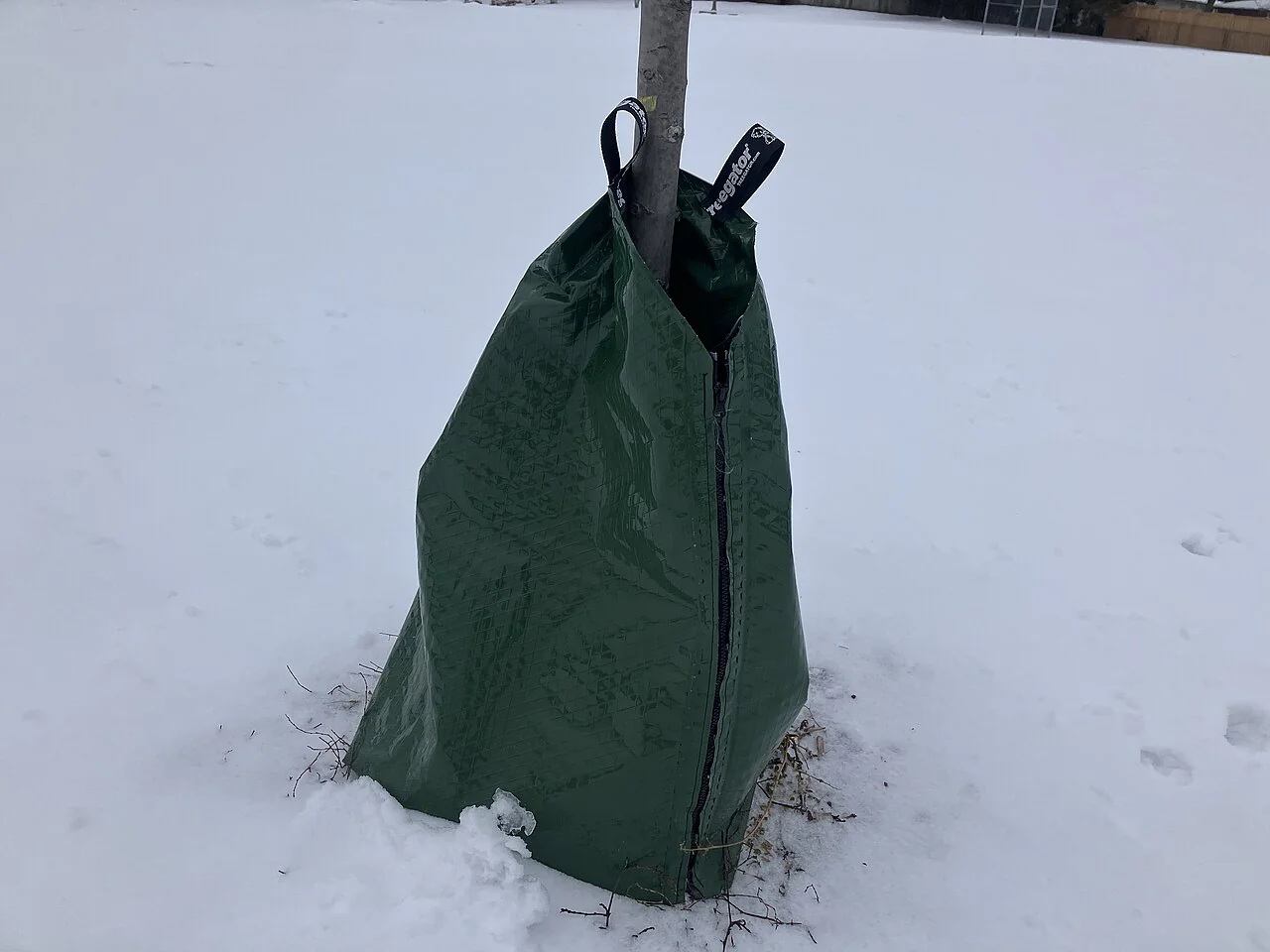
A tree can wilt when it has too little water and when its roots sit in too much. The leaves show stress, but they do not tell you which condition caused it. To distinguish the two, inspect soil below the surface near the roots, note how quickly it drains, and connect those observations to recent rain and watering.
Why both extremes look similar
Roots take up water from soil, but they also need air in the spaces between soil particles. When soil dries, water is unavailable. When it stays saturated, air is restricted. Either condition can interfere with the tree’s ability to supply its leaves, so drooping is not proof that a tree needs more water.
This is especially important for a recently planted tree, whose disturbed roots are still establishing in the new site. New York DEC says adequate water is essential for newly planted trees, while also cautioning that too much can be as harmful as too little. The appropriate amount depends on species and site conditions. [2]
What dry soil suggests
Feel the soil a few inches down near the root ball, not just the mulch or surface crust. Dry soil there, alongside recent heat or a lack of rain, points toward a need for water. Apply it slowly over the root zone; a fast pour may run away before soaking in, especially on compacted or sloped ground.
Mulch helps retain moisture and buffer temperature, but it does not replace checking the soil. A moist layer of mulch can cover dry soil, and dry mulch can sit above damp soil. Keep mulch away from the trunk to avoid problems associated with piling it against bark. [1] [2]
What persistent wetness suggests
If soil remains muddy or water stands after irrigation, do not add more. Consider whether water drains away, whether the site is naturally wet, or whether repeated watering has kept the root zone saturated. A brief damp period after rain is different from soil that stays waterlogged; check again after time for drainage rather than reacting to one wet reading.
Soil texture affects how water moves: sandy soil generally drains differently from clay, and site grading or compaction can change conditions further. The planting guidance emphasizes assessing whether a site is usually wet or dry and what kind of soil it has. A tree species suited to one site may struggle in another. [2]
Use a simple comparison, not a calendar
Imagine a young tree wilting in a yard after several hot days. If the root-zone soil is dry, water it slowly and then recheck. If it is damp and remains so, pause watering and watch whether the ground drains. The useful comparison is between soil moisture and the tree’s response over time, not simply between this week and a fixed watering schedule.
Published guidance illustrates why schedules cannot be universal: DEC says to water newly planted trees at least weekly barring rain and more frequently in hot weather, but says the right amount depends on site and species; the Arbor Day bare-root instructions give a different interval for dry weather during the first year. Treat these as context-specific guidance, not interchangeable rules for every tree. [2] [3]
Choose the next step from the evidence
If the soil is dry, water over the roots and check whether it penetrates. If it is persistently saturated, stop adding water and assess drainage and site suitability. If moisture seems reasonable but the tree continues to decline, ask a local arborist or extension office: regional pests and diseases can be hard to diagnose without examining the tree. [1]
The common mistake is to respond to wilt with more water before checking the ground. Make the soil inspection first, then change one part of the routine so you can see whether conditions improve.
Follow the evidence
Primary sources used in this story. Practical examples are illustrative unless a source states otherwise.
- Arbor Day Foundation: Tree care and maintenance ↗
- New York DEC: How to plant a tree ↗
- Arbor Day Foundation: Planting bare-root trees ↗
Read our editorial standards. Have a correction? Identify the article and relevant source in your feedback to the site owner.