tree day
Guide
How to start birdwatching?
Start with the birds already using a familiar place. A short, repeatable watch helps you notice behavior, learn a few common calls and identify species without needing expensive equipment or close contact.
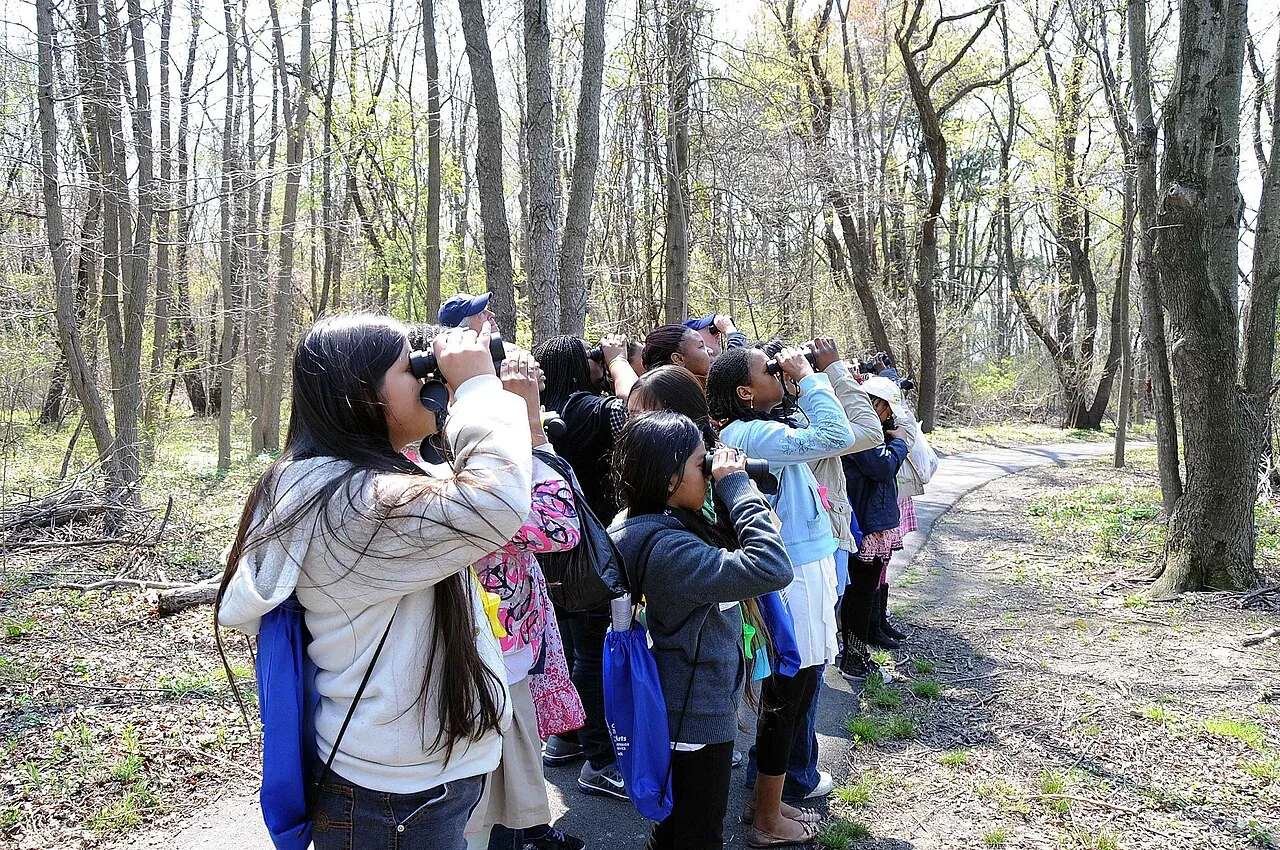
To start birdwatching, choose a place you can visit more than once, watch quietly for ten minutes, and write down what you see before trying to name it. A yard, courtyard, park path or window can be enough. Repeated visits reveal which birds are regulars and which details—size, shape, movement, sound and habitat—help distinguish one from another.
Begin with a place, not a checklist
Pick a spot where you can stand or sit without blocking a path or disturbing wildlife. A bench near shrubs, a window with a view of a feeder, or a stretch of trail beside open ground can all work. For a first visit, notice the broad scene: where birds perch, whether they feed on the ground or in trees, and how they move between cover and open space.
A familiar location makes comparisons easier. If a bird appears again, you can ask what changed: its size relative to a nearby sparrow, the shape of its bill, a stripe on its face, or the way it flies. Those observations are more useful than a quick guess based on color alone.
Record clues before names
Use a pocket notebook or phone note to record the date, place and observations. Try a plain description: “small gray bird, two pale bars on the wing, hopping under the hedge.” Add behavior and sound if you can. Was it alone or in a group? Did it call once or repeat a pattern? Did it forage on bark, grass or water?
Then compare your description with a regional field guide or a reputable bird identification resource. Start by narrowing the possibilities using size, shape and habitat; check color and markings after that. A photograph can help, but it is optional. Avoid chasing a bird for a better view: the National Park Service advises observing wildlife from a distance and not following or approaching it. [1]
A small routine builds skill
A practical first-week plan might be three visits to the same park edge, each for ten or fifteen minutes. On the first visit, note every bird without naming it. On the second, try to recognize one frequent bird. On the third, listen for a call you heard before. This hypothetical routine makes progress visible without turning every outing into a test.
If you enjoy structure, keep a short list of confirmed species and a separate list of “possible” identifications. That distinction prevents an uncertain glimpse from becoming a permanent record. Over time, compare notes by season: the mix of birds you encounter may shift, while the place and your own method stay familiar.
Use tools lightly and protect the birds
Binoculars can make distant features easier to see, but you can begin without them. If you buy a pair later, choose one you can hold steadily and carry comfortably. A field guide is often more useful at first than several gadgets because it encourages comparison among similar birds.
Keep to established paths where available, avoid nesting or roosting areas, and keep pets controlled. Leave No Trace guidance also recommends staying on durable surfaces, leaving natural objects in place and being considerate of other visitors. [1] A common mistake is closing distance to force a better view; waiting quietly or returning another day is usually the more considerate choice.
Make the next outing specific
Choose one question for your next watch: Which birds use the ground? Which call repeats? Does the same species visit the same shrub? A focused question gives your attention somewhere to go and makes a short visit rewarding even when you see few birds.
If a bird remains unidentified, save the description and revisit it later with a guide. Your next step is simple: pick a nearby place, set a ten-minute timer, and record three observable clues before opening an identification tool.
Follow the evidence
Primary sources used in this story. Practical examples are illustrative unless a source states otherwise.
Read our editorial standards. Have a correction? Identify the article and relevant source in your feedback to the site owner.