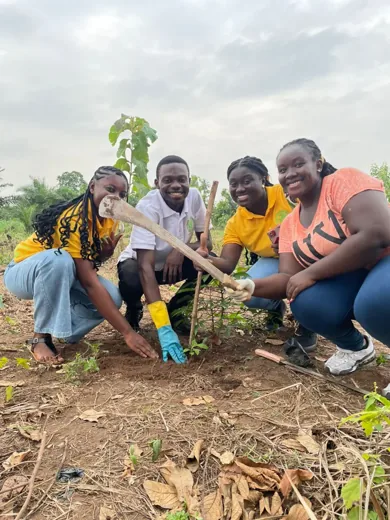
tree day
Guide
How to remove tree stakes?
Remove stakes and ties once the tree can stand securely without support, taking care not to pull against the trunk or damage roots. Check for rubbing and instability first; ask an arborist if the tree still leans or shifts.
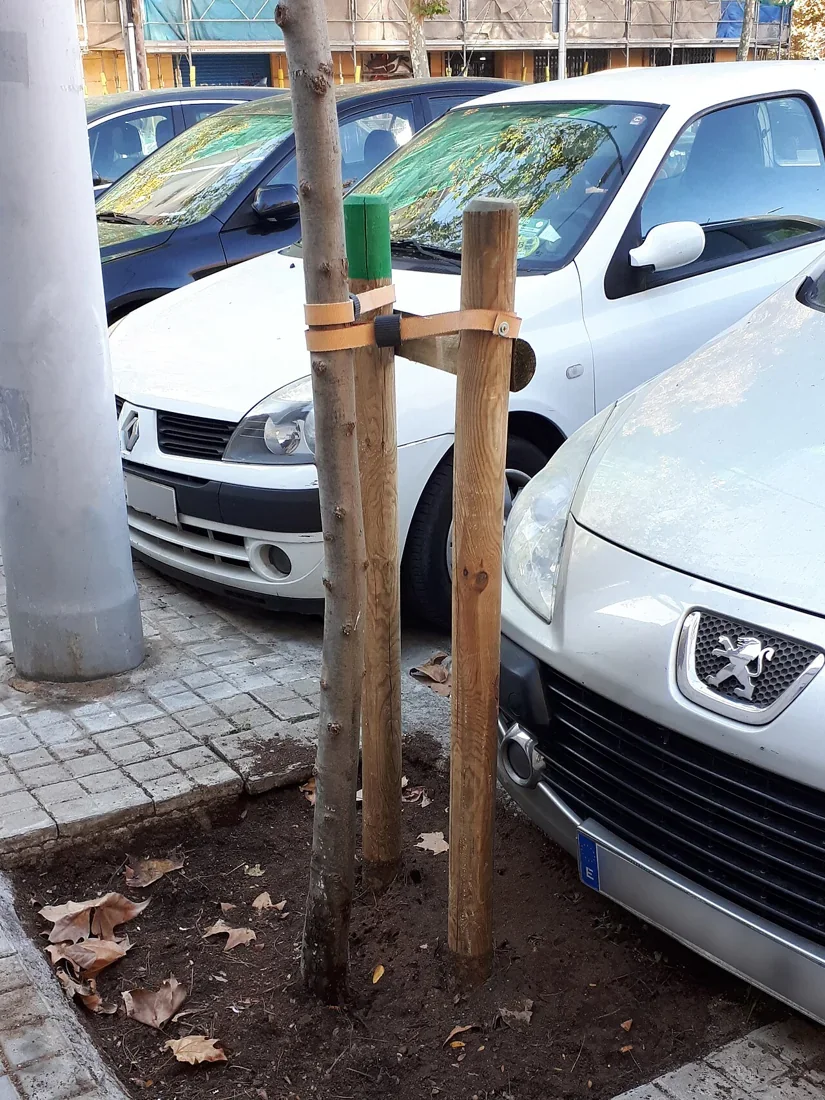
To remove tree stakes, first check whether the tree can stand upright and remain stable without them. If it can, loosen and remove the ties, then pull out the stakes without levering against the trunk or digging through roots. If the tree shifts or leans substantially, pause and ask an arborist to assess why it still needs support.
Check the tree before the hardware
Stakes are not usually necessary for newly planted trees, and the New York Department of Environmental Conservation says unstaked trees can develop stronger trunk and root systems. [1] This makes removal part of checking whether support is still useful, rather than a task with one fixed date for every tree.
Look for a stable trunk and root area, and inspect the tie points for rubbing, tightness or damage. If the tree appears unstable, do not simply remove its support and walk away; determine whether it was planted securely or whether wind exposure and other site conditions continue to matter.
Remove ties without scraping the bark
Release each tie carefully so it does not drag across the trunk. If a tie has become tight or embedded, avoid yanking it free; cutting or loosening it without harming the bark may require careful work. The supplied planting guidance warns that support is not usually necessary but does not give a detailed removal method or a universal schedule. [1]
Do not use the trunk as a lever while extracting a stake. If a stake is difficult to remove, inspect the ground around it and work cautiously; avoid digging blindly where utilities may be present. For a large tree, a deeply placed stake or a tie that has grown into the trunk, get help from a qualified arborist.
A simple example of the decision
Imagine a young tree that has remained upright through ordinary weather and no longer rocks at its base. Its ties are loose and the trunk is not relying on the stakes. Removing the support is a reasonable next step, followed by watching how the tree stands on its own.
Now imagine the trunk still tilts sharply when the tie is loosened or the root area shifts. That is a different situation. The support may be masking a planting or stability problem, so an arborist can inspect the tree and advise whether it needs a different temporary arrangement or other attention. These examples illustrate decisions, not guaranteed outcomes.
Inspect after removal
Once the stakes and ties are out, check the trunk for damage and observe the tree after ordinary weather. A stable tree should not need hardware merely because it is newly planted. If it begins to lean or shift, assess the planting site and contact an arborist rather than reinstalling the same arrangement by habit. [1]
Also make sure removal has not disturbed the tree’s root area. Avoid cutting roots or changing grade as part of stake removal; the DEC’s planting guidance emphasizes giving roots room to spread and planting at the correct depth. [1]
Make the next check useful
Record when support came off and take a photograph of the tree’s posture. That gives you a simple comparison if the tree later appears to move. Keep an eye out for trunk wounds where ties sat, and seek professional advice if damage or instability is evident.
If the tree stands well, leave the stakes out and continue ordinary establishment care. If it does not, have an arborist assess the cause before choosing another support method.
Follow the evidence
Primary sources used in this story. Practical examples are illustrative unless a source states otherwise.
Read our editorial standards. Have a correction? Identify the article and relevant source in your feedback to the site owner.