tree day
Guide
How to prune a young tree?
Prune with a clear purpose, make small selective cuts and preserve the branch collar. A young tree usually needs less cutting than its owner expects; timing and structure depend on its species and setting.
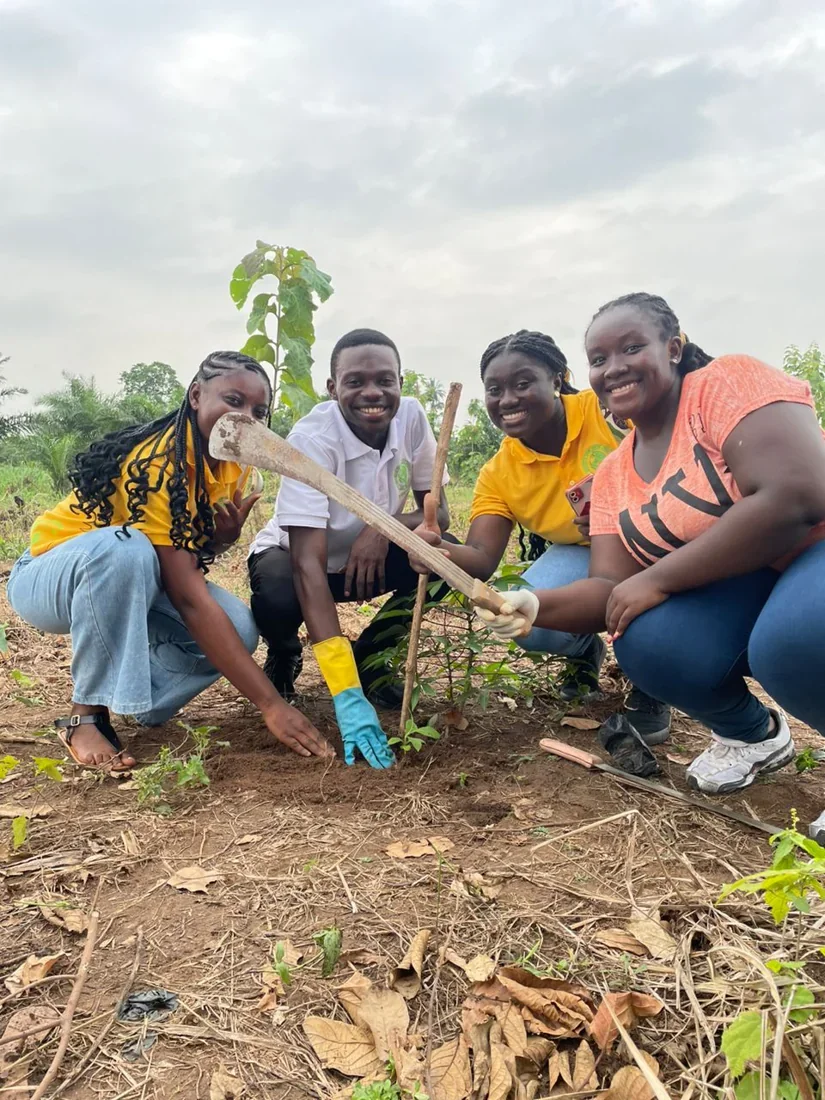
A young tree’s shape is still developing, so a cut can influence years of growth. The useful question is not how to make the crown look tidy, but whether a particular branch is dead, damaged, crossing, poorly attached or likely to conflict with the tree’s intended space. Begin with a reason, identify the tree if possible, and leave healthy growth alone when there is no clear need. [2] [3]
Decide whether a cut is needed yet
At planting, several extension and arboriculture guides recommend limiting cuts to dead, broken or diseased branches. University of Minnesota Extension advises beginning formative training in the dormant season after planting; the International Society of Arboriculture’s consumer guide says to defer other pruning until the second or third year, after transplant stress has eased. Those are not identical timetables. They point toward the same cautious practice: do not reshape a newly transplanted tree just to make it look finished. Check species-specific and local advice, and let establishment and the tree’s condition guide routine work. [1] [2] [3]
Before cutting, name the objective: remove a broken limb, reduce rubbing, or guide a structural branch while it is small. A tree does not need pruning simply because branches make the crown look full. Natural form varies: many trees develop a central leader, while others normally form broad or multiple stems. Do not force every species into one silhouette. [1] [3]
Choose the smallest useful correction
Look first for dead, broken or diseased wood, branches that rub, and competing shoots that could create a weak structure. For a tree that naturally grows with one main leader, a competing upright stem may deserve attention while it is still small. A cross branch may be better removed than shortened if it is rubbing another limb. Make one change at a time and step back to see what remains; a sound framework needs branches distributed around the trunk, not a bare pole. [1] [2]
Keep useful lower branches unless there is a practical reason to raise the crown, such as pedestrian or vehicle clearance. The eventual clearance depends on where the tree grows: a street tree, a screen and a yard shade tree have different jobs. Raise a crown gradually over several seasons rather than removing a long row of healthy limbs at once. Leaves and branches support growth, and heavy canopy removal can stress a tree. [2] [3]
Do not top a tree by cutting the leader or major limbs back to stubs to make the tree shorter. That removes its natural structure and can prompt weak sprouting and decay. If a tree is outgrowing its location, ask an arborist about appropriate reduction or whether a better-sized replacement is needed. [1] [2]
Make the cut just outside the branch collar
The branch collar is the slightly raised or wrinkled tissue where a branch joins the trunk or a larger limb. Find it before you cut. Remove the branch just outside this collar, leaving the collar intact: a flush cut takes away trunk tissue, while a long stub leaves unnecessary dead wood. Both can interfere with the tree’s response to the wound. If the branch is too large to hold safely, a three-cut method prevents its weight from tearing bark, but that is a reason to pause and get help rather than improvise from a ladder. [2] [3]
For a small, reachable twig that needs shortening, cut back to a side branch or a bud rather than stopping midway along bare wood. Use sharp hand pruners sized for the branch; do not use hedge shears to shape a tree. Clean, fitting tools make more controlled cuts, but tool choice does not make a large or overhead branch safe for a do-it-yourself job. [2] [1]
Match timing and the job to local conditions
Late winter or early spring before growth starts is a common window for routine cuts, and a leafless crown can be easier to inspect. It is not universal: species and local disease risks can change the best time. Check local extension guidance before planned pruning; use qualified help for an immediate hazard. [1] [2]
Work from the ground and within comfortable reach. Do not prune near electrical wires, climb with cutting tools, or use a chainsaw from a ladder. Large limbs, cracks, hanging branches, storm damage or work requiring climbing call for a qualified arborist. For utility lines, contact the utility or public agency. [1] [3]
A five-minute example
Imagine a young yard tree with a broken twig, a healthy low branch and a small upright shoot beside its main stem. Identify the species and confirm whether it should have one leader. Remove the broken twig just outside its branch collar. Keep the low branch if it does not obstruct a path. If the competing shoot clearly weakens the intended structure, plan a small selective cut at the locally appropriate time. If the tree is split or its form is uncertain, ask an extension office or arborist first. This is an illustrative decision aid, not a diagnosis.
Leave cuts uncovered unless a local expert identifies a specific exception. Wound paint cannot replace a correctly placed cut; ISA and Utah State guidance say dressings do not reliably prevent decay or speed closure. Recheck next season instead of making speculative cuts in one visit. [2] [3]
Follow the evidence
Primary sources used in this story. Practical examples are illustrative unless a source states otherwise.
- University of Minnesota Extension: Pruning trees and shrubs ↗
- International Society of Arboriculture, TreesAreGood: Pruning Young Trees ↗
- Utah State University Extension: Pruning Landscape Trees—An Overview ↗
Read our editorial standards. Have a correction? Identify the article and relevant source in your feedback to the site owner.