tree day
Guide
How to observe autumn leaf color?
A patient way to notice autumn color is to compare the same trees over time, paying attention to light, weather and differences between species rather than chasing a single peak day.
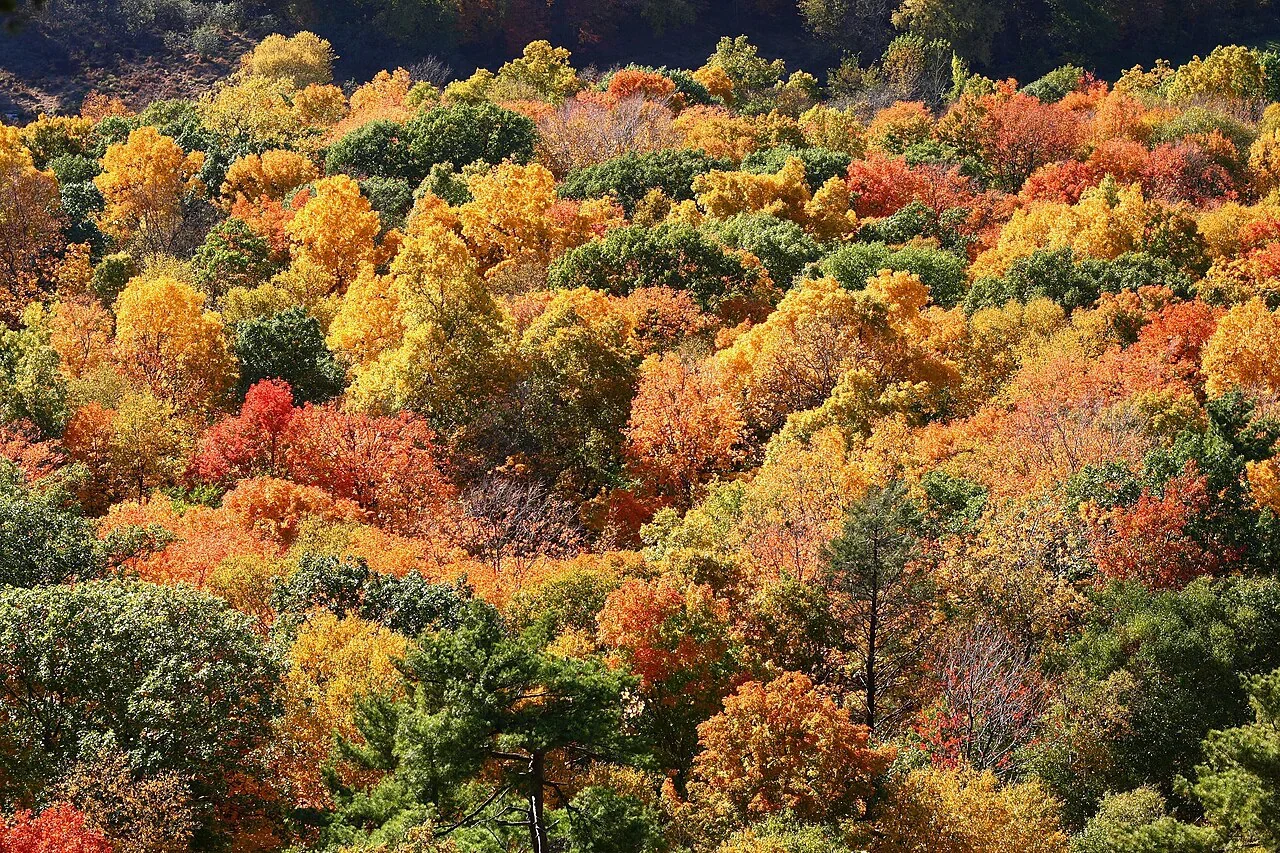
To observe autumn leaf color, pick a few trees you can revisit and watch how their leaves change over several weeks. Note the date, weather, light and which parts of each tree have shifted. The approach works whether fall brings a vivid display or only muted yellows and browns: it turns a passing impression into a record of what is happening in one familiar place.
Choose a useful viewpoint
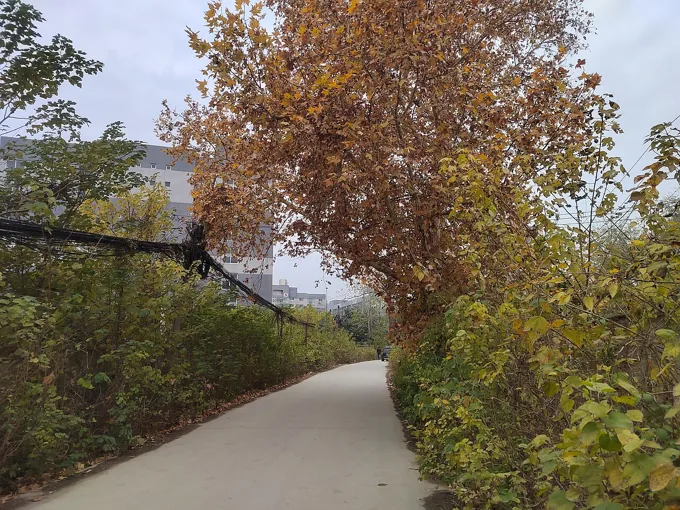
A street, park path or yard can serve as a small observation route. Choose trees you can identify by a visible feature—a branching shape, bark pattern or position beside a path—and make sure you can look without stepping into planted beds or blocking other visitors. A few contrasting trees are more useful than a long list: compare a broadleaf tree with a conifer, or two broadleaf trees that seem to change at different times.
Return from roughly the same viewpoint. A photograph can help, but include the date and avoid treating camera color as a measurement; phones adjust exposure and tone. If you prefer notes, describe what you see in plain terms: green still dominant, yellow along the outer canopy, or leaves falling in patches. That vocabulary makes comparisons possible without pretending to measure pigment precisely.
Separate color from light
The same leaves can look different in morning shade, strong midday sun and overcast light. When comparing visits, notice the conditions. A bright day may make red or gold seem more intense, while a gray sky can flatten the scene. If a tree looks dramatically different from one day to the next, check whether the light has changed before concluding that its leaves have.
Look at more than the most colorful branch. Is the change starting near the crown, along the outer edge, or across the whole canopy? Are leaves still attached, curled, spotted or already on the ground? These observations distinguish a gradual seasonal shift from damage or simple leaf drop. One tree may show several stages at once, so a single leaf is not a reliable summary of the whole canopy.
Track the sequence, not a peak date
Make brief visits every few days or once a week, depending on how quickly the season is changing and how convenient the route is. Record the first visible yellowing, the point when color becomes widespread, and when leaves begin to fall. The dates are local observations, not a forecast for another neighborhood or year. Species, site conditions and the particular season can all change the sequence.
A useful comparison is one tree beside pavement and another in a more open, vegetated spot. Note whether one appears to change earlier, but do not assume the setting alone explains it: the trees may be different species, or differ in age, exposure or health. The comparison raises a question worth observing again next year; it does not prove a cause.
Understand what the calendar can and cannot tell you
In the Northern Hemisphere, autumn follows the part of the year when the North Pole tilts away from the Sun. That tilt changes how directly sunlight reaches the region and how much daylight it receives; Earth’s changing distance from the Sun is not the main cause of the seasons. [1] The calendar provides context for shorter days, but it cannot tell you the exact week a particular tree will turn.
A warm spell or a cold snap may coincide with a change, yet a few observations cannot establish why it happened. Keep weather notes alongside leaf notes, and treat them as context rather than proof. That distinction makes the record more useful: it can show what happened in your route without claiming to explain a complex seasonal response.
Observe without changing the scene
Stay on paths where possible, leave leaves and branches where they are, and keep a comfortable distance from wildlife using the canopy or leaf litter. The National Park Service’s Leave No Trace principles advise observing wildlife without approaching or feeding it and leaving natural objects as found. [2] For a close look at a fallen leaf, choose one already on a path rather than pulling one from a tree.
Your next step can be small: choose three trees, write down today’s date and conditions, and take one repeatable view. After a month, compare the sequence. The result may be a photo series, a few sentences or simply a sharper sense of when your own neighborhood changes.
Follow the evidence
Primary sources used in this story. Practical examples are illustrative unless a source states otherwise.
Read our editorial standards. Have a correction? Identify the article and relevant source in your feedback to the site owner.