tree day
Guide
How to check tree soil moisture?
A quick hand check below the mulch is more useful than judging by the surface alone. Learn where to inspect, how to interpret what you feel and when to check again.
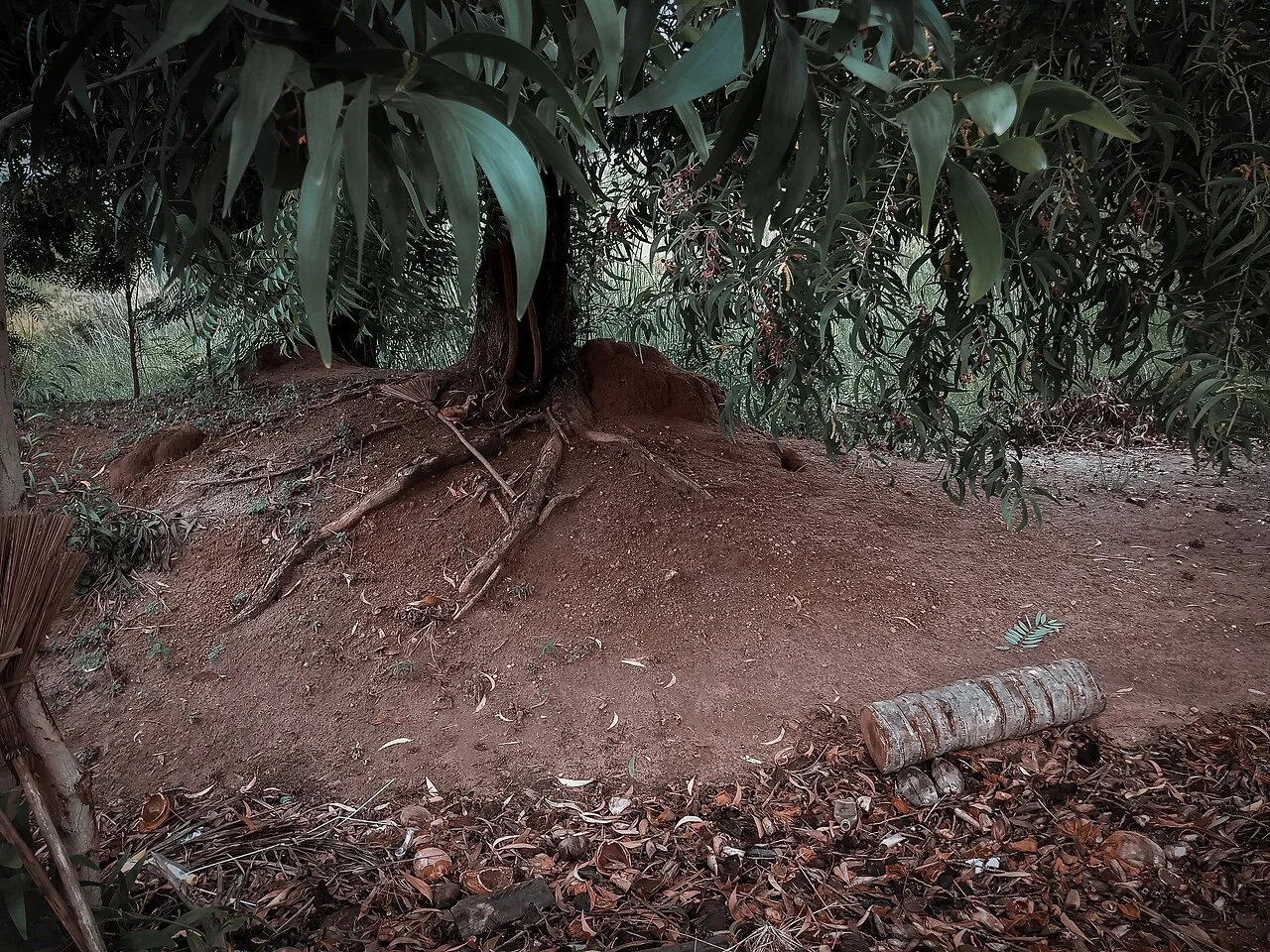
To check a tree’s soil moisture, move mulch aside and feel the soil a few inches below the surface near the root zone. A dry surface does not prove the roots need water, and wet mulch does not guarantee the soil below is moist. The goal is to inspect the layer where water must reach the roots, then decide whether to water or wait.
Choose a useful spot
For a new tree, inspect near the edge of the root ball and in the surrounding soil, taking care not to damage roots. For an established tree, check in more than one place beneath the canopy rather than directly against the trunk. Roots extend beyond the trunk base, and soil can vary across even a small yard. [2]
Pull mulch aside temporarily so you are feeling soil, not bark chips. If the ground is dry at the surface but cool and damp below, the tree may not need immediate watering. If the upper soil is dry through the depth you can check, recent weather and tree age can help guide the next step.
Use your fingers and a small trowel
Press a finger into loose soil if it is easy to reach. For firmer ground, use a small hand trowel to lift a modest sample from a spot away from the trunk. Feel whether it is cool and damp, crumbly and dry, or sticky and saturated. Avoid repeatedly digging in the same place, especially near a new tree’s roots.
Soil texture changes how a sample feels. Sandy soil may fall apart even when it contains some moisture; clay may feel sticky and hold shape. Compare a few spots and note whether water is draining after rain or irrigation rather than treating one sample as a precise measurement. The planting guidance stresses that soil type and whether a site tends to be wet or dry matter to tree care. [2]
Read the result with the weather
A dry sample near a young tree after hot, rainless weather is a reason to consider watering, provided local guidance allows it. Water slowly over the root zone and observe whether it soaks in or runs off. A wet sample after rain calls for waiting and checking later, especially if the site drains slowly.
New York DEC says newly planted trees should be watered at least once a week barring rain, more often in hot weather, but also says the right amount depends on species and site. The Arbor Day Foundation’s bare-root instructions offer a different interval for dry weather during the first year. These are source-specific examples, not a single schedule for all trees. [2] [3]
Avoid two misleading shortcuts
The first shortcut is watering because leaves droop. Wilt can result from too little water or too much, so check the root zone before adding more. The second is judging by a moisture meter reading without understanding the tool or soil: a single reading is not a diagnosis, and a meter does not tell you whether the planting site suits the tree.
Mulch can make the surface look uniformly damp or dry while conditions underneath differ. Keep mulch in a moderate layer and away from the trunk; its role is to buffer soil conditions, not to substitute for inspection. [1]
Turn the check into a decision
Suppose a hypothetical young tree is in a sloped lawn. The soil just under the mulch is damp, while a lower patch is wet after irrigation and water runs away downhill. Rather than repeating the same watering, check another point near the root ball and consider whether slow application would soak in. If soil is already wet, waiting is the more useful next step.
If you cannot tell whether the soil stays saturated, or the tree continues to decline despite appropriate moisture, contact a local arborist or extension office. For today, inspect two spots near the roots and record whether they feel dry, moist or saturated before changing your routine.
Follow the evidence
Primary sources used in this story. Practical examples are illustrative unless a source states otherwise.
- Arbor Day Foundation: Tree care and maintenance ↗
- New York DEC: How to plant a tree ↗
- Arbor Day Foundation: Planting bare-root trees ↗
Read our editorial standards. Have a correction? Identify the article and relevant source in your feedback to the site owner.