tree day
Guide
How often to water a new tree?
There is no reliable watering interval for every new tree: soil, rain, heat and species change how quickly roots dry. Check moisture where the roots are and water deeply when that zone needs it.
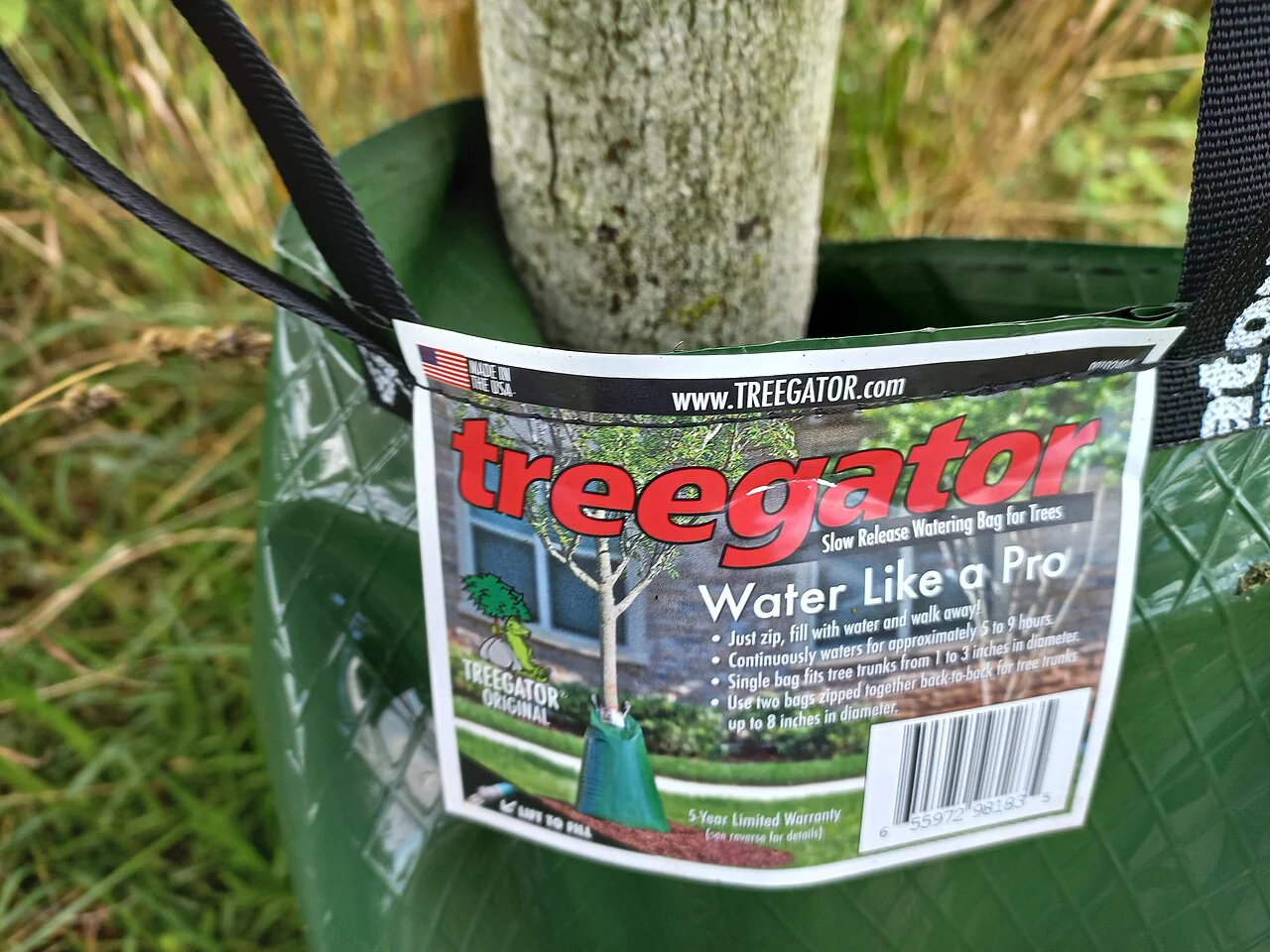
Check beneath the mulch before you reach for the hose. A newly planted tree needs water at its root zone, but a fixed schedule can leave one tree dry and another sitting in soggy soil. Soil texture, drainage, rain, heat and species all affect how quickly moisture is used, so the useful habit is to monitor the planting area and adjust.
Water the root zone, not just the surface
A brief sprinkle can wet mulch and the soil surface without reaching the roots. Apply water slowly enough to soak into the planting area, including the root ball and adjacent soil where new roots will spread. The Arbor Day Foundation’s bare-root guidance says to water slowly at the dripline and keep soil and mulch moist but not soggy. [3]
For a recently planted tree, the root ball may dry at a different rate from surrounding soil. Check both when practical, especially if the soil is sandy or the tree sits in a hot, exposed spot. The aim is steady access to moisture without standing water or persistently saturated soil.
Let conditions set the interval
The Arbor Day Foundation’s bare-root instructions suggest generous watering every seven to ten days during dry weather in the first year. [3] That interval is specific guidance for bare-root trees and dry weather, not a universal rule for every planting. New York DEC advises watering at least weekly barring rain and more often in hot weather, while also emphasizing that the right amount depends on the site and species. [2]
These recommendations point to a decision process: account for rainfall, then check whether soil below the mulch is drying. Arbor Day Foundation guidance says to water when that soil is dry below the surface of the mulch. [1] Frequency can rise during hot, dry periods and fall after substantial rain or where soil drains slowly.
A practical check after a dry week
Imagine a young tree planted in ordinary garden soil after several warm, rainless days. Pull mulch aside at the edge of the root ball and feel the soil below the surface. If it is dry, water slowly until the root zone is soaked; if it remains damp, wait and check again. Then restore mulch without pressing it against the trunk.
This check is more useful than counting days alone because it responds to the actual planting conditions. In a container-grown tree, also check whether the original root ball is dry even if nearby soil feels moist. If water runs off or collects, slow the application and consider whether compaction or poor drainage is preventing it from soaking in.
Avoid the two common errors
Underwatering can leave roots dry during establishment, while overwatering can deprive them of the conditions they need. DEC explicitly cautions that too much water can be as harmful as too little. [2] Do not keep adding water simply because the surface looks dry, and do not assume a recent shower soaked a deep or sheltered root ball.
Mulch can help retain soil moisture, but it can also hide the soil surface from view. Keep it in a broad layer and away from the trunk, then check beneath it. The Arbor Day Foundation recommends that new-tree mulch insulate soil and retain moisture, while warning against piling it against the trunk. [1]
A simple routine to start
For the first weeks, inspect the root zone regularly and after major weather changes. Note whether the soil is dry, moist or waterlogged, and how long it takes to change after watering. That observation gives you a better interval for your own site than a calendar borrowed from a different climate.
Your next step is to check the soil below the mulch today. Water slowly if the root zone is drying; if it is already wet, pause and reassess drainage and rainfall before adding more.
Follow the evidence
Primary sources used in this story. Practical examples are illustrative unless a source states otherwise.
- Arbor Day Foundation: Tree care and maintenance ↗
- New York DEC: How to plant a tree ↗
- Arbor Day Foundation: Planting bare-root trees ↗
Read our editorial standards. Have a correction? Identify the article and relevant source in your feedback to the site owner.