tree day
Guide
Biodegradable vs compostable?
Biodegradable describes a material’s capacity to break down under some conditions; compostable refers to breakdown within a composting process. Neither word alone tells you what your local waste system accepts.
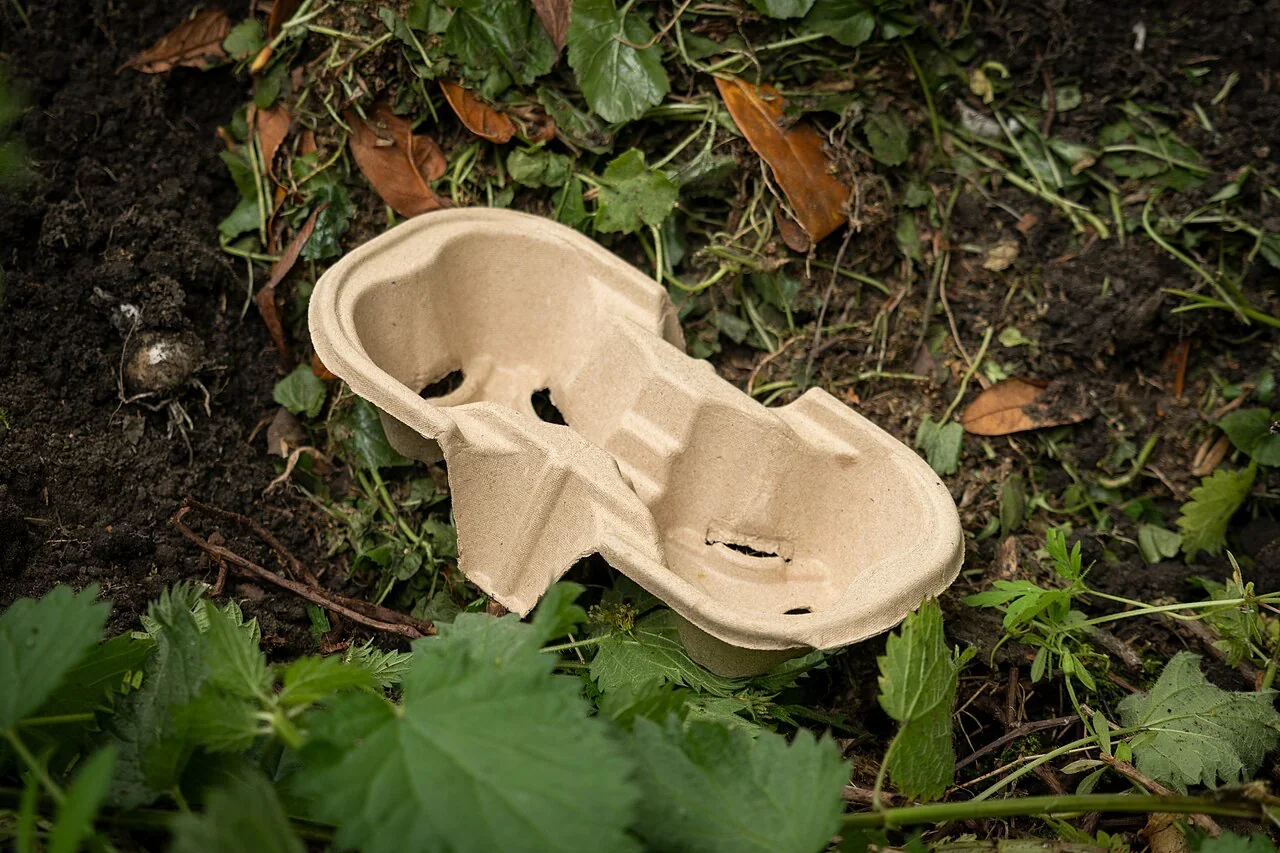
A “biodegradable” fork and a “compostable” cup may sound like the same disposal choice, but the labels do not guarantee the same outcome. Biodegradable is a broad description of breakdown over time under particular conditions. Compostable points to a material intended to break down in composting conditions. For either product, the useful question is where it can actually go after use.
The words describe different things
Biodegradation is a process in which microorganisms break down material. How quickly that happens depends on the material and the conditions around it, including moisture, temperature, oxygen, and available organisms. A product may break down in one setting and persist in another. The word “biodegradable” alone usually does not tell a shopper how long the process takes or what environment is required.
Compostable materials are intended to break down as part of composting and contribute to compost under suitable conditions. That does not mean an item belongs in every compost pile. Some products require controlled conditions or a particular facility, and a backyard pile may not provide them. The distinction is about process and setting, not a promise that an item will vanish wherever it is dropped.
The local route matters
Before buying or discarding a product, check whether a local curbside or drop-off program accepts that specific type of item. The EPA says compostable plastics are not intended for conventional plastic recycling and can disrupt the recycling stream if mixed with non-compostable plastics. If a community program does not accept them, the EPA advises checking with the waste provider or local government for options [1].
This means the three-bin mental model—recycling, compost, trash—cannot be applied by label alone. A compostable food-service item may need a commercial collection program, while a household compost setup may not be appropriate for it. A biodegradable claim may describe breakdown in a test environment that does not match a landfill, roadside, or home compost pile. Look for instructions that name the accepted collection route rather than inferring one from a leaf icon.
A picnic plate example
Imagine you are choosing plates for a picnic. A package says “biodegradable,” but gives no disposal instructions. That word alone cannot tell you whether the plate can be composted locally or how it should be handled after the meal. If a collection service at the event accepts only food scraps and certified items under its own rules, the plate may be excluded even if it looks like paper or plant fiber.
A more useful choice might be reusable plates if you can transport and wash them, or ordinary paper plates only if the disposal route is clear and the materials meet local guidance. If you select a compostable product, verify that the local service accepts that exact category and prepare it as directed. The EPA notes that compostable plastic is not intended for ordinary plastic recycling [1]. The hypothetical picnic illustrates that the best product depends on the collection system as well as its material.
Separate material claims from disposal claims
Packaging claims can make a product sound environmentally preferable without explaining the full trade-off. The EPA recommends considering product impacts across sourcing, manufacturing, packaging, transport, use, and end-of-life, and warns that a choice can shift burdens from one impact to another [2]. A disposable item advertised as compostable still uses material and requires the right route; if it is not collected as intended, the claimed end-of-life benefit may not occur.
Check whether the label identifies the conditions or standard behind the claim and whether instructions name a real local option. “Plant-based” is not the same as “compostable,” and “compostable” is not a synonym for recyclable. The EPA advises reading the label for compostability and recyclability information on bio-based plastics and checking with local programs [1]. Avoid putting ambiguous items into the recycling bin to guess.
Make a simple purchasing decision
When comparing products, start by asking whether the disposable item is necessary at all. If it is, compare a reusable option with a disposable one you can actually manage. Next, check whether the product’s end-of-life route exists where you live, and follow the provider's accepted-material list. If there is no accepted compost collection for the item, do not assume a home pile will finish the job.
A practical next step is to photograph the product label and look up its named material and local disposal instructions before buying a large quantity. If the label gives no clear route, choose a product with a known, usable path or avoid the disposable item. That decision is more reliable than trying to infer disposal from the words “biodegradable” or “compostable” alone.
Follow the evidence
Primary sources used in this story. Practical examples are illustrative unless a source states otherwise.
- US EPA: How do I recycle common recyclables? ↗
- US EPA: Institutional purchasers of greener products and services ↗
Read our editorial standards. Have a correction? Identify the article and relevant source in your feedback to the site owner.