tree day
Guide
Why leaf litter matters?
A layer of fallen leaves shelters small organisms, returns organic matter to soil, and can provide cover for wildlife. Learn where to leave it, when to clear it, and how a selective approach fits paths, drains, lawns, and fire conditions.
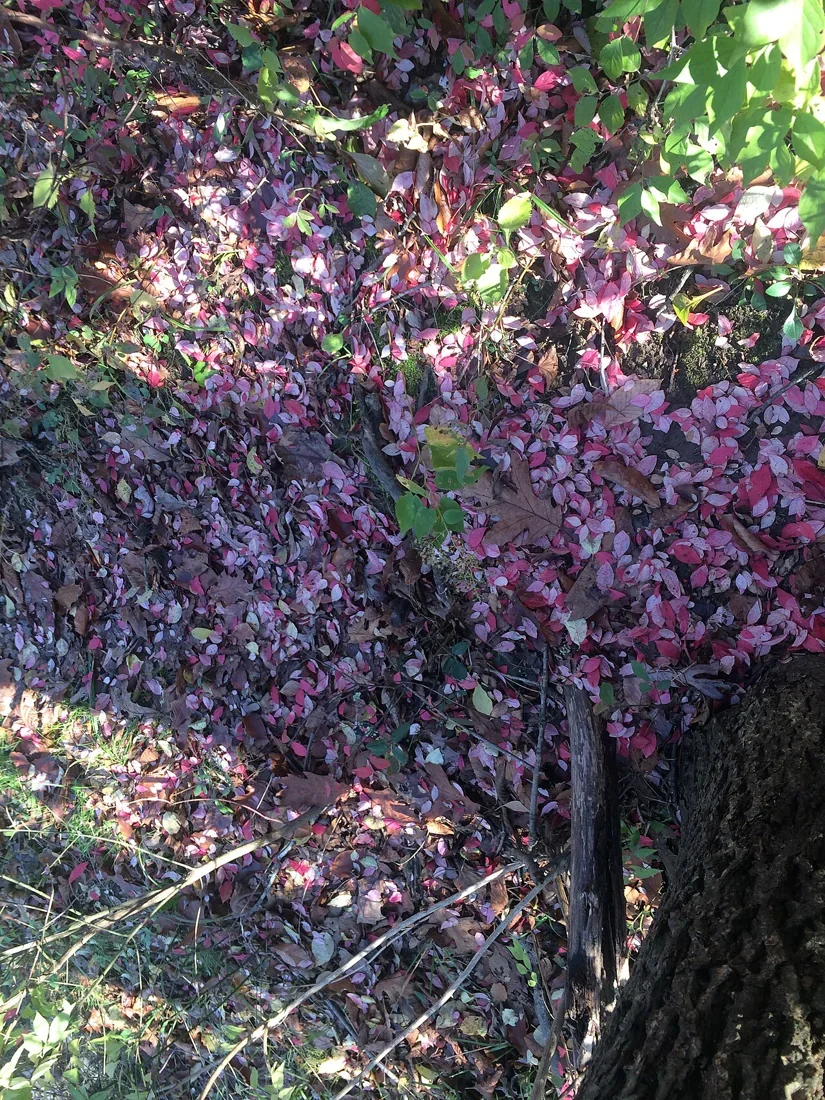
The leaves gathering beneath a shrub are doing more than making a garden look untidy. Leaf litter shelters small organisms, slows the exposure of soil, and breaks down into organic matter. That does not mean every leaf should stay everywhere: thick mats can smother some plants, block drains, or create a slippery path. A selective approach preserves habitat where it helps while keeping surfaces and structures clear.
A layer with several jobs
Leaves create a loose layer between soil and open air. That layer can provide hiding places for invertebrates and other small organisms, moderate direct exposure, and gradually decompose. The result depends on leaf type, moisture, temperature, soil, and whether the material is compacted. A thin layer beneath established shrubs behaves differently from a wet, dense mat across a small lawn.
As leaves break down, they become part of the soil’s organic matter. The speed and effect vary with local conditions, so leaf litter should not be treated as a substitute for understanding soil or plant needs. It is one part of a living system, not a guaranteed amendment with a fixed benefit.
The hidden food web beneath the surface
A leaf layer can support organisms that are easy to miss during ordinary garden work. Invertebrates and fungi participate in decomposition, and some animals forage among the litter. The National Park Service describes biodiversity as variety across life at ecosystem and species levels, including organisms that are not commonly seen. [1] Leaf litter is one place where that less visible variety can be present close to home.
Plants also connect to wider food webs. Pollinators and other wildlife depend on suitable habitat, and the U.S. Fish and Wildlife Service identifies habitat conservation as part of its pollinator work. [2] Leaf litter is not itself a pollinator garden, but keeping some ground cover and varied vegetation can contribute to a more diverse garden structure.
Leave leaves where they fit
Under shrubs, along a woodland edge, or in an unused garden bed, a modest leaf layer can usually remain if it does not interfere with drainage or plant health. A concrete example: rather than blowing an entire yard bare, a household could rake leaves off the front walk and storm drain, then place them in a shallow layer beneath established shrubs. That preserves a habitat patch while keeping necessary routes clear.
If leaves are diseased, heavily contaminated, or come from a plant known to spread through seed or fragments, local guidance may call for removal or a different disposal method. Avoid assuming every leaf pile is harmless or every leaf must be bagged. Check what the material is, where it came from, and whether the site has a specific management concern.
Clear the places that need access
Paths, steps, drains, and hard surfaces should remain clear enough for safe use and water flow. Leaves can become slick when wet, and a pile against a building can interfere with maintenance or drainage. In dry, fire-prone conditions, local fire agencies may recommend clearing combustible material from particular areas. Follow local guidance rather than applying one yard-wide rule to every climate.
On lawns, a thin scattering may break down, but a thick mat can block light and smother grass. If you want a lawn, rake or mulch enough leaves to keep it in the condition you want, then move the rest to beds or a compost system suited to your area. Compost rules and acceptable material vary locally; do not assume every municipality accepts yard waste in the same way.
Make a small seasonal plan
Choose one or two zones where leaves can stay, and identify the routes, drains, and planted areas that need clearing. Reassess after heavy rain or wind, when leaves may shift or compact. If a planting struggles, inspect the depth and condition of the layer before removing all leaves; the issue could instead involve water, soil, or plant suitability.
The distinction is between useful cover and obstructive accumulation. Biodiversity covers many organisms and ecological levels, not just visible wildlife. [1] Your next step is to leave a modest layer under suitable shrubs or in a quiet bed, while clearing paths and drains you depend on.
Follow the evidence
Primary sources used in this story. Practical examples are illustrative unless a source states otherwise.
Read our editorial standards. Have a correction? Identify the article and relevant source in your feedback to the site owner.