tree day
Guide
Why dead wood matters?
Dead branches, logs, and standing trunks can provide shelter and food for fungi, insects, and other wildlife. Learn what they contribute, where retaining them makes sense, and how to balance habitat with access and safety.
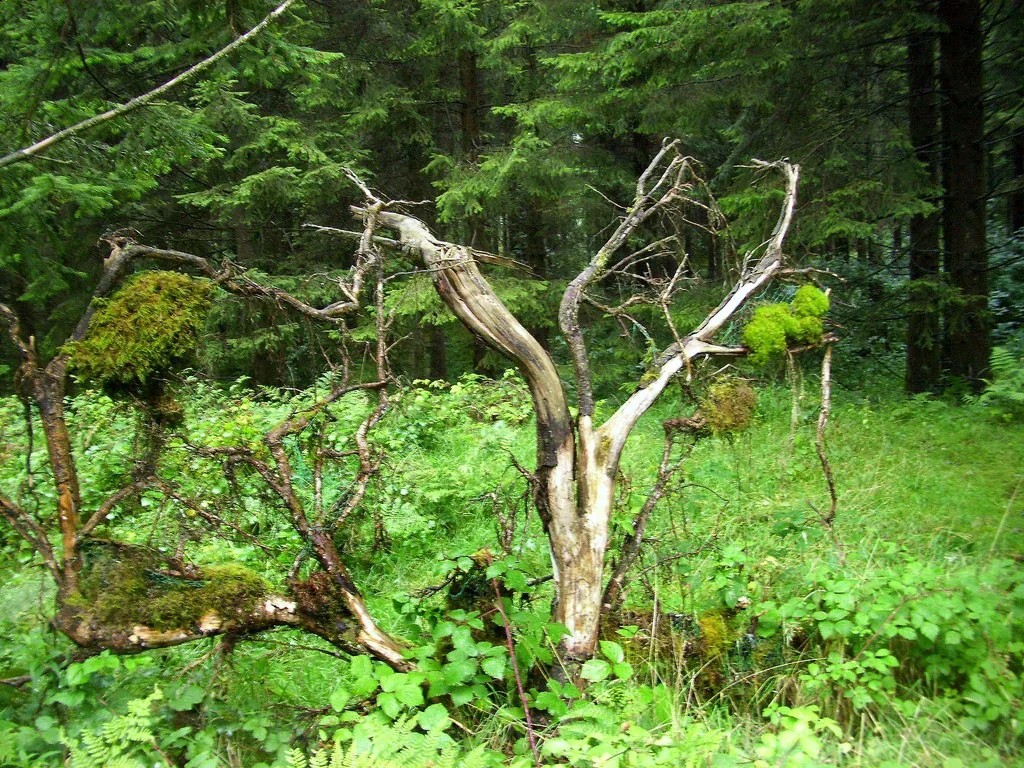
A fallen branch or old stump is not automatically waste: dead wood can become habitat as fungi, insects, and other organisms break it down. What makes sense to retain depends on where the wood lies, whether it creates a safety or access problem, and what wildlife the area can support. Instead of clearing every piece or keeping all of it, decide which material can remain safely and in what form.
Decay creates a changing habitat
Dead wood changes as it dries, softens, cracks, and decays. Different organisms can use different stages, and the wood may retain moisture or create sheltered spaces. Fungi and invertebrates help break down organic material; birds and other animals may forage around it. These are general ecological mechanisms, not a guarantee that any particular log will attract a named species.
A dead trunk standing upright offers different conditions from a log on damp soil. Branches in a sunny, dry corner may support a different mix from wood beneath shrubs. The broader value is variety: keeping a few kinds of wood in different conditions can create more niches than a single uniform pile, if the site allows it.
Why that matters beyond the log
Biodiversity describes variety across ecosystems and species, including organisms people may not notice. [1] Dead wood makes some of that less visible life easier to understand: a log can hold a small community of decomposers and the animals that feed around them. Its contribution is not just the wildlife that can be spotted from a path but also the processes that return nutrients to soil.
Fungi and insects are part of interconnected food webs. In some places, birds forage for invertebrates in or beneath decaying wood. The exact species and ecological importance vary by region, forest type, and surrounding habitat, so avoid assuming a garden log recreates the conditions of an old forest. It can still offer a modest, local habitat feature.
Retain wood where it is safe
A useful example is a large yard with a low log well away from a path, play area, building, and drainage route. Leaving it in place or moving it to a sheltered corner may preserve habitat with little inconvenience. In a narrow courtyard, a small bundle of untreated branches may fit better. The choice depends on the material and site; do not leave wood where it blocks access, hides a trip hazard, or can roll.
Standing dead trees require special caution because falling limbs or trunk failure can injure people and damage property. Do not climb, cut, or attempt to fell a tree yourself. If a standing tree is near a home, path, or public space, seek an assessment from a qualified arborist or relevant land manager. Habitat value does not remove the need to manage immediate risks.
Keep useful wood from becoming a problem
Avoid moving firewood long distances, since wood can carry insects or pathogens into new areas. Use local rules and guidance about firewood movement and disposal. The National Invasive Species Information Center notes that invasive species can spread through human activity and that insects may be transported in wood. [2] That supports caution about transport; it does not mean every piece of dead wood is infested.
Do not burn or chip material automatically if it can remain safely, but also do not stack it against a structure or leave it in a location that creates a fire, pest, or maintenance concern. Untreated, locally sourced wood is a more sensible habitat material than imported or chemically treated lumber. If you need to remove wood, check local disposal practices and avoid spreading it to natural areas.
Choose a scale that fits the space
You do not need a large pile. Preserve a stump, leave a few branches in a tucked-away corner, or place a modest log where it will not interfere with mowing or circulation. A neat, isolated log can be easier to maintain than scattered debris. Keep it visible enough to avoid accidental contact, and check periodically for changes that create a hazard.
The right next step is to look at the wood already on your property and sort it by risk and location. Retain what is safe and local, move small pieces to a suitable quiet area if necessary, and get qualified advice about standing trees near people or structures.
Follow the evidence
Primary sources used in this story. Practical examples are illustrative unless a source states otherwise.
- US National Park Service: What is biodiversity? ↗
- National Invasive Species Information Center: What are invasive species? ↗
Read our editorial standards. Have a correction? Identify the article and relevant source in your feedback to the site owner.