tree day
Guide
What is an ecosystem?
An ecosystem is a community of organisms interacting with one another and with the physical conditions around them. Thinking in terms of relationships, flows, and boundaries makes the concept useful in a yard, pond, forest, or city block.
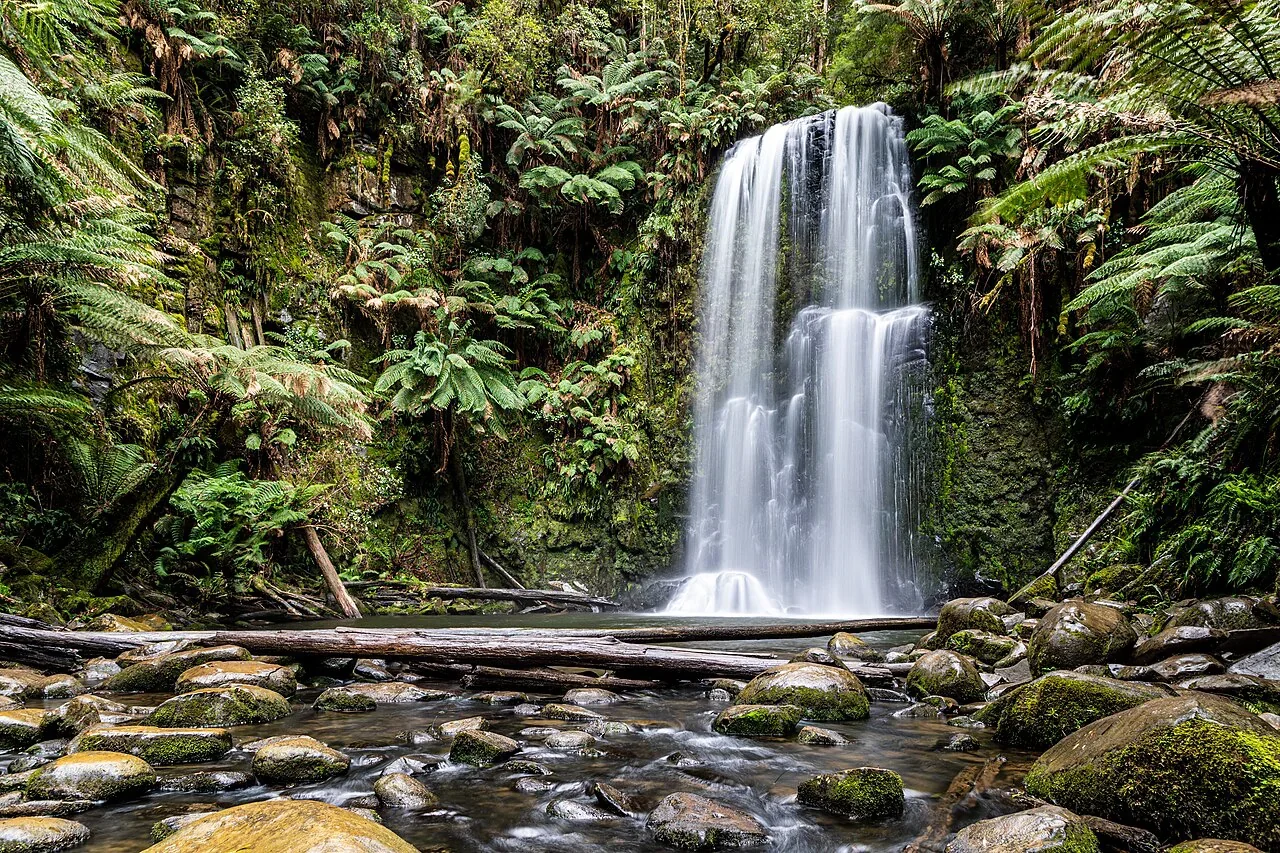
A fallen log is more than dead wood: it can hold moisture, shelter insects, and become food for fungi, while its shade changes the conditions beneath it. An ecosystem is the living community and the nonliving surroundings interacting in a place. Its boundary depends on the question being asked, so an ecosystem can be a pond, a forest, or a smaller patch within one.
The parts are connected
The living parts include organisms such as plants, animals, fungi, and microorganisms. The nonliving parts include conditions and materials such as water, air, soil, light, and temperature. These categories interact. Plants use light and water; animals eat plants or other animals; decomposers break down dead material and return nutrients to the surroundings.
A list of organisms is therefore not yet an ecosystem description. The important question is how the organisms relate to one another and to their physical setting. Biodiversity includes life at several levels, from genes and species to ecosystems, according to the National Park Service [1].
Boundaries are useful, not absolute
People draw ecosystem boundaries to study a place or make a decision. A pond's edge is a practical boundary for a walk, but water, animals, seeds, and nutrients can move between the pond and surrounding land. A forest patch may be analyzed on its own, even though its wildlife moves beyond the mapped line.
For a home gardener, the useful scale might be a rain garden and the soil and organisms it supports. For a watershed planner, the relevant scale could include streams and land draining into them. Neither boundary is the one true boundary; each makes certain interactions easier to see.
Follow energy and materials
Energy enters many ecosystems as sunlight captured by plants and other organisms that make their own food. It passes through feeding relationships as organisms consume plants or other animals, and some energy is released as heat. Materials such as water and nutrients move through organisms and the environment in more complex cycles.
This is why removing one part can have effects beyond that part. If vegetation changes, shade, soil cover, food, and shelter may change too. The size and direction of those effects depend on the ecosystem, the organisms involved, and the nature of the disturbance; a simple diagram cannot predict every result.
A small example: a planted corner
Imagine replacing a bare patch beside a home with locally appropriate flowering plants. The plants interact with soil moisture and sunlight; insects may visit flowers; birds may use the area for food or shelter. Those visitors also connect the patch to nearby green spaces. This hypothetical corner is an ecosystem in the ordinary ecological sense, even if it is small and strongly influenced by people.
The Fish and Wildlife Service says pollinators support plants and wildlife and that habitat restoration is part of its conservation work [2]. That helps explain why a planting can matter beyond its appearance. It does not mean every flower mix suits every region: climate, soil, water, and locally appropriate species should guide choices.
Change can be local and cumulative
An ecosystem is not a static container. Seasons, weather, growth, decay, and human activity all alter its conditions. A change may be modest in one spot but significant when repeated across many places, or it may affect only certain species. The term alone does not imply that a system is pristine or untouched; people are often part of the interactions being described.
A frequent misconception is to use ecosystem as a synonym for habitat. Habitat describes the conditions and resources a particular organism needs; an ecosystem includes the wider community and its interactions. To apply the idea, choose a place, sketch its living and nonliving parts, and trace one connection—such as how water reaches plants or how a flowering plant supports a visitor.
Follow the evidence
Primary sources used in this story. Practical examples are illustrative unless a source states otherwise.
Read our editorial standards. Have a correction? Identify the article and relevant source in your feedback to the site owner.