tree day
Guide
What is a wildlife corridor?
A wildlife corridor is a route or connected habitat that helps organisms move between areas they use. Whether a strip, crossing, or chain of habitat functions as a corridor depends on the species, landscape, and conditions along the route.
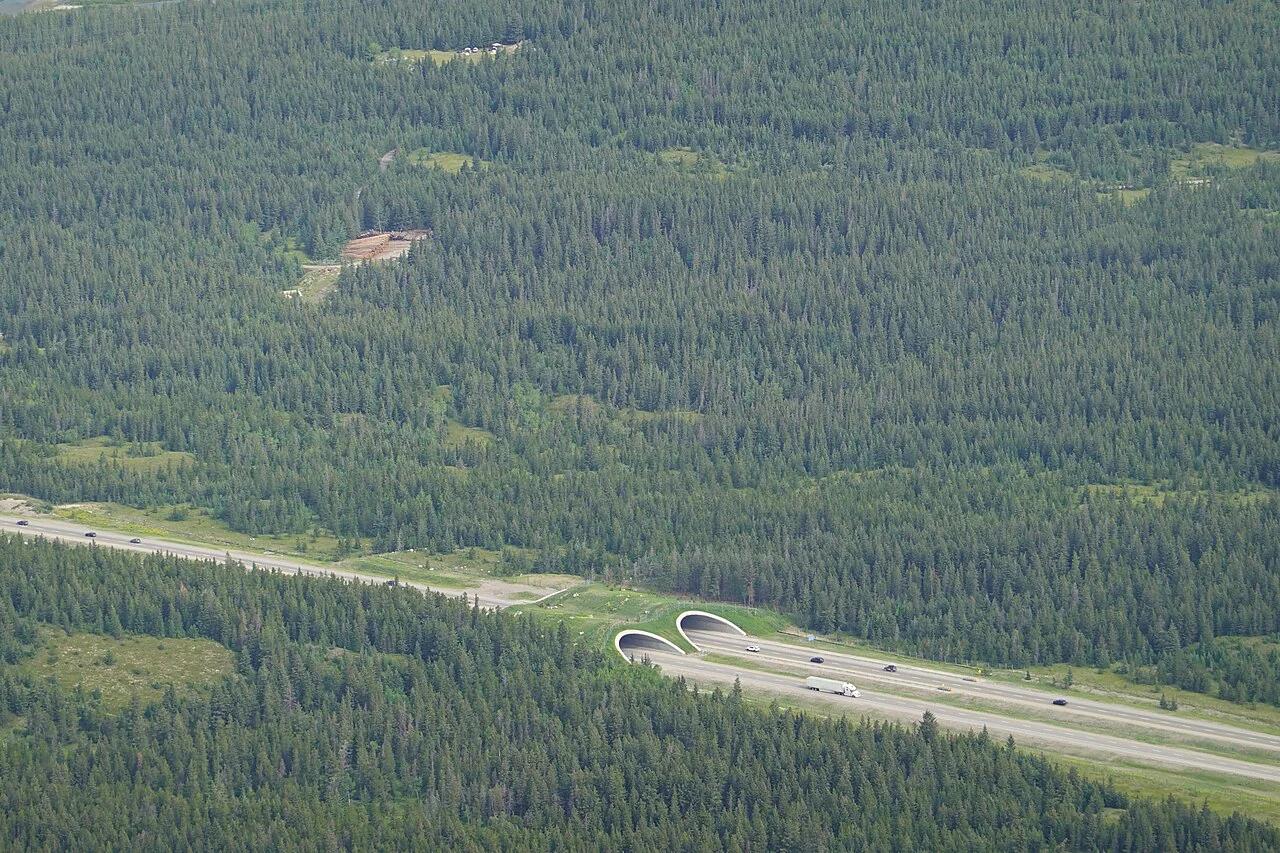
A band of shrubs between two larger green spaces may look like a narrow planting, but for some animals it can provide cover as they move across an exposed block. A wildlife corridor is habitat or a route that helps animals travel between areas. Its value depends on which species need to move, what lies between habitat patches, and whether the route is usable.
Movement is the central idea
Animals move to find food, shelter, mates, nesting sites, or seasonal habitat. A corridor can connect places that meet different needs, or allow dispersal between populations. It may be a continuous strip of habitat, a crossing structure, or a series of suitable patches that animals can move between.
The word corridor does not guarantee that every species can use the same route. A small ground-dwelling animal may need cover near the ground; a bird may cross open space more readily; a fish needs connected waterways. Design must begin with the organisms and movement at issue, not with a generic green line on a map.
Connectivity can reduce isolation
When roads, development, or other changes separate habitat, populations can become more isolated. A corridor may make movement easier and help animals reach resources or other populations. The potential benefit depends on whether the route connects meaningful habitat and whether hazards or unsuitable conditions interrupt it.
Connectivity is not always simple. Some species avoid areas used by others, and a route that helps one organism may not help another. A narrow strip can be a useful passage for one species but poor habitat for a different one. Biodiversity includes organisms with differing needs, including small and less visible life [1], so planning should avoid treating wildlife as one uniform group.
A neighborhood example
Imagine a hypothetical town with a streamside green space and a larger wooded area, separated by streets and lawns. A connected line of suitable vegetation might help some animals move between them, while a safe crossing or protected stream edge could matter more to others. The result depends on local species, the width and quality of habitat, traffic, and other conditions.
The U.S. Fish and Wildlife Service identifies habitat restoration as part of conserving pollinators and their habitat [2]. That illustrates the broader value of connected, suitable habitat, though it does not establish a particular corridor design. Before planting or building, identify the species of concern and consult local habitat or transportation guidance.
A corridor is not a substitute for habitat
A route can help connect habitat, but it cannot necessarily provide everything a species needs to feed, breed, and shelter. A thin strip through degraded surroundings may enable passage without supporting a viable population. Protecting the habitat patches at either end and improving conditions along the route may all be necessary.
A common mistake is to assume that any planted strip works as a corridor. Plant choice, disturbance, lighting, barriers, predators, and maintenance can affect whether animals use it. In a home landscape, a sequence of regionally appropriate plants may benefit some visitors, but it should not be advertised as a wildlife corridor without knowing which species can move through it.
Plan from a species and a map
Start by asking what should be connected and for whom. Map the habitat areas, barriers, and existing routes; then find local information about movement needs and threats. Monitoring can help establish whether animals use a route, but signs such as tracks or sightings need careful interpretation and may not prove successful movement or breeding.
The next choice is practical: if you manage a property, preserve suitable habitat and reduce obvious breaks where local guidance supports it; if planning a larger project, ask a wildlife or land-use professional to assess the target species and crossing conditions. A corridor is most useful when it connects real ecological needs rather than merely appearing continuous from above.
Follow the evidence
Primary sources used in this story. Practical examples are illustrative unless a source states otherwise.
Read our editorial standards. Have a correction? Identify the article and relevant source in your feedback to the site owner.