tree day
Guide
What is a rain garden?
A rain garden is a planted, shallow landscape depression that receives runoff and lets it soak into the ground; learn how it works and what to check before siting one.
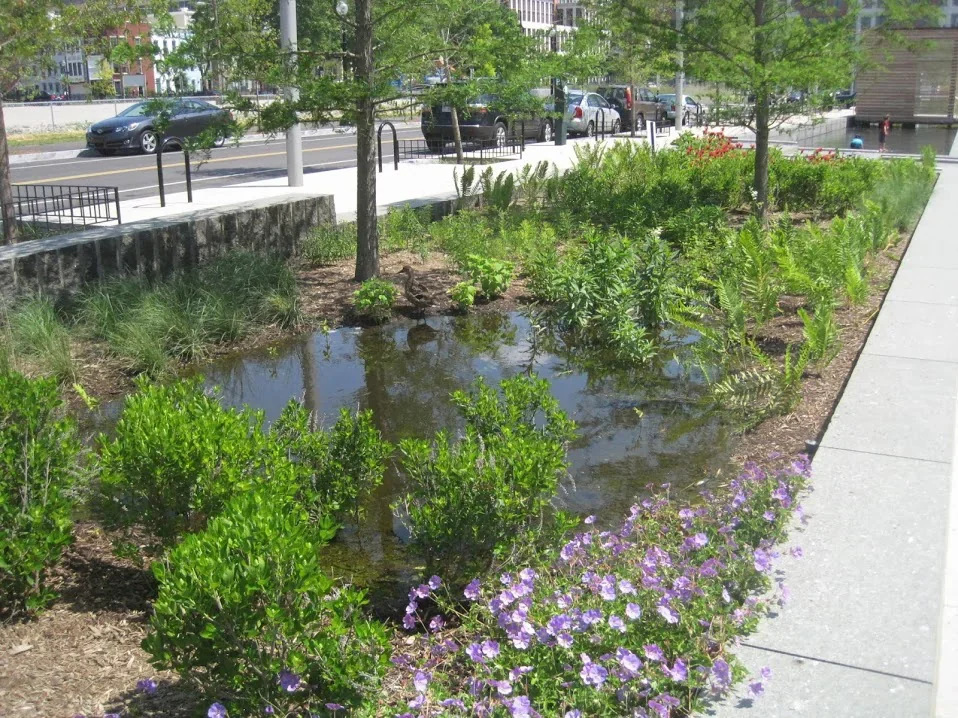
A rain garden is a planted, shallow depression designed to collect runoff from a surface such as a roof or paved area and let it soak into the ground. It is not simply a pond or a low spot that stays wet. Its success depends on where water comes from, how the site drains and whether the soil and plants can handle the wetting and drying cycle.
How a rain garden handles a storm
Runoff enters the planted depression, spreads across its surface and infiltrates into the soil. Plants and soil help slow the flow and hold water temporarily, reducing the amount that rushes directly across a yard. The garden should drain between storms; persistent standing water can signal that the location or soil is unsuitable, or that an outlet is needed.
Compost can improve soil structure and help soil absorb and retain water, according to EPA guidance [1]. That is one possible part of soil preparation, not a guarantee that any site will infiltrate rain quickly. The underlying soil, groundwater and incoming runoff all affect performance.
Start by tracing the runoff
Identify which surface would feed the garden and where water travels now. A roof downspout, driveway or compacted area can send a concentrated flow, but the amount and quality of runoff vary. Note whether water already collects in the proposed area and whether it moves toward buildings, neighboring land or a place where it causes erosion.
Choose a location only after understanding the route water will take. Local rain garden guidance can address separation from foundations, utilities, slopes and other site features; there is no single distance that fits every property. Before digging, check local utility-location requirements and have buried services identified.
Check the soil and site conditions
Observe the proposed location after rain and use a small test hole to compare how water infiltrates there. Avoid testing only the lawn nearby if the garden would sit on different fill or compacted ground. A site that drains slowly may need a different design or may not be appropriate for a simple infiltration garden.
Rain gardens are often planted with species able to tolerate both wet periods and drier intervals, but plant choices must match local climate, soil and exposure. Use regional extension or municipal guidance for species and construction details. Do not assume every native plant tolerates temporary flooding or every wetland plant suits a garden that dries between storms.
Build for function, not appearance alone
The garden needs a shallow basin, a stable route for inflow and an overflow path for storms that exceed its capacity. The edges should prevent erosion where water enters, and the planting should leave access for maintenance. A rain garden is not a place to direct water without considering where excess will go.
For a hypothetical small roof section, a homeowner might first observe how much runoff reaches the downspout and whether the nearby soil absorbs water. The next design decision could be to route only part of that flow to a planted basin, with a safe overflow route. Exact sizing should follow local design guidance and site conditions rather than a generic formula.
Plan for the first seasons
New plantings need attention while roots establish, and mulch may need refreshing as it shifts or decomposes. Keep inflow points clear of leaves and sediment, inspect after heavy rain for erosion, and note whether water drains as intended. If the basin remains saturated or overflows toward a structure, reassess the design rather than adding more plants and hoping they solve it.
Your next step is to trace a runoff route, check the intended site’s drainage and consult local rain garden guidance before deciding whether a planted basin fits your property.
Follow the evidence
Primary sources used in this story. Practical examples are illustrative unless a source states otherwise.
Read our editorial standards. Have a correction? Identify the article and relevant source in your feedback to the site owner.