tree day
Guide
Protected areas vs conservation areas?
Protected area and conservation area describe places managed to safeguard nature, but their meanings and rules depend on the country, designation and site. Learn how to check what protection actually means before visiting or evaluating an area.

A sign that calls a place a conservation area does not tell you exactly what activities are allowed, and “protected area” can refer to many kinds of designations. The terms overlap in ordinary use, while legal definitions and management rules vary by jurisdiction. The useful distinction is not a universal ranking: it is the specific purpose, authority and rules attached to the place in question.
The label needs a jurisdiction
A protected area is commonly understood as a place set aside or managed for nature and other conservation purposes. A conservation area may be a formal designation, a local planning category, a community-managed site or a broad description of land where conservation is a priority. In one jurisdiction, the two labels may have defined legal meanings; elsewhere, one or both may be used informally. The name alone cannot establish who manages a site or what protections apply.
The sources available here define biodiversity and discuss habitat conservation, but they do not establish a single legal meaning for these area labels. The National Park Service describes biodiversity as including ecosystems, species and genes [1], while the U.S. Fish and Wildlife Service identifies habitat conservation as part of its pollinator work [2]. Those concepts explain why places may be managed for nature, but a site’s designation and rules must be checked locally.
Protection can mean different rules
Some areas restrict activities such as development, collecting, off-trail access or resource use; others allow recreation and certain uses under management rules. A conservation designation may focus on a particular habitat or feature, while a protected area may have a broader purpose. These are possible differences, not dependable definitions across countries. Check the official designation, the managing organization and the current management plan before drawing conclusions.
Even where a place has strong formal protection, the practical experience may depend on zoning or the site’s own rules. A trail may be open while a nesting area is closed; a visitor activity may be allowed in one season but restricted in another. Do not assume that “protected” means no human use, or that “conservation” means every activity is permitted.
A visitor’s example
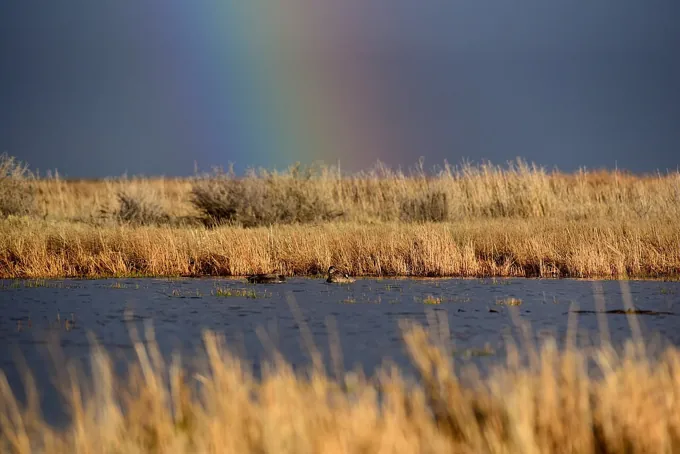
Suppose a family sees a sign naming a nearby marsh a conservation area and wants to walk there. Before planning, they check the municipality or land manager’s official page for access hours, trails, dogs, seasonal closures and any sensitive areas. The sign answers what the site is called; the current rules answer what visitors can do. If information is unclear, contact the manager rather than relying on a map label or an old social post.
That small check can prevent disturbance and wasted travel. Habitat supports wildlife in different ways, and the Fish and Wildlife Service describes habitat restoration and pollinator conservation among its efforts [2]. A visitor cannot infer the site’s management goals from that broad fact, but can follow posted guidance that protects the particular place. The appropriate choice may be to stay on the open trail or visit another area if access is restricted.
Compare places by purpose and management
If you are comparing two sites, look for who designated each one, what authority applies, what conservation features the designation is meant to protect and what activities remain allowed. Then check how the site is monitored and whether management can respond to new pressures. A designation may be valuable without being identical in strength or purpose to another; compare the actual rules and stated objectives.
It also helps to distinguish conservation goals from a label. Protecting biodiversity can involve safeguarding habitat, species or ecological processes, but no single category of area guarantees every one of those outcomes. A site might conserve one feature while allowing uses that affect another. Read the management objective and any available monitoring information to understand the scope.
Make the next check specific
For a visit, check the official site manager’s current visitor guidance. For a planning, ownership or policy question, look for the legislation, designation record or management plan that applies in that jurisdiction. If the terms are being used in a report or proposal, ask the author to identify the exact designation and authority rather than treating the phrases as interchangeable.
A practical comparison can fit on a note: site name, managing body, designation, conservation purpose and rules relevant to your decision. That is enough to distinguish a place that is formally protected under a particular law from one described more generally as a conservation area, when local documents make that distinction. Start with the source that controls the specific place, then decide whether its protections and access fit your purpose.
Follow the evidence
Primary sources used in this story. Practical examples are illustrative unless a source states otherwise.
Read our editorial standards. Have a correction? Identify the article and relevant source in your feedback to the site owner.