tree day
Guide
How to water container plants?
Learn to judge when pots need water, how to wet the root ball thoroughly, and how pot size, mix, weather and drainage change the routine.
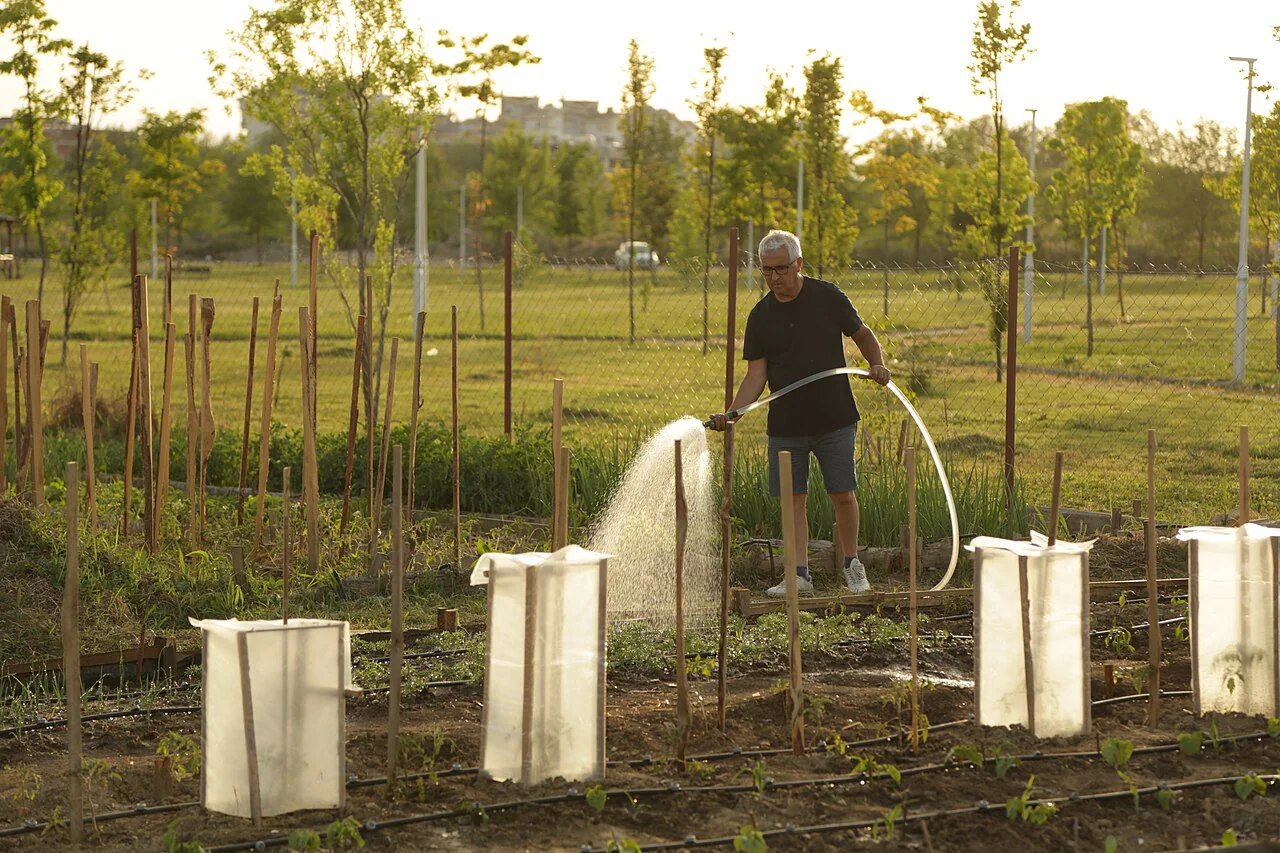
Water a container when its potting mix is beginning to dry at the roots, then water slowly until the whole root ball is wet and excess drains away. A fixed weekday schedule is a poor guide: a small pot in sun can dry quickly, while a large one in cool shade may stay damp. The useful routine is to check each pot and respond to its condition.
Check below the surface
Touch the mix about an inch below the surface, or closer to the roots in a deep pot. If it feels dry there, water; if it is still moist, check again later. A light pot can also signal that it has lost much of its stored water, but lifting is most useful when you already know how the pot feels after a thorough watering.
Plant needs vary. A leafy annual in a small, exposed container may use water faster than a drought-adapted herb in a larger pot. Heat, wind, plant size and the mix all matter. Learn the pattern of a particular pot over several days rather than assuming every container on a patio dries at the same speed.
Wet the root ball, not just the surface
Pour gently over the soil surface, moving around the pot so water reaches the whole root area. If the mix is very dry, water can run down a gap between the soil and pot wall without soaking the center. Apply a little, pause, then water again; check that the mix has absorbed moisture and that water eventually emerges from the drainage holes.
Empty saucers after drainage has stopped if the plant is not suited to standing in water. A plugged hole or a pot with no outlet can leave roots waterlogged even when the surface looks dry. Drainage matters because roots need both moisture and air; persistent saturation can deprive them of oxygen.
Adjust for pot and weather
Small containers hold less water than large ones, and porous unglazed pots can lose moisture through their sides. A sunny, windy position speeds drying; a sheltered spot or cool spell slows it. These are reasons to check more often during hot weather, not to apply the same amount automatically whenever the forecast is warm.
For example, imagine two pots with the same herb: one is a small clay pot on a breezy balcony, the other a large plastic pot in partial shade. The balcony pot may need checking more often, but the correct amount still depends on how dry its root zone is. If only the top is wet while roots remain dry, slow the next watering and let it soak in.
Keep the mix and plant in balance
Use a container mix suited to pots rather than assuming dense garden soil will behave well in a confined space. A compacted or poorly draining mix can stay wet too long; an overly coarse mix may dry rapidly. If the plant repeatedly wilts despite careful watering, check for blocked drainage, crowded roots, extreme exposure or a mismatch between the plant and container before simply adding more water.
A surface layer of organic material can reduce evaporation, but leave room around stems and monitor the soil beneath it. Compost can improve soil structure and help it retain moisture and nutrients, according to the EPA’s home composting guidance [1]. In a pot, use a modest amount appropriate to the mix and plant rather than treating compost as a substitute for drainage or observation.
Make checking the next step
Choose a consistent point in your day to inspect containers, especially during a hot spell, and group pots with similar light and water needs where practical. Keep a note of which pots dry first. If a plant is wilting, check the root-zone moisture before watering: wilting can occur in dry soil, but adding water to already saturated soil can make the problem worse.
Your next watering decision is simple: feel the mix near the roots, water slowly if it is drying, and confirm that excess can drain. Then check again when conditions change.
Follow the evidence
Primary sources used in this story. Practical examples are illustrative unless a source states otherwise.
Read our editorial standards. Have a correction? Identify the article and relevant source in your feedback to the site owner.