tree day
Guide
How to make leaf mould?
Leaf mould is made by letting collected leaves decompose on their own, producing a leaf-based soil conditioner rather than a balanced food-scrap compost. Learn how to contain, monitor and use it in a home garden.
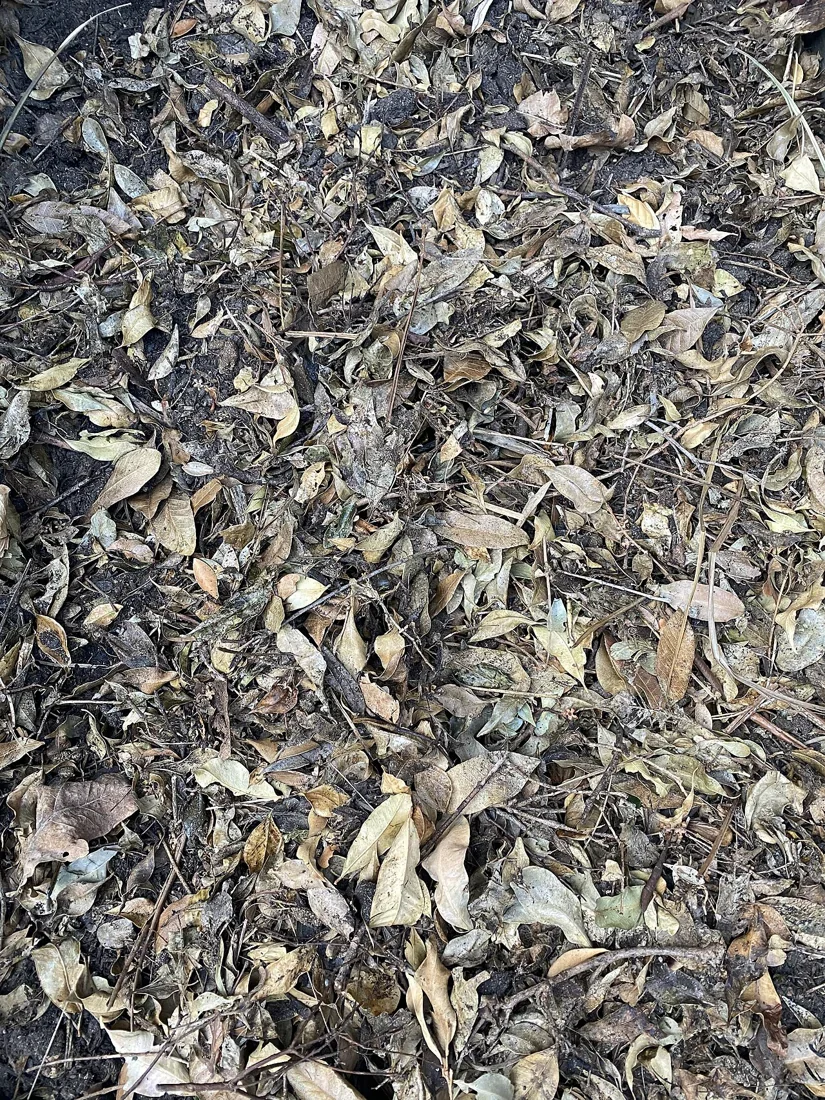
To make leaf mould, gather fallen leaves, keep them in a contained pile or enclosure, and give them time to break down. Unlike a mixed compost pile, leaf mould is made mainly from leaves rather than a planned balance of food scraps and other greens. It is a useful way to turn a seasonal surplus into organic matter for garden soil, though it is not a complete fertilizer.
Start with suitable leaves
Use leaves that are healthy and untreated. EPA advises against adding herbicide-treated plants or grass, diseased or pest-infested plants, and aggressive weeds or weeds with seeds to a backyard compost pile. The same caution is useful when deciding what to gather for a leaf pile: avoid material likely to spread a persistent garden problem. Follow local yard-waste rules for anything you do not want to keep. [1]
Different leaves break down at different rates, depending on their size, toughness, moisture and the conditions where they are stored. Shredding or chopping them can make a more compact pile and expose more surface area, but it takes extra effort. Whole leaves are simpler to collect; they may mat together, so expect to check whether air and water can reach the pile.
Contain the pile and let it work
Choose a place where leaves will not blow into a street or drain. A simple enclosure or a container with air access can keep them together; the setup can be modest, because the aim is to hold leaves while they decompose rather than build a hot, carefully balanced pile. Keep the material in contact with normal outdoor moisture, but avoid leaving it so saturated and compacted that it becomes a dense, airless mass.
Leaf mould is a slow process, and the time varies with climate, leaf type and how finely the material was prepared. Do not use a fixed calendar as proof that it is ready. Check for a dark, soft, earthy material and for recognizable leaves. If much of the pile is still intact, give it longer or use the more decomposed portion first.
How it differs from compost
A mixed compost pile is managed with carbon-rich browns, nitrogen-rich greens, water and oxygen. EPA includes dry leaves as browns and food scraps, grass clippings and coffee grounds as greens. It recommends mixing at least two to three parts browns to one part greens by volume, turning the pile occasionally, and monitoring moisture. [1]
A leaf mould pile is simpler because leaves provide most of the input. The trade-off is that its nutrient contribution is less varied than finished mixed compost. Think of leaf mould primarily as a way to add organic matter and improve the feel of soil, not as a precise nutrient treatment. For hungry crops or plants with specific needs, do not assume it replaces other soil preparation.
A small garden example
Imagine a yard with more fallen leaves than its compost bin can absorb. The gardener could reserve some dry leaves for covering food scraps through winter, then place the rest in a separate enclosure for leaf mould. In spring, the gardener checks the material instead of assuming the pile has finished: crumbly, dark portions can be used, while intact leaves remain for more decomposition. That approach gives the leaves two distinct jobs without overloading the food-scrap pile.
When using leaf mould, spread it on the surface around plants or incorporate a modest amount where soil improvement is wanted. Finished compost can also be used as a soil amendment or mulch, according to EPA, but the two products are not interchangeable in every planting situation. [1] Keep material clear of plant stems, and observe how the bed holds moisture before adding more.
Solve the common failures
If leaves blow away, improve containment or choose a sheltered location. If they sit as a dry, unchanged heap, add moisture when conditions are dry and make sure the pile is not entirely sealed from air. If they form a slick, compacted mat, loosen or mix them. These are practical adjustments, not reasons to add food scraps; adding greens shifts the project toward mixed compost.
One common mistake is using every leaf as mulch in the fall, then having no browns to balance kitchen scraps. Another is treating leaf mould as instantly ready because it has been in a pile for a season. Keep a small reserve of dry leaves and judge the finished material by its condition. Your next step is to choose a contained spot, sort out problematic foliage, and start with the leaves you can comfortably manage.
Follow the evidence
Primary sources used in this story. Practical examples are illustrative unless a source states otherwise.
Read our editorial standards. Have a correction? Identify the article and relevant source in your feedback to the site owner.