tree day
Guide
How do trees cool cities?
Trees cool urban spaces mainly by shading surfaces and releasing water through leaves, but the effect depends on canopy, species, site and water. Learn what trees can change on a street and what to consider before planting for shade.
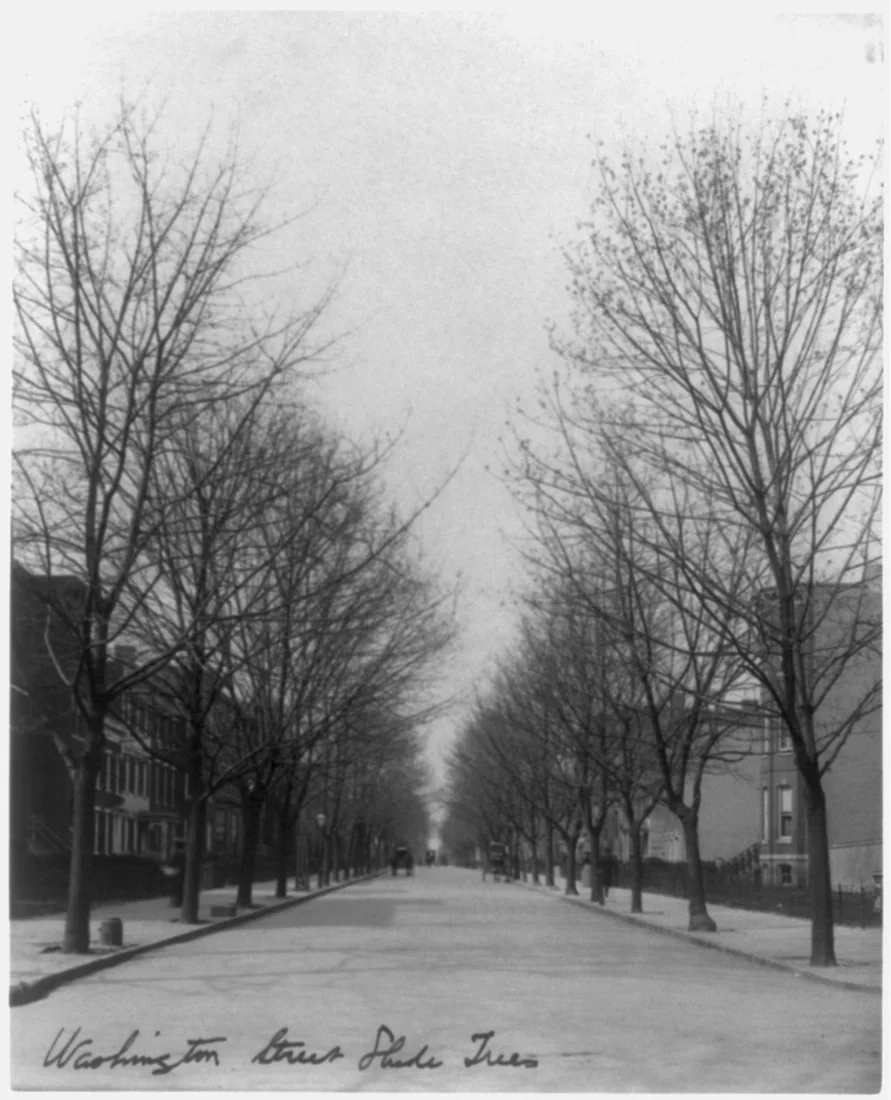
A tree-lined sidewalk can feel cooler than a bare stretch of pavement because its canopy blocks direct sun and its leaves release water to the air. The difference is most obvious where people walk or wait in the shade. Trees can improve local comfort, but their effect depends on canopy size, health, placement and the conditions around them.
Canopy blocks sunlight before it heats the ground
Leaves intercept sunlight that would otherwise reach pavement, walls and people. Shaded surfaces absorb less solar energy, and people in shade receive less direct radiant heat. This is why a route beneath a broad canopy can feel more comfortable even when the measured air temperature changes only modestly.
Placement matters: shade falls in different places over the course of the day. Trees near a bus stop, sidewalk or playground may make those places more usable during hot periods, while a tree planted where its canopy shades no regularly used space may provide less immediate comfort to people.
Leaves also move water into the air
Trees draw water from soil and release some through leaf pores in a process called transpiration. Evaporation uses energy, which can cool the surrounding air. The effect depends on water availability, tree health, weather and the amount of leafy canopy; it is not a fixed cooling rate that applies to every tree or street.
A hypothetical block with established trees and adequate soil moisture may receive both shade and evaporative cooling. During dry conditions, trees may have less water available, and local watering needs depend on species, soil and climate. Follow local planting guidance rather than applying a universal schedule.
Cooling is local and uneven
A tree can cool the space beneath and around its canopy, but that does not mean it changes temperatures uniformly across a city. Building height, street orientation, wind, surrounding surfaces and canopy continuity all shape where benefits are felt. A line of trees may shade a walking route while leaving nearby roofs exposed.
Cities become warmer in part because built materials absorb and release heat and many developed areas have less vegetation and shade. These urban conditions are distinct from the broader warming trend caused by increasing greenhouse gases. [1] Trees help with local heat exposure; they do not by themselves address the emissions driving global climate change.
Choose trees for the site, not a slogan
A useful planting decision begins with the place: soil volume, available water, overhead and underground utilities, nearby buildings and the local ecosystem. Species suited to local conditions are more likely to establish and provide lasting canopy. Mature size and maintenance access matter, too.
For example, a hypothetical school might prioritize shade over a paved waiting area, but the planting plan would need to account for root space, the site’s water availability and safe clearance from infrastructure. Before digging, arrange utility location through the appropriate local service. Where trees are unsuitable, a shade structure may address the immediate need.
Plan for the years before full canopy
New trees do not provide the same shade as established ones, and they require care while they establish. A planting project should identify who will monitor tree health and how care will adapt to local soil and weather. Existing mature trees can also be valuable sources of shade, so protecting them may be as important as adding young trees.
For a practical next step, walk the site during the hottest hours and mark where people need shade most. Then ask local forestry or extension staff which species and planting methods suit those conditions. Choose a location and care plan that can sustain canopy, rather than judging the project by the number of trees planted.
Follow the evidence
Primary sources used in this story. Practical examples are illustrative unless a source states otherwise.
Read our editorial standards. Have a correction? Identify the article and relevant source in your feedback to the site owner.