tree day
Guide
Food chains vs food webs?
A food chain follows one path of energy transfer between organisms, while a food web maps many connected feeding relationships. Use a chain to explain a simple route and a web to see the alternatives and dependencies around it.
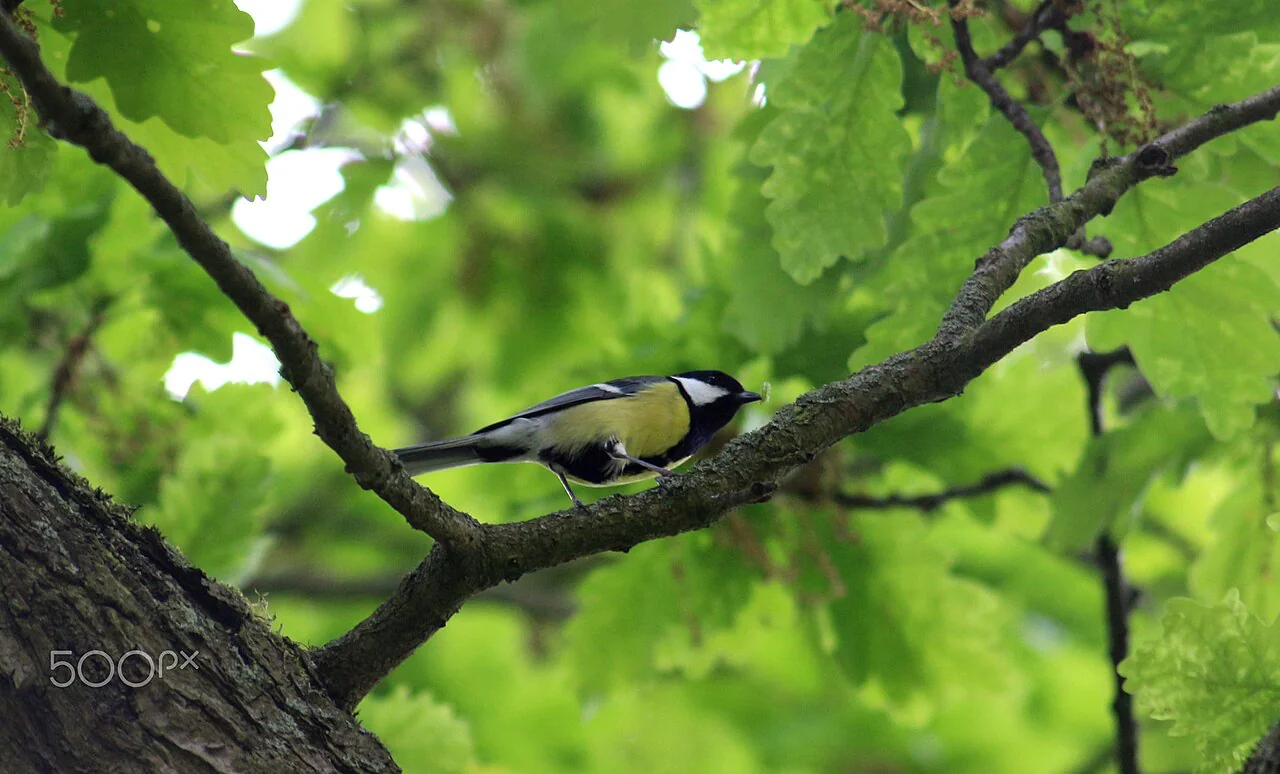
A caterpillar eats a leaf, and a bird eats the caterpillar: that short sequence is a food chain. In a garden, the bird may also eat other insects, while several animals may feed on the same plant. Those overlapping links form a food web. The chain is easier to follow; the web better represents the many feeding relationships in a real community.
A chain traces one route
A food chain is a simplified sequence showing how energy and matter pass through organisms when one eats another. It often starts with a plant or another organism that captures energy, then moves to consumers. The arrows usually point in the direction energy moves—from the food to the organism eating it.
Chains are useful for explaining a particular route without drawing every relationship. A leaf-to-caterpillar-to-bird example helps show that a predator depends on prey, and that prey depends on food resources. It is a model of one path, not a claim that the bird eats only caterpillars or that the caterpillar uses only one plant.
A web keeps the overlaps
A food web combines multiple chains that share organisms. One bird may eat several kinds of insects; one insect may feed on several plants; and a larger predator may eat the bird as well as other animals. The web makes those overlaps visible and helps explain why a change in one population can matter to more than one species.
Even a food web is a simplification. It may omit seasonal diets, life stages, parasites, decomposers, or organisms that are difficult to observe. Its detail depends on the question and the evidence available. Adding more arrows is not automatically better if the relationships are uncertain or irrelevant to the issue being studied.
Where decomposers fit
Dead leaves and organisms do not simply vanish from the system. Fungi, microbes, and other decomposers break down organic material, and nutrients can return to soil or water where they become available to other organisms. Many introductory diagrams show this as a recycling loop alongside feeding links rather than as one linear chain.
Including decomposition helps separate energy flow from material cycling. Energy is transferred and eventually dissipates as heat; nutrients can be reused through ecological processes. A diagram that draws one endless circle for both can blur that distinction. For a basic classroom or garden sketch, show the feeding route with arrows and add a separate note for decomposers and nutrient return.
A hypothetical garden web
Picture a garden with flowering plants, leaf-eating insects, spiders, songbirds, and soil decomposers. A chain could show plant to insect to bird. A web would add that spiders also eat insects, birds eat multiple prey, and several insects visit flowers. The example is hypothetical; actual relationships vary with species, season, and location.
The U.S. Fish and Wildlife Service explains that pollinators support plants and wildlife [2]. That is a useful reminder that a garden's relationships can extend beyond who eats whom: some insects move pollen while feeding. A food web focused only on predation would not show that interaction unless the diagram also included pollination links.
Choose the model for the question
A common mistake is to treat the most visible predator as the only important part of a web. Plants, small invertebrates, decomposers, and less conspicuous species can all shape the relationships. The National Park Service describes biodiversity as including all living things, including organisms that are not readily seen [1]. That broad view can help prevent a diagram from shrinking to familiar animals alone.
Use a chain when you need to explain one clear feeding route. Use a web when you want to show shared food sources, alternate prey, or possible indirect effects. If you are making one for a local patch, start with organisms you can identify reliably, draw arrows from food to eater, and mark uncertain links as questions rather than facts.
Follow the evidence
Primary sources used in this story. Practical examples are illustrative unless a source states otherwise.
Read our editorial standards. Have a correction? Identify the article and relevant source in your feedback to the site owner.