tree day
Guide
Drip irrigation vs sprinklers?
Compare drip irrigation and sprinklers by planting layout, water placement, maintenance and coverage, then choose the method that suits the space you actually need to irrigate.
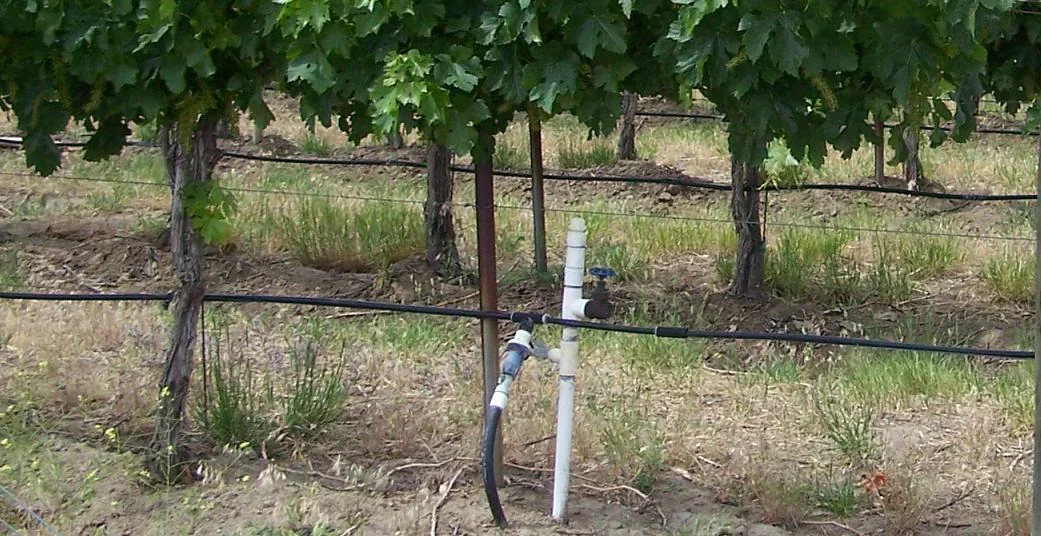
Choose drip irrigation when water should reach distinct root zones with little overspray; choose sprinklers when a larger area needs broad coverage. Neither method is automatically more efficient in every garden. Layout, pressure, upkeep and how well water enters the soil determine whether the system puts moisture where plants can use it or sends it onto paths and beyond the bed.
Drip puts water along a route
Drip systems use tubing and outlets to deliver water near plants. They can suit rows, containers or established beds where plant positions are predictable. Because water is localized, fewer leaves and nearby surfaces may get wet, but the system requires working emitters and tubing placed where roots are growing.
A clogged outlet or a line that misses a plant can leave dry spots while the rest of the bed looks watered. Check the system while it runs and inspect soil near several plants, including those farthest from the supply. Adjust placement as plants grow or the planting plan changes.
Sprinklers cover an area
Sprinklers apply water over a wider pattern and can cover closely spaced crops or lawns. Their reach can be useful where plants are spread across an open area, but wind can push water onto paths or away from the intended zone. Uneven coverage may leave dry patches beside saturated ones.
WaterSense advises choosing timing and amount to avoid runoff and supports a holistic approach to water-smart landscapes [1]. With a sprinkler, observe the pattern on a calm day and note where water lands. If the soil begins to pond or runoff starts before the whole area is watered, shorten or pause application so the water can soak in.
Compare the garden, not just the equipment
For a hypothetical vegetable bed with straight rows and clear plant spacing, drip tubing may follow the rows and keep water close to roots. A broad bed of closely spaced crops could be easier to cover with a sprinkler, provided the spray reaches evenly and wind is limited. These examples do not establish a universal winner; soil texture, slope, local conditions and available water pressure matter.
If a garden mixes plants with different water needs, separate zones can prevent one group from receiving too much because another needs more. A single system that covers everything may be simpler to install but harder to tune. Match the system to plant groupings before buying equipment.
Include upkeep in the comparison
Drip tubing needs inspection for leaks, blocked outlets and displacement. Sprinklers need checks for broken heads, poor alignment and overspray. Either system can waste water if left running without observation or if its timer no longer matches weather and plant needs.
The system should deliver water at a rate the soil can absorb. If water runs off, change the application pattern or pause between cycles rather than assuming more pressure or longer runtime will solve the problem. EPA guidance on compost notes that improved soil structure can help soil absorb and retain water [2], though an amendment cannot fix every site or irrigation issue.
Make a small, observable choice
If uncertain, try the method on one representative section and inspect the soil after operation. Compare how evenly moisture reaches the roots, how much lands outside the planting and how much adjustment the setup needs. Larger in-ground systems may benefit from an irrigation audit; WaterSense identifies certified professionals who can install, maintain or audit such systems [1].
Your next step is to map plant groups and observe their current watering pattern, then choose drip, sprinklers or separate zones for the area that needs attention.
Follow the evidence
Primary sources used in this story. Practical examples are illustrative unless a source states otherwise.
Read our editorial standards. Have a correction? Identify the article and relevant source in your feedback to the site owner.