tree day
Guide
Climate models vs weather forecasts?
Weather forecasts estimate atmospheric conditions over the coming days, while climate models explore long-term patterns under specified conditions. They answer different questions, so a climate projection is not a day-by-day forecast.
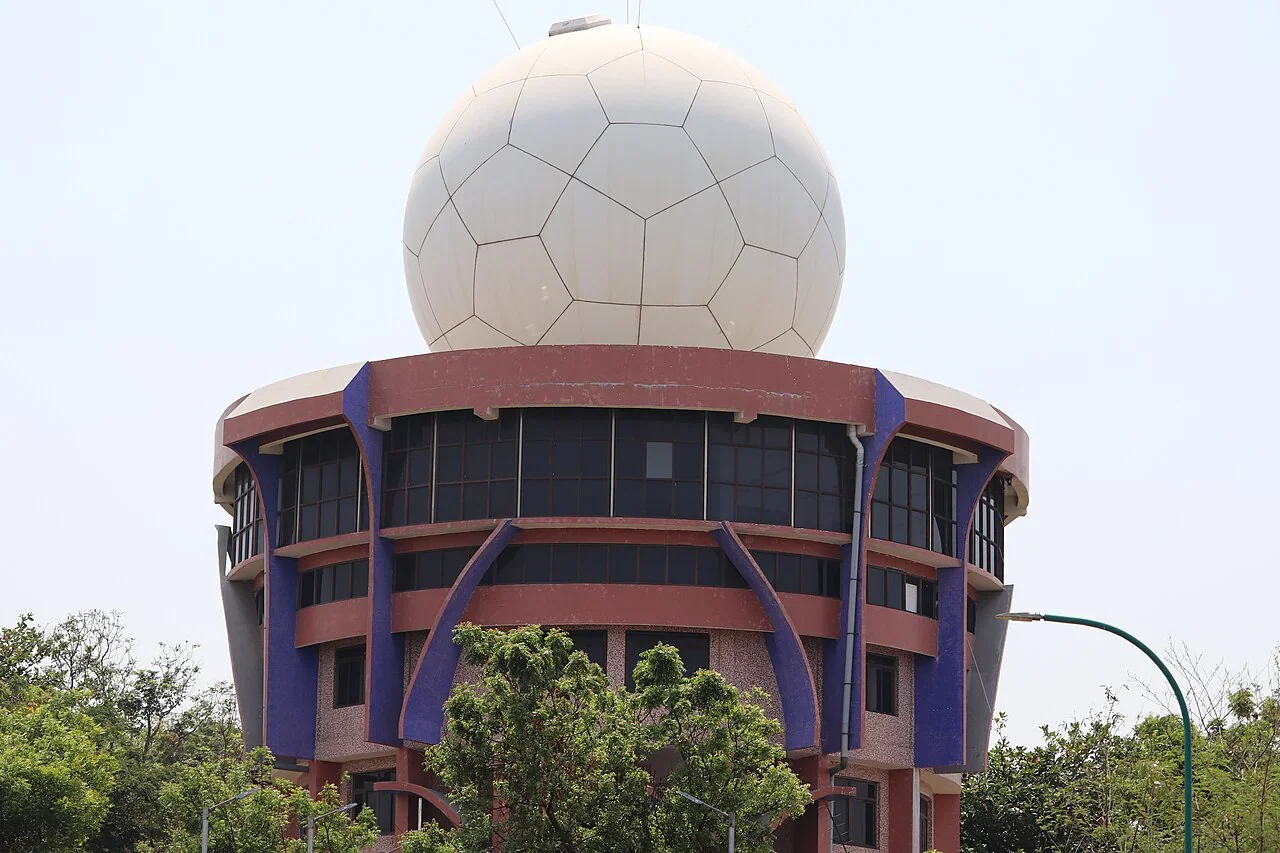
A climate model cannot tell you whether it will rain at your picnic next Saturday. A weather forecast is designed for that short-range question; climate models examine how patterns may change over longer periods under stated conditions. The difference is not that one is certain and the other is guesswork. Each uses observations and physical understanding to answer a different kind of question.
Different questions, different time horizons
A weather forecast asks what atmospheric conditions are likely over a near-term period: temperature, rain, wind or cloud at a particular location. Climate describes average patterns over much longer periods, usually decades. NASA distinguishes weather over minutes to days from climate patterns assessed over long time spans. [1]
A climate model therefore is not a forecast for a particular Tuesday decades from now. It can explore questions such as how average conditions or the likelihood of certain extremes might differ across a future period, given assumptions about greenhouse gases and other influences.
Why weather forecasts focus on the initial state
For a short-range forecast, the atmosphere's current state matters greatly. Forecasters use observations to estimate conditions now, then calculate how the system may evolve. Small uncertainties in the starting picture and atmospheric behavior can grow, making detailed forecasts less dependable farther out in time.
That is why checking an updated local forecast is useful for immediate choices such as whether to carry rain gear. A climate projection cannot replace that forecast; it does not aim to resolve the exact sequence of storms or calm days in a future season.
Climate models examine patterns and drivers
Climate models represent processes that move energy and water through the atmosphere, ocean, land and ice. Scientists use observations and computer models together to study past, present and future climate change. [1] Models can examine how long-term patterns respond when influences such as greenhouse-gas concentrations change; the result depends on the conditions being represented.
The physical reason warming matters is that added greenhouse gases slow the escape of heat from Earth's system. NASA attributes the warming trend observed since the mid-20th century to human activities that expand this heat-trapping effect. [2] Climate models help explore the consequences of that altered energy balance, not the precise weather of a chosen future date.
A hypothetical planning example
Imagine a town considering shade and cooling measures for public spaces. A weather forecast can help staff decide whether to move an event indoors this weekend. A climate projection can inform whether long-term planning should account for hotter average conditions or changing heat risks. The town still needs local observations, relevant projections and its own knowledge of who uses each space.
These tools complement each other, but they are not interchangeable. The forecast supports immediate operations; the projection supports decisions meant to last. Neither alone specifies every neighborhood's future experience.
Read the conditions and limits
When you see a model result, check the period, region, variable and assumptions. Is it an average, a range, or a particular scenario? A scenario describes an assumed set of future conditions; it is not automatically a prediction that those conditions will happen. Also check whether the result is global or scaled to a local area and how uncertainty is represented.
A common mistake is to treat uncertainty as proof that nothing can be learned. Instead, ask which conclusions remain useful across plausible outcomes and what decision is being made. For a near-term outing, consult a current local forecast; for infrastructure or long-lived planning, look for climate information tailored to the place and decision.
Follow the evidence
Primary sources used in this story. Practical examples are illustrative unless a source states otherwise.
Read our editorial standards. Have a correction? Identify the article and relevant source in your feedback to the site owner.