tree day
Guide
Can you compost autumn leaves?
Autumn leaves are valuable carbon-rich material for a compost pile and can also be kept as leaf mould. Learn how to store, mix and use them, while avoiding diseased foliage and leaves treated with herbicide.
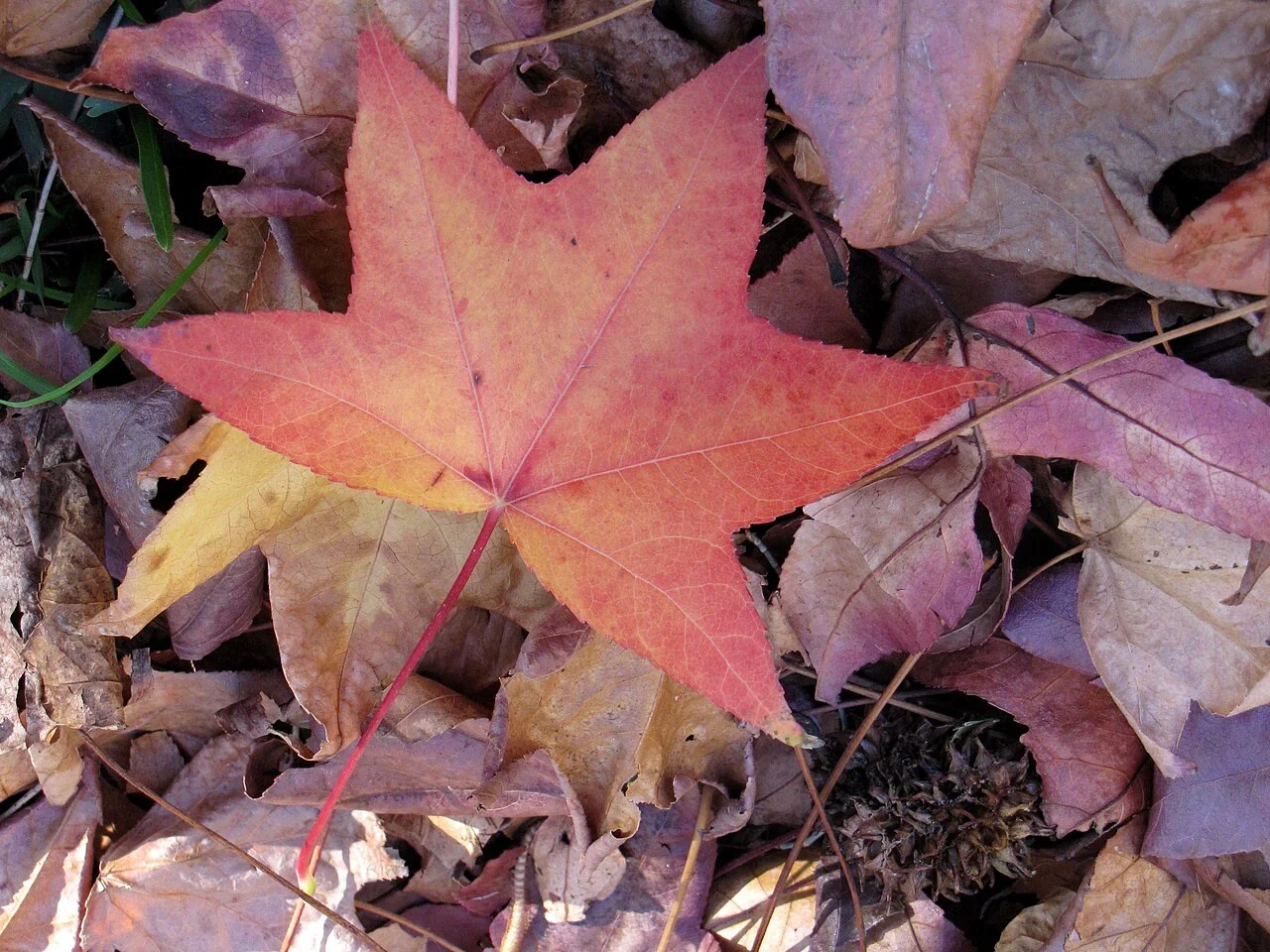
Yes, autumn leaves are among the most useful materials for home compost. Dry leaves supply carbon-rich browns that balance food scraps and other nitrogen-rich greens. They can also be gathered separately and left to decompose into leaf mould. The choice depends on whether you want a mixed compost with food scraps and yard material, or a leaf-based soil conditioner, and on how much storage space you have.
Why a pile needs leaves
Compost microorganisms need carbon and nitrogen, as well as water and oxygen. Dry leaves are a brown; fruit and vegetable scraps, grass clippings and coffee grounds are greens. EPA recommends maintaining at least two to three volumes of browns per volume of greens in a backyard pile, and covering food scraps with dry leaves or other browns. [1]
That makes fall a chance to store a useful resource for the rest of the year. A bag or covered bin of dry leaves can help when kitchen scraps arrive during a season with little fresh yard material. Leaves also help absorb excess moisture and create a less compact mix, though the exact texture depends on the species and how finely the leaves are broken up.
Use them in mixed compost
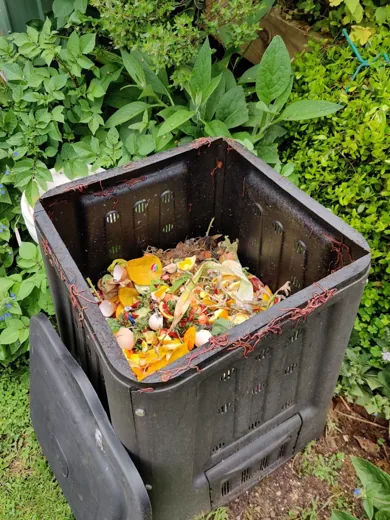
For a mixed pile, break large or tough leaves into smaller pieces if convenient, then layer or mix them with food scraps and other greens. Add enough dry material to keep the pile loose and cover food scraps with several inches of browns. Moisten the mixture if it is dry; a properly damp pile should feel like a wrung-out sponge. Turn it occasionally to bring air through the materials. [1]
If the pile smells bad, it may be too wet or short of air. Add dry leaves and turn it. If it is dry and barely changing, moisten it and mix it. Leaves do not guarantee a quick finish: EPA says a well-maintained pile may be ready in about three to five months, while an untended one may take a year. Treat those as possible timelines, not a deadline for every climate and pile. [1]
Keep a separate leaf pile
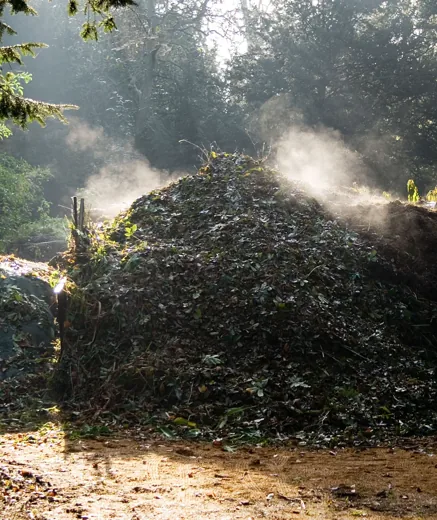
A separate leaf pile is useful when you have many leaves but relatively few food scraps, or want to produce leaf mould without managing a balanced mix of greens and browns. Store the leaves in a contained area where they will not blow away, and allow them to break down. Finely shredded leaves usually settle and decompose differently from whole, matted leaves; if a pile becomes a dense wet mass, loosening it can help air move through.
Leaf mould is not the same as finished mixed compost. It is primarily decomposed leaf material, so it is useful for improving soil structure and covering the soil, but it should not be treated as a complete source of plant nutrients. If a vegetable crop needs particular nutrients, consider the crop and soil rather than assuming leaf mould alone meets every need.
Sort carefully before adding
Avoid putting herbicide-treated plants or grass in a backyard compost pile, along with diseased or pest-infested plants, according to EPA’s home compost guidance. Leaves from a plant with a serious disease may carry material you do not want to spread through the garden. Follow local yard-waste guidance for disposal or processing where needed. [1]
Also leave out aggressive weeds or weeds with seeds if your pile may not heat consistently. A well-managed backyard pile can reach temperatures that help reduce weed seeds, but not every part of every pile reaches the same temperature. Do not rely on an ordinary pile to sanitize questionable material. [1]
Store a reserve and choose its use
A simple seasonal system is to keep a reserve of dry leaves near the compost area, while filling a separate leaf enclosure if the fall supply exceeds what the mixed pile can use. That avoids the common mistake of using all available leaves as a one-time disposal task, then having no browns when food scraps accumulate. Keep the storage accessible and dry enough to remain useful.
When finished, compost can be mixed into garden soil or used as a surface layer; EPA describes both uses and notes that compost can help soil retain moisture and nutrients. A leaf-based material can likewise become a gentle surface cover, though garden and climate conditions shape its performance. [1] Start by sorting leaves into clean, healthy material for your pile and anything that needs a different local disposal route, then decide how much to reserve for winter browns.
Follow the evidence
Primary sources used in this story. Practical examples are illustrative unless a source states otherwise.
Read our editorial standards. Have a correction? Identify the article and relevant source in your feedback to the site owner.